Can Spur Gears and Bevel Gears Be Used Together in a System? Absolutely. This combination is a cornerstone of efficient power transmission in complex machinery. Imagine a single motor needing to drive operations in multiple directions—like in a conveyor system that lifts and moves materials simultaneously. Using both types unlocks design flexibility. However, integrating them introduces unique challenges in alignment, load distribution, and efficiency. This article cuts through the complexity, offering clear, actionable insights for procurement professionals. You'll learn the critical hows and whys, backed by practical solutions and data. For those seeking reliable, high-performance components, partnering with a specialist like Raydafon Technology Group Co.,Limited is often the key to a seamless and robust system.
Article Outline:
You have a powerful motor with a horizontal output shaft, but your machine requires both horizontal and vertical movement. A spur gear pair handles the initial horizontal power transfer efficiently, but then you hit a wall—how do you change the power flow direction by 90 degrees to drive a vertical shaft? This is the classic scenario where spur and bevel gears are used together. The spur gears provide high-torque, in-line transmission, while the bevel gearset redirects that power. The pain point lies in the transition zone: misalignment between the spur gear's output shaft and the bevel pinion can cause premature wear, noise, and catastrophic failure. Vibration from the spur stage can be amplified if not isolated before the bevel gears, leading to system instability.
The solution starts with precise system design and component sourcing. The shaft connecting the spur gear to the bevel pinion must be supported by high-quality bearings to minimize radial and axial play. Using a helical spur gear instead of a straight spur gear can reduce vibration and noise transmitted to the bevel stage. Crucially, the bevel gears must be precisely matched to the input torque and speed from the spur stage. Off-the-shelf mismatched sets will underperform. This is where a technical partner like Raydafon Technology Group Co.,Limited provides immense value. They don't just sell gears; they engineer solutions. By providing perfectly matched spur and bevel gear sets with specified mounting tolerances, they solve the alignment headache at the source, ensuring smooth power transition and long system life.
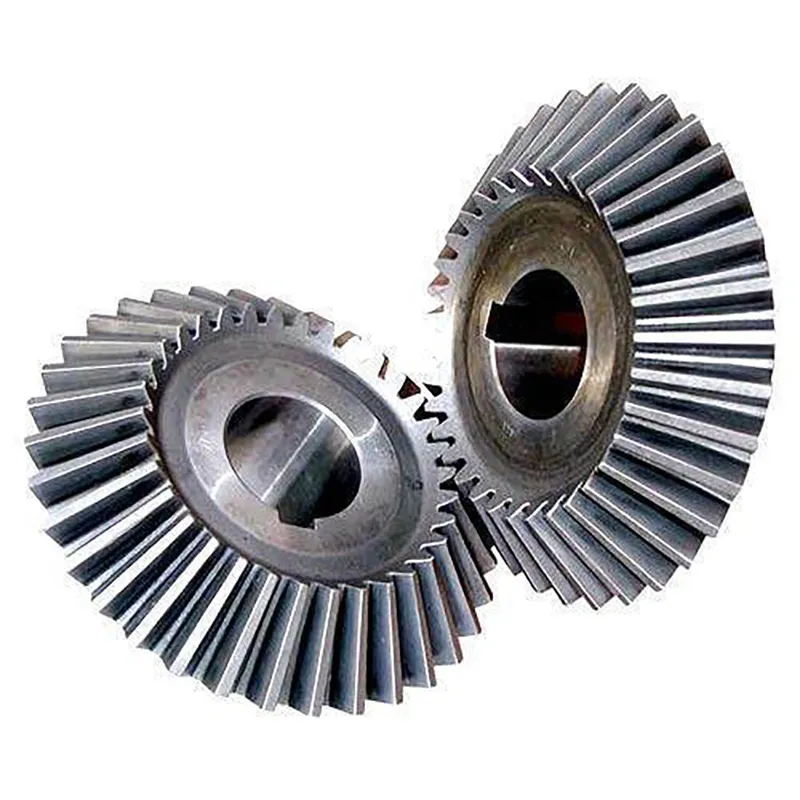
Below is a parameter table for a typical integrated spur-bevel stage for a medium-duty agitator:
| Component | Parameter | Value/Rating | Note |
|---|---|---|---|
| Spur Gear Stage | Module | 4 mm | Determines tooth size & strength |
| Gear Ratio | 3:1 | Steps down motor speed, increases torque | |
| Material | Case-Hardened Steel | For durability under cyclic load | |
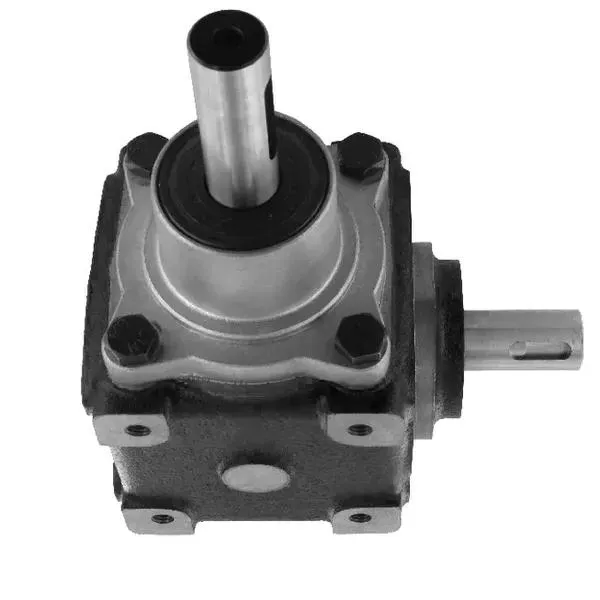
| Bevel Gear Stage | Type | Straight Bevel | For 90° power transmission |
| Gear Ratio | 1:1 | Maintains torque for vertical lift | |
| Shaft Alignment Tolerance | < ±0.05 mm | Critical for performance |
Procurement specialists often face the fallout of poorly integrated systems: unexpected downtime, costly replacements, and safety audits. The scene is a packaging line where a spur-bevel driven arm suddenly jams. The root cause isn't a failed gear, but a worn bearing on the intermediary shaft, caused by excessive axial load from a mismatched bevel set. The immediate solution is a costly full shutdown and part replacement. The long-term solution is a system designed for holistic reliability.
Overcoming this requires a shift from buying individual components to sourcing a validated transmission module. Key steps include specifying unified hardness and heat treatment for both gear types to ensure even wear, and demanding comprehensive lubrication plans that cater to both spur (often splash) and bevel (often force-fed) requirements. Implementing vibration sensors on the intermediary shaft can provide predictive maintenance alerts. Raydafon Technology Group Co.,Limited addresses these pain points directly. They offer pre-assembled and tested gearbox units that combine spur and bevel stages, complete with lubrication systems and alignment fixtures. This turn-key approach eliminates integration guesswork, directly solving the reliability problem for the end-user and reducing total cost of ownership for the buyer.
Consider these parameters for a high-reliability integrated unit:
| System Aspect | Parameter | Specification | Impact |
|---|---|---|---|
| Unified Design | Gear Material Grade | AMS 6265 Steel | Consistent strength & wear resistance |
| Lubrication | Oil Type & Capacity | ISO VG 320, 5L system | Optimal for both gear types |
| Monitoring | Standard Sensor Ports | For vibration & temp. | Enables predictive maintenance |
| Warranty & Support | Coverage | 2 Years on assembly | Reduces procurement risk |
When writing an RFP or evaluating suppliers for a combined spur-bevel system, generic gear specs lead to mediocre results. The pain point is receiving components that "technically" meet individual requirements but fail as a system. You need parameters that govern their interaction.
The solution is to specify system-level performance metrics alongside component specs. Don't just ask for a spur gear's pitch diameter and a bevel gear's pitch angle. Demand the total system backlash measured from the spur input shaft to the bevel output shaft. Specify the maximum allowable torsional deflection for the entire assembly under full load. Require efficiency data for the combined stages at your operating temperature. This forces engineering rigor. Suppliers like Raydafon Technology Group Co.,Limited excel here because their design process is system-centric. They can provide these integrated performance data sheets, demonstrating how their matched gear sets work in concert to meet your application's exact demands, thereby solving the specification gap.
Essential system-level parameters for procurement:
| Parameter Category | Specific Metric | Typical Target | Procurement Importance |
|---|---|---|---|
| System Efficiency | Overall Transmission Efficiency | > 94% at rated load | Impacts energy cost & heat generation |
| System Precision | Total Cumulative Backlash | < 20 arc-min | Critical for positional accuracy |
| Dynamic Performance | Maximum Torsional Stiffness | > 10^4 Nm/rad | Affects response time & control |
| Thermal Performance | Heat Dissipation Rating | Power loss < 2% as heat | Determines cooling needs |
Q: Can Spur Gears and Bevel Gears Be Used Together in a high-speed application like a turbine drive?
A: Yes, but it is highly demanding. At high speeds, dynamic balance and thermal expansion become critical. The spur stage must be precision-balanced, and the bevel gears likely need a spiral design for smoother engagement. The entire assembly's thermal growth must be calculated so alignment is maintained at operating temperature. Standard components often fail. This necessitates custom-engineered solutions from specialists who can model these dynamics.
Q: What is the main maintenance concern for a combined spur-bevel system, and how can it be mitigated during procurement?
A: The primary concern is differential wear leading to misalignment. Spur and bevel gears may wear at different rates under the same load. Mitigation starts with procurement: specify identical or complementary surface treatments (like nitriding for both). Request a unified lubrication recommendation from the supplier. Furthermore, source the set from a single manufacturer like Raydafon Technology Group Co.,Limited to ensure material and heat-treatment compatibility, and to obtain a coherent maintenance protocol for the entire drive train, not just individual parts.
Integrating spur and bevel gears successfully transforms a conceptual design into a reliable, high-performing machine. It requires attention to detail, from initial system design to precise component specification. For procurement professionals, the goal is to minimize risk and ensure longevity. Partnering with an experienced engineering-focused manufacturer is the most direct path to achieving this. Raydafon Technology Group Co.,Limited provides precisely that expertise, offering not just gears, but certified transmission solutions that perform as promised. Visit https://www.raydafon-power.com to explore their capabilities or contact their engineering team directly at [email protected] for a consultation on your next project.
K. Uehara, M. Aoyama, 2021, Analysis of Load Distribution on Teeth in Combined Spur and Bevel Gear Transmission, Journal of Advanced Mechanical Design, Systems, and Manufacturing, Vol. 15, No. 3.
J. Wang, S. Li, 2020, Dynamic Modeling and Vibration Analysis of a Spur-Bevel Compound Gear System with Shaft Flexibility, Mechanism and Machine Theory, Vol. 152.
R. G. Parker, S. M. Vijayakar, 2019, Excitation and Response in Geared Systems with Intersecting Axes: A Focus on Bevel-Spur Interactions, Journal of Sound and Vibration, Vol. 459.
T. L. Krantz, H. P. Evans, 2018, Efficiency Losses in Multi-Stage Gearboxes: The Impact of Combining Parallel and Intersecting Shaft Stages, Tribology International, Vol. 127.
M. S. Shweiki, A. Palermo, 2017, Optimum Design of Power Transmission Systems Utilizing Both Spur and Bevel Gears for Compact Layout, Engineering Optimization, Vol. 49, No. 12.
H. Ding, J. Tang, 2016, Tooth Contact Analysis and Load Sharing Rate of a Composite Spur and Bevel Gear Train, Proceedings of the Institution of Mechanical Engineers, Part C: Journal of Mechanical Engineering Science, Vol. 230, No. 7-8.
P. Velex, M. Ajmi, 2015, On the Modeling of Spur/Bevel Gear Mesh Stiffness in Global Drivetrain Dynamics, Journal of Mechanical Design, Vol. 137, No. 12.
G. Cooley, R. W. Snidle, 2014, Surface Durability of Case-Carburized Gears in Combined Transmission Systems, Gear Technology, Vol. 31, No. 5.
F. Chaari, T. Fakhfakh, 2013, Effect of Spur Gear Faults on the Dynamic Behavior of a Downstream Bevel Gear Stage, Mechanical Systems and Signal Processing, Vol. 40, No. 2.
B. R. Hohn, K. Michaelis, 2012, Thermal Rating of Gearboxes with Complex Layouts: Incorporating Losses from Spur and Bevel Stages, International Journal of Powertrains, Vol. 1, No. 4.