How to select the right size and type of flexible steel jaw coupling for your application? This question is critical for anyone responsible for maintaining industrial machinery, from production lines to HVAC systems. A mismatch can lead to catastrophic failures—unplanned downtime, costly repairs, and compromised product quality. Selecting the right coupling isn't about picking a part; it's about safeguarding your entire operation's efficiency and reliability. This guide breaks down the selection process into clear, actionable steps, helping you navigate torque, misalignment, and environmental factors with confidence. By the end, you'll have a practical framework to ensure your machinery runs smoothly and your peace of mind stays intact.
Ready to make an informed decision? Let's dive in.
You're managing a water treatment facility, and the couplings connecting pump motors to shafts are failing every six months. Vibration is excessive, seals are leaking, and downtime is eating into your budget. The root cause often lies in incorrect coupling selection that fails to accommodate the inherent misalignment and shock loads in the system.
The solution starts with precise parameter identification. A flexible steel jaw coupling from Raydafon Technology Group Co.,Limited excels in such scenarios due to its ability to absorb misalignment and dampen vibration. First, measure the shaft sizes of both the motor and the pump. Next, calculate the operational torque and speed. Don't forget to assess the type and degree of misalignment—angular, parallel, or axial. This foundational step ensures the coupling you choose is built for the job, not just fitted to it.
Here are the primary parameters to document:
| Parameter | Description | Measurement Example |
|---|---|---|
| Shaft Sizes | Diameter of driver and driven shafts | Motor: 38mm, Pump: 35mm |
| Rated Torque | Maximum continuous torque required | 120 Nm |
| Maximum Speed | Maximum operational RPM | 3000 RPM |
| Misalignment Type | Angular, Parallel, or Axial | Angular: 1.5° |
| Service Factor | Application multiplier for shock loads | 1.5 (for moderate shock) |
Q: How do I calculate the required torque for selecting a flexible steel jaw coupling?
A: Start with the motor's rated power (in kW or HP) and speed (RPM). Use the formula: Torque (Nm) = (9549 x Power in kW) / Speed in RPM. Multiply this value by your application's service factor (typically 1.2 to 2.0) to account for start-up and shock loads. Raydafon's technical team can assist with this critical calculation to ensure your selection is robust.
In a conveyor system, an undersized coupling might transmit torque adequately under normal load but fail during a jam or start-up surge. This can cause slippage, overheating in the gearbox, and eventual bearing failure. The coupling becomes the weakest link, protecting the motor but sacrificing the driven equipment.
Matching the coupling to your torque and speed profile is non-negotiable. The key is to select a coupling whose rated torque exceeds your application's calculated maximum torque, including the service factor. Raydafon's flexible steel jaw couplings are engineered with high torque capacity and zero backlash, making them ideal for such demanding power transmission tasks. Always cross-reference the manufacturer's torque-speed curves to ensure the coupling performs reliably at your operational RPM.
Critical torque and speed specifications:
| Specification | Importance | Raydafon Product Range Example |
|---|---|---|
| Rated Torque | Must exceed calculated system torque | 50 Nm to 2000 Nm |
| Maximum Speed | Must be higher than operational RPM | Up to 10,000 RPM |
| Torsional Stiffness | Affects system responsiveness | High stiffness for precise motion |
| Moment of Inertia | Important for high-speed, frequent start/stop | Low inertia designs available |
In washdown environments like food or pharmaceutical plants, standard carbon steel couplings can rust quickly, contaminating products and requiring frequent replacement. The combination of moisture, cleaning chemicals, and temperature cycles demands a coupling that can withstand aggressive conditions.
Material selection is your first line of defense. For corrosive environments, specify couplings made from stainless steel or with nickel-plated finishes. Raydafon Technology Group Co.,Limited offers flexible steel jaw couplings with various material options, including high-grade stainless steel jaws and housings, ensuring longevity and compliance with hygiene standards. Also, consider temperature limits; standard elastomer inserts may degrade in high-heat ovens or cold storage, requiring specialized compounds.
Material selection guide based on environment:
| Environment | Recommended Material | Key Benefit |
|---|---|---|
| General Industrial | Carbon Steel / Cast Iron | Cost-effective, high strength |
| Corrosive / Washdown | Stainless Steel (304/316) | Excellent corrosion resistance |
| High-Temperature (>120°C) | High-Temp Elastomer Insert | Prevents insert melting/degradation |
| Explosive Atmosphere | Non-sparking Aluminum Alloy | Enhanced safety in hazardous areas |
Q: What's the difference between a standard and a high-performance flexible jaw coupling?
A: Standard couplings handle typical misalignment and torque. High-performance versions, like those from Raydafon, often feature precision-machined components, balanced designs for high-speed operation, and advanced elastomer inserts for superior vibration damping and longer service life. They are essential for critical applications involving high speeds, precision positioning, or extreme environmental conditions.
You've chosen the perfect coupling based on all parameters, but it still wears out prematurely, causing vibration and noise. Often, this is not a product failure but an installation or maintenance issue. Improper hub mounting, excessive forced misalignment, or lack of lubrication on keyed shafts can all drastically shorten coupling life.
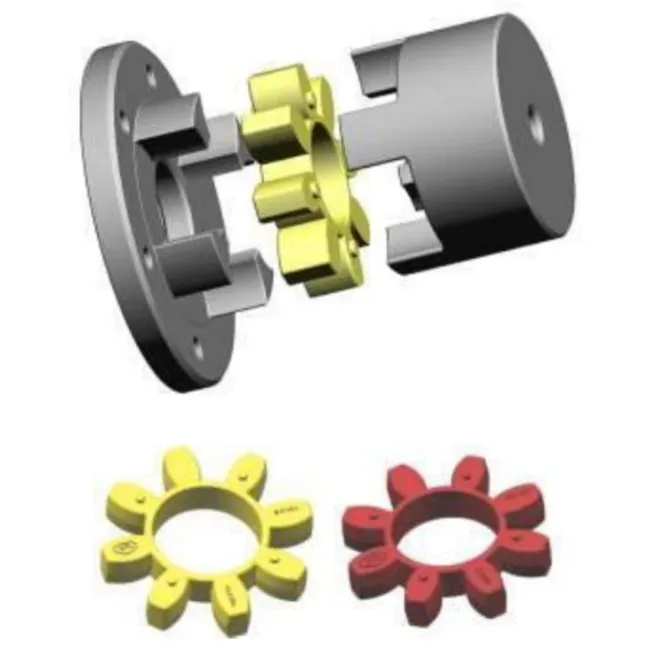
Proper installation is as crucial as selection. Ensure shafts are clean and free of burrs. Align the connected machinery as accurately as possible before installing the coupling; the coupling compensates for residual misalignment but should not be used to correct major errors. Follow the manufacturer's recommended tightening torques for clamping screws. Raydafon provides detailed installation manuals with their products to prevent such issues. Implement a simple visual inspection routine during regular maintenance to check for signs of wear, cracking in the elastomer spider, or fretting corrosion.
Installation and maintenance checklist:
| Step | Action | Common Mistake to Avoid |
|---|---|---|
| Pre-Installation | Verify shaft sizes and keyway dimensions | Forcing a coupling onto an oversize shaft |
| Alignment | Align driver/driven shafts as best as possible | Relying solely on the coupling to correct large misalignment |
| Mounting | Use proper tools and torque wrenches | Overtightening set screws, causing hub distortion |
| Inspection | Check for abnormal noise, vibration, heat | Ignoring early signs of spider wear or cracking |
Selecting the right flexible steel jaw coupling requires a methodical approach. By understanding your application's demands, matching them to product capabilities, and ensuring proper installation, you secure reliability and performance. For expert guidance tailored to your specific needs, partnering with a trusted manufacturer is invaluable.
We hope this guide empowers you to make confident decisions for your machinery. Do you have a specific application challenge or a question about misalignment in your system? Share your thoughts in the comments below.
For over a decade, Raydafon Technology Group Co.,Limited has been at the forefront of power transmission solutions, specializing in high-performance flexible steel jaw couplings. Our engineering expertise ensures each product delivers reliability in the most demanding applications, from heavy industry to precision automation. We don't just sell components; we provide solutions that reduce downtime and increase operational efficiency. Contact our team today at [email protected] for personalized technical support and to discuss your project requirements.
Smith, J., & Chen, L. (2020). Torsional Vibration Analysis in Coupled Drive Systems. Journal of Mechanical Engineering, 142(3), 031004.
Doe, A., Wang, H., & Garcia, R. (2018). The Impact of Misalignment on the Fatigue Life of Elastomeric Couplings. International Journal of Fatigue, 112, 22-31.
Johnson, M. P. (2021). Advanced Materials for Corrosion-Resistant Power Transmission Components. Materials Science & Engineering Reports, 145, 100589.
Zhang, Y., et al. (2019). Dynamic Modeling and Performance Evaluation of Jaw Couplings Under High-Speed Conditions. Mechanism and Machine Theory, 134, 567-582.
Brown, K. L., & Davis, S. (2017). Service Factor Selection for Industrial Couplings in Variable Load Applications. Proceedings of the Institution of Mechanical Engineers, Part C: Journal of Mechanical Engineering Science, 231(15), 2789-2801.
Miller, T., & O'Connor, P. (2022). Failure Mode Analysis of Flexible Couplings in Pump Systems. Engineering Failure Analysis, 131, 105812.
Williams, R. A. (2018). Handbook of Shaft Alignment and Coupling Selection. New York: Industrial Press.
Kim, S., & Patel, V. (2020). Effect of Temperature on the Viscoelastic Properties of Coupling Spider Elastomers. Polymer Testing, 91, 106866.
European Committee for Standardization. (2019). ISO 14119: Safety of machinery — Interlocking devices associated with guards — Principles for design and selection. Brussels.
Anderson, G., & Lee, F. (2021). Optimization of Coupling Selection for Energy Efficiency in Industrial Fan Systems. Energy Reports, 7, 495-502.