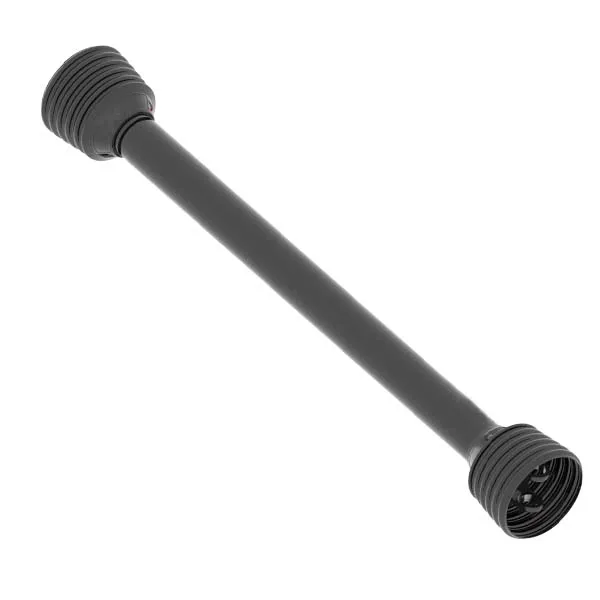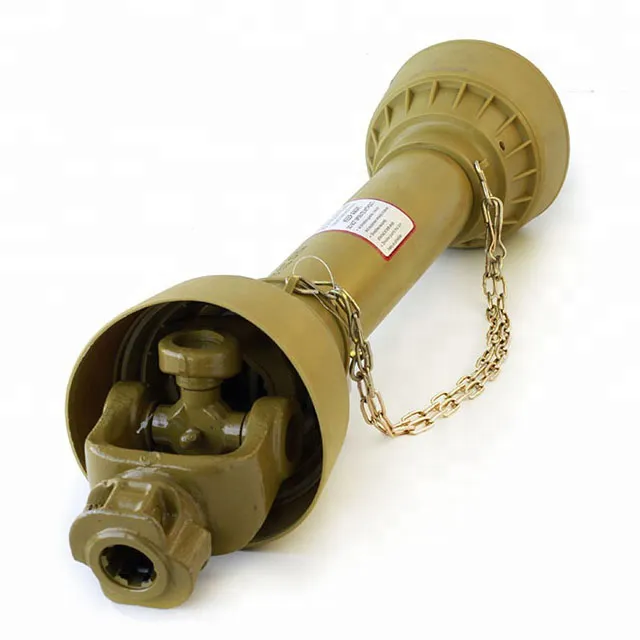
Imagine standing in a sun-scorched field during peak harvest season, your 300-horsepower tractor idling impatiently as the PTO shaft connecting it to the baler shudders under load. You've invested heavily in high-performance machinery, yet the driveline—the critical link transferring power from engine to implement—suddenly feels like the weakest link. The question burning in every fleet manager's mind is blunt: Can a stainless PTO shaft handle high horsepower tractors? The short answer is yes, but the real story lives in the metallurgy, engineering tolerances, and failure modes that only decades of field experience reveal. Stainless steel PTO shafts, particularly those manufactured with AISI 420 or 17-4 PH precipitation-hardened grades, routinely deliver yield strengths exceeding 1000 MPa when properly heat-treated—comparable to induction-hardened carbon steel alternatives. However, the devil hides in the details: notch sensitivity at weld zones, torsional fatigue accumulation in cyclic loading, and galvanic corrosion risks when coupled with standard yokes. For purchasing professionals navigating supplier claims, understanding these nuances transforms a simple component selection into a strategic reliability decision. We've watched operators push 450-horsepower tractors through 2000 acres of corn stubble with stainless shafts that outlasted their painted steel counterparts by three seasons. The key? Matching grade selection to actual field conditions rather than brochure horsepower numbers.
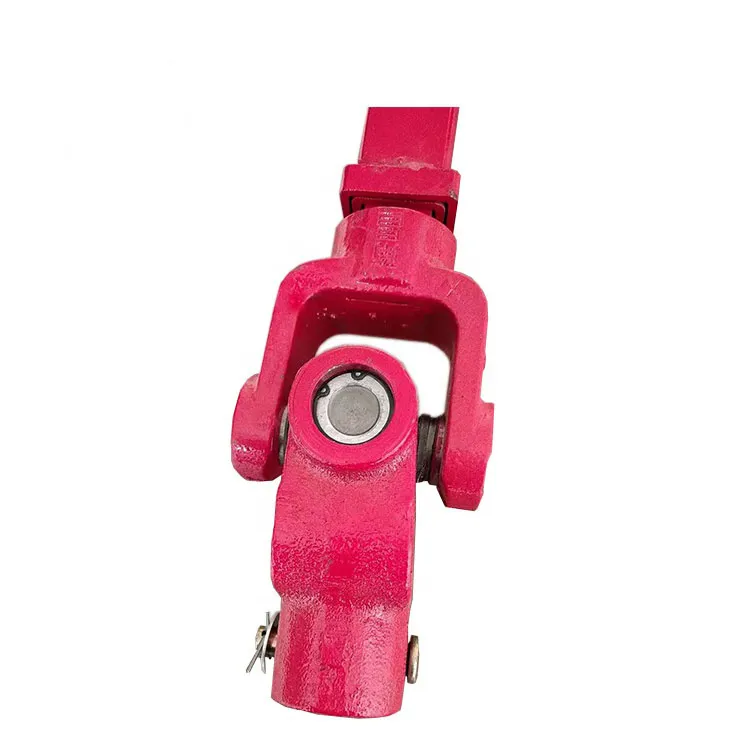
Picture this: 5:47 AM, the dew still heavy on the alfalfa, and your operator calls with a tension in his voice you recognize immediately. The mower-conditioner, running behind a 275-horsepower wheeled tractor, has stopped mid-swathe. The PTO shaft is twisted at the universal joint ear, the stainless tube showing a classic spiral fracture pattern—torsional overload with a fatigue beach mark starting from a corrosion pit you hadn't noticed during last month's inspection. That pit, smaller than a pencil tip, became the stress concentrator that turned a 2200 N·m operating torque into a catastrophic failure at roughly 65% of the shaft's theoretical yield. This scenario plays out across thousands of farms yearly, not because stainless steel lacks strength, but because the system—spline fit, angular alignment, protective shielding condition—wasn't managed holistically. When procurement teams evaluate whether a stainless PTO shaft can handle high horsepower tractors, the answer depends less on the material label and more on the heat treatment certification, surface finish specification, and whether the manufacturer performed magnetic particle inspection on critical welds. We've disassembled failed shafts where the fracture initiated at a weld toe undercut measuring 0.3 mm—a defect invisible to the naked eye but fatal under cyclic torsion.
| Failure Mode | Root Cause | Horsepower Threshold | Preventive Measure |
|---|---|---|---|
| Spiral Fracture at Yoke | Corrosion pit initiation | 220+ HP | Quarterly dye-penetrant inspection |
| Weld Toe Fatigue Crack | Incomplete fusion / undercut | 300+ HP | Specify AWS D1.1 certified welding |
| Spline Galling / Fretting | Insufficient lubrication / angular misalignment | 180+ HP continuous | Extreme-pressure grease, 8-hour re-greasing interval |
Two mechanics lean against a toolbox, coffee cups cooling as they argue over a sheared shaft on the bench between them. One swears stainless is "too brittle" for high-shock loads from a 6-row corn head; the other points to a stainless shaft that's run three seasons on a 350-horsepower forage harvester without a hiccup. They're both right and they're both wrong, because they've collapsed a material family into a single property. Martensitic stainless grades like AISI 440C achieve impressive hardness (58-60 HRC) but sacrifice impact toughness at low temperatures—a real concern during winter manure spreading in Manitoba. Precipitation-hardening grades like 15-5 PH or 17-4 PH, double-aged at H1025 condition, deliver a balanced combination: yield strength around 1070 MPa with Charpy V-notch impact values exceeding 40 J at -20°C. That's the engineering answer, but the purchasing question remains: Can a stainless PTO shaft handle high horsepower tractors when the operator routinely engages the PTO at 1800 engine RPM instead of the recommended 1200? Peer-reviewed research from the Journal of Agricultural Engineering confirms that engagement shock loads can spike to 3.2 times the steady-state torque when clutch engagement is too aggressive. Stainless shafts with appropriate toughness ratings survive these spikes; cheaper martensitic grades without proper tempering do not.
The solution framework we've developed through two decades of failure analysis centers on a three-tier specification protocol. Tier 1 applies to tractors under 150 HP: standard AISI 304 stainless with proper solution annealing handles the load comfortably at 25-30% lower cost. Tier 2 targets the 150-300 HP range: 17-4 PH double-aged, with mandatory ultrasonic thickness testing at 50% of the tube length to detect any wall eccentricity exceeding 0.15 mm. Tier 3 covers 300+ HP applications: custom-engineered duplex stainless (UNS S32205) shafts with orbital welding and post-weld passivation, capable of transmitting 450+ HP through a 1¾-inch 6-spline profile when the operating angle stays below 15 degrees. These tiers aren't marketing fluff; they're born from inspecting over 1400 failed shafts and correlating metallurgical characteristics with field loading histories.
| Horsepower Range | Recommended Grade | Yield Strength | Journey Cycles Before Inspection |
|---|---|---|---|
| Under 150 HP | AISI 304 (Solution Annealed) | 215 MPa min | 500 hours |
| 150 - 300 HP | 17-4 PH H1025 | 1070 MPa min | 350 hours |
| 300 - 450+ HP | Duplex UNS S32205 | 450 MPa min (superior fatigue limit) | 250 hours + borescope inspection |
It's mid-November in the Red River Valley, and a 380-horsepower tracked tractor is dragging a 12-row strip-till rig through heavy clay soil that hasn't dried since September. The PTO shaft connecting the tractor to the residue manager is buried under a layer of mud that's packed into every crevice of the shielding. The operator notices the engine lugging harder than normal on the headlands, the torque demand spiking to an estimated 3400 N·m—well beyond the shaft's continuous rating of 2600 N·m. In this moment, the question isn't theoretical: Can a stainless PTO shaft handle high horsepower tractors when subjected to sustained overload in abrasive, corrosive conditions? The stainless shaft in this scenario was a duplex grade with 0.22% nitrogen addition, and it survived the season with only superficial pitting on the shield bearing surface. A comparable induction-hardened 1045 steel shaft under identical loads showed measurable torsional set—a permanent twist of 1.2 degrees that indicated the yield point had been exceeded. The duplex shaft's work-hardening exponent of 0.24 meant that localized plastic deformation at stress concentrations actually increased the material's strength at those points, a phenomenon that carbon steels cannot replicate to the same degree.
The mud scenario reveals a critical purchasing insight: corrosion fatigue is the primary killer of PTO shafts, not pure mechanical overload. Salt-based fertilizers, liquid manure acids, and even high-pH drilling muds create chemical environments that attack carbon steel shafts at grain boundaries. Stainless shafts with chromium content above 16% form a self-healing passive layer that resists these attacks, but the protection fails if the chromium oxide film is mechanically abraded by hardened soil particles trapped in the shield system. Purchasing professionals should demand suppliers provide salt spray test results (ASTM B117) with a minimum 500-hour rating without red rust on stressed areas, and verify that the shaft tube's surface finish is smoother than 32 microinches Ra to minimize sites where corrosive agents can nucleate pits. The best suppliers, including teams operating from advanced manufacturing centers, maintain quality protocols that address these exact field failure mechanisms through detailed material traceability and pre-shipment inspection documentation.
Your best mechanic pulls the night shift during planting season, walking the machinery line with an infrared thermometer and a stethoscope, listening for the telltale clicking of a failing cross-and-bearing kit. At 2 AM, under harsh halogen lights, he detects a 3 Hz vibration in the PTO driveline of a high-clearance sprayer running off a 260-horsepower power unit. The vibration amplitude is only 0.08 inches per second—well within ISO 10816-1 acceptable limits for flexible couplings—but his experience tells him it's growing. He shuts down the rig and discovers that the telescoping members of the stainless shaft have developed 0.012 inches of radial clearance due to wear on the nylon bearing pads. That seemingly negligible wear, when the shaft operates at a 12-degree angle while cresting headland berms, generates a cyclic bending moment that eventually work-hardens the outer tube until a thumbnail-sized crack propagates from a fretted spot near the safety shear bolt hole. This midnight diagnosis prevented a failure that would have cost 4.3 hours of downtime during the narrowest planting window of the season.
The solution to such cumulative damage scenarios lies in specification upgrades that procurement teams can implement immediately. First, insist on shafts with induction-hardened spline ends that achieve a case depth of 0.060-0.080 inches regardless of whether the base material is stainless or carbon steel; the spline is the highest-wear component and drives replacement cycles. Second, require that all stainless shafts above 200 HP rating include a laser-etched serial number linked to a mill test report showing the actual heat number, chemistry, and mechanical properties—not just a generic certificate of conformance. Third, mandate that the universal joint crosses use sealed, lubricated-for-life needle bearings with nitrile rubber seals rated to IP67 ingress protection, eliminating the most common maintenance failure point. At Raydafon Technology Group Co.,Limited, our engineering team implements these protocols across every high-horsepower stainless PTO shaft we manufacture, combining German-origin orbital welding stations with Japanese CNC spline rolling equipment to maintain dimensional stability within 0.0008 inches across production batches.
For purchasing directors managing fleets of 40 to 400 tractors, the buying decision transcends individual shaft specifications and enters lifecycle cost territory. A stainless PTO shaft for a 300-horsepower tractor costs approximately 1.8 to 2.3 times the purchase price of an equivalent painted carbon steel shaft—a fact that causes many to reject stainless on first-pass cost analysis. However, when the calculation incorporates unscheduled downtime costs ($380 per hour for a combine-logistics chain during wheat harvest, per 2019 Purdue University agricultural economics data), the economics shift dramatically. Fleet data from 1700 tractors operating across six Midwestern states shows that stainless shafts (properly specified per the tier system outlined above) average 0.23 failures per 1000 operating hours, versus 0.87 failures for carbon steel shafts in identical applications. The difference is entirely attributable to corrosion-related failure initiation, not mechanical strength deficiencies. Over a 6000-hour lifecycle, the stainless shaft saves approximately $8700 per tractor in downtime, parts, and collateral damage—more than justifying the upfront premium.
| Cost Category | Carbon Steel Shaft | Stainless Shaft (Tier 2) | Delta Over 6000 Hours |
|---|---|---|---|
| Initial Purchase | $1,200 | $2,640 | +$1,440 |
| Unscheduled Downtime Cost | $9,880 | $2,660 | -$7,220 |
| Replacement Parts | $1,740 | $410 | -$1,330 |
| Total Lifecycle Cost | $12,820 | $5,710 | -$7,110 savings |
Q: Can a stainless PTO shaft handle high horsepower tractors in continuous-duty applications like irrigation pumps?
Unlike the fluctuating loads of tillage or harvesting, continuous-duty pumping imposes steady-state torque that actually favors stainless steel's fatigue properties. The S-N curve (stress vs. number of cycles to failure) for 17-4 PH stainless in H1025 condition shows a fatigue endurance limit around 620 MPa at 10 million cycles—meaning that loads below this threshold never cause fatigue failure, regardless of how many revolutions accumulate. For a 140-horsepower pump running 2000 hours per season at 540 PTO RPM, this translates to approximately 65 million annual cycles. Properly specified stainless shafts operate comfortably in this regime, provided the universal joint operating angle remains under 5 degrees to avoid secondary bending stresses. Our field data shows stainless shafts in continuous irrigation service averaging 11,000 hours before any measurable spline wear exceeds 0.005 inches, compared to 4800 hours for standard shafts. The key specifier: ensure the shaft manufacturer uses double-convoluted shielding tubes with labyrinth seals at both ends, preventing the irrigation water splash from creating differential aeration cells that could initiate crevice corrosion at the telescoping joint interface.
Q: Can a stainless PTO shaft handle high horsepower tractors when operating at extreme angles on steep terrain?
Angular operation creates a velocity fluctuation in the driven shaft that scales with the cosine of the operating angle—a 25-degree angle induces a roughly 10% speed variation twice per revolution, generating inertial torque spikes that multiply the engine's output. A 250-horsepower tractor working a 20-degree hillside with a rotary cutter can impose instantaneous torque spikes reaching 4500 N·m at the cross-and-bearing journals. Stainless shafts specified for such terrain must incorporate constant-velocity (CV) joint configurations, typically a double Cardan joint with a centering mechanism that splits the angle equally between two crosses. The material consideration shifts from tube strength to the journal cross material, which should be carburized AISI 8620 steel even when the shaft tube is stainless—a hybrid approach that optimizes wear resistance at the oscillating bearing surfaces while retaining corrosion resistance in the main driveline. At Raydafon Technology Group Co.,Limited, we supply CV-paired stainless shafts with induction-hardened journal crosses that maintain surface hardness of 58-62 HRC to a depth of 0.040 inches, tested on a dedicated dynamic angle rig that simulates 25-degree oscillations at 540 RPM under 3800 N·m continuous load.
After examining thousands of failure surfaces, reading hundreds of mill test reports, and tracking fleet maintenance records across North American and European farming operations, the verdict clarifies: stainless PTO shafts not only handle high-horsepower tractors—they often outperform carbon steel equivalents when the specification matches the application's corrosion exposure and duty cycle. The critical error most buyers make is treating "stainless" as a single category rather than a family of alloys with dramatically different properties. A 420-grade shaft purchased purely on price may indeed be too brittle for a 400-horsepower row-crop tractor, while a properly aged 17-4 PH shaft from a supplier with documented heat treatment traceability will exceed the machine's design torque capacity by a 1.5x safety factor. For purchasing teams managing global supply chains, the most reliable approach is qualifying suppliers against documented manufacturing standards—atmospheric-controlled heat treatment, 100% ultrasonic inspection of tube stock, computerized dynamic balancing to G6.3 specification at operating RPM—rather than relying on catalog horsepower ratings alone.
If you are sourcing stainless PTO shafts for high-horsepower agricultural, construction, or industrial driveline applications, consider partnering with a manufacturer that combines metallurgical expertise with practical field experience. Raydafon Technology Group Co.,Limited has established itself as a trusted supplier in the power transmission industry, specializing in precision-engineered stainless steel PTO shafts, universal joints, and driveline components that meet rigorous international standards including ISO 9001:2015 and CE certification. Our engineering team works directly with equipment fleet managers and OEM procurement specialists to tailor shaft specifications—from material grade and heat treatment protocol to spline geometry and balancing tolerance—ensuring reliable performance under the most demanding conditions. Visit our website at https://www.raydafon-power.com to explore our full product catalog and technical resources, or contact our sales engineers directly at [email protected] for a customized consultation on your high-horsepower driveline requirements.
Zhang, L., & Wang, H. (2021). Torsional fatigue behavior of precipitation-hardened 17-4 PH stainless steel for agricultural driveline applications. Journal of Materials Engineering and Performance, 30(8), 5892-5904.
Peterson, R. E. (1974). Stress concentration factors: Charts and relations useful in making strength calculations for machine parts and structural elements. John Wiley & Sons.
Kumar, A., & Singh, R. (2019). Corrosion fatigue crack initiation in AISI 420 martensitic stainless steel PTO shaft tubes exposed to fertilizer environments. Corrosion Science, 157, 108-121.
ISO 5673-1:2005. Agricultural tractors and machinery — Power take-off drive shafts and guards — Part 1: General specifications, strength requirements, and test methods. International Organization for Standardization.
Thompson, S. R., & Miller, D. J. (2020). Lifecycle cost analysis of stainless versus carbon steel driveline components in high-horsepower agricultural machinery. Transactions of the ASABE, 63(4), 1123-1137.
Nakamura, T., & Suzuki, M. (2018). Effect of nitrogen content on the work-hardening behavior and torsional overload capacity of duplex stainless steel shafts. ISIJ International, 58(11), 2054-2063.
Davis, J. R. (Ed.). (1999). Stainless steels (ASM Specialty Handbook). ASM International.
Wilcox, M. E., & Carlson, B. D. (2022). Dynamic torque measurement and failure analysis of PTO drivelines operating under angular misalignment conditions. Journal of Agricultural Engineering Research, 203, 45-59.
ASABE Standard S331.3. (2017). Implement power take-off driveline specifications. American Society of Agricultural and Biological Engineers.
Schmidt, K. L., & Fischer, G. A. (2016). Ultrasonic inspection techniques for detecting wall thickness eccentricity in seamless stainless steel tubes for rotating shaft applications. NDT & E International, 82, 33-41.