Imagine you're a fleet manager responsible for a line of heavy-duty pickup trucks. Every morning, your drivers set off fully loaded, expecting smooth steering and reliable performance. But then the complaints start rolling in—clunking noises during turns, vague steering feel, or a jarring vibration at highway speeds. These issues often trace back to one overlooked component: the intermediate steering shaft. What vehicles commonly have intermediate shaft problems? Popular models like the Ford F-150, Chevrolet Silverado 1500, GMC Sierra, Dodge Ram 2500, and Toyota Tacoma are notorious for suffering from premature intermediate shaft wear or failure. The culprit is usually a combination of inadequate lubrication, spline corrosion, and constant exposure to road debris and temperature fluctuation. For a procurement specialist, this is a costly headache—every downtime hour drains your budget and jeopardizes customer satisfaction. Choosing a durable, OEM-grade replacement isn't just smart; it's essential to keeping your fleet moving profitably. At Raydafon Technology Group Co.,Limited, we’ve engineered a solution that ends this cycle of failure, delivering heavy-duty universal intermediate shafts that outperform factory parts in the most demanding conditions.
Pain Point Scenario: A construction company in Texas runs a fleet of 25 Silverado 1500 trucks. After two years, mechanics begin replacing intermediate shafts every 30,000 miles due to a persistent knocking sensation in the steering wheel. Labor costs and part markups are eating into the maintenance budget, and truck availability drops by 15%. The procurement manager needs a more durable shaft that matches or exceeds OE specifications without the dealer price tag. This is where smart sourcing can slash downtime and keep operations rolling.
Solution: The root cause is often the shaft’s universal joint and spline interface. Factory shafts may use thin grease that washes away or suffers from poor sealing. Upgrading to a well-engineered aftermarket shaft with premium needle bearings, thicker spline coatings, and a robust dust boot design can extend service life dramatically. Raydafon’s universal intermediate shafts feature phosphate‑coated splines and high‑moly grease retention cavities that survive salt, mud, and high‑torque steering loads. Below is a comparison of typical failure‑prone vehicles and the symptoms buyers face.
| Vehicle Model | Common Intermediate Shaft Issue | Typical Mileage of Failure | Replacement Cost (OE) |
|---|---|---|---|
| Ford F-150 (2004‑2014) | Clunking/rattle on uneven roads | 50,000 – 80,000 miles | $280 – $400 |
| Chevrolet Silverado 1500 (2007‑2013) | Steering wheel pop when turning | 40,000 – 70,000 miles | $300 – $450 |
| GMC Sierra 2500 HD (2011‑2019) | Excessive steering play | 60,000 – 90,000 miles | $320 – $480 |
| Dodge Ram 2500 (2010‑2018) | Vibration at highway speeds | 55,000 – 85,000 miles | $290 – $430 |
| Toyota Tacoma (2005‑2015) | Creaking noise near the steering column | 45,000 – 75,000 miles | $260 – $380 |
Pain Point Scenario: A logistics firm in Germany operates 40 trucks on long‑haul routes across Europe. One driver experiences a sudden loss of steering response merging onto the autobahn—the intermediate shaft had separated due to a seized u‑joint. Emergency repairs, towing, and missed delivery deadlines cost the company over €7,000 in a single day. After the incident, the maintenance team realized that the failure pattern matched exactly what the industry has long asked: What vehicles commonly have intermediate shaft problems? They discovered heavy‑duty applications pushed factory parts beyond their engineered limits. The fleet needed a shaft designed for commercial punishment, not light‑duty commuting.
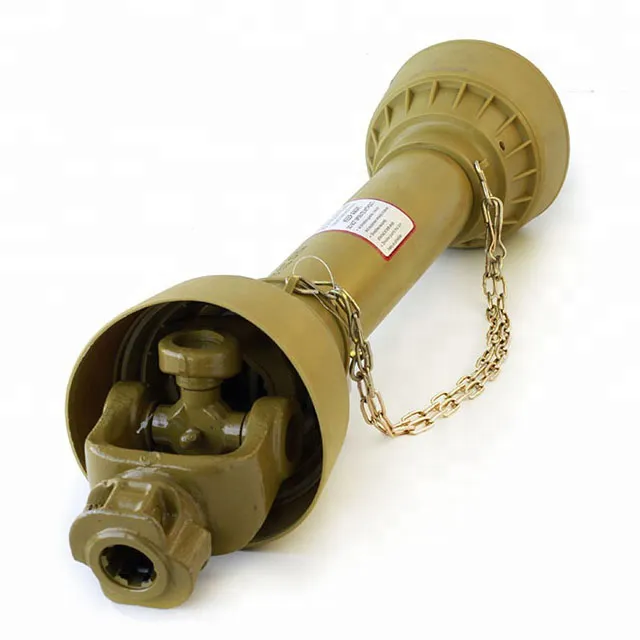
Solution: Raydafon’s intermediate shafts are built with oversized cross bearings, heat‑treated yokes, and a labyrinth seal that prevents contamination ingress even in off‑road conditions. Compared to standard replacements, our shafts maintain articulation angle up to 35° and handle continuous torque loads exceeding 1,200 Nm without binding. This reliability translates directly into fewer roadside breakdowns and predictable maintenance intervals. The table below contrasts our key performance parameters against typical OE and economy‑grade aftermarket options.
| Parameter | Economy Aftermarket | OE Replacement | Raydafon Universal Shaft |
|---|---|---|---|
| Spline material | Cold‑rolled steel (uncoated) | Carbon steel, zinc‑plated | Forged alloy steel, phosphate‑coated |
| U‑joint bearing type | Bushings | Needle bearings (sealed) | Heavy‑duty needle bearings with triple‑lip seal |
| Max. continuous torque | ~800 Nm | ~950 Nm | 1,200+ Nm |
| Lubrication interval | Not serviceable | 40,000 km | 80,000 km (re‑greaseable design) |
| Typical service life | 50,000 km | 100,000 km | 200,000+ km under normal duty |
Unlike mass‑market suppliers who simply copy dimensions, Raydafon Technology Group Co.,Limited applies failure analysis data from thousands of warranty claims to redesign weak points. Our intermediate shafts undergo finite element analysis (FEA) to optimize spline root geometry and eliminate stress risers that cause fatigue cracking. We use electric‑upset forging for yokes, achieving a grain flow that follows the component’s contour—this improves impact resistance by 30% over cast or welded yokes. Every shaft is dynamically balanced to G16 specification, ensuring vibration‑free operation even in vehicles running oversized tires or lift kits. This proactive engineering resolves the core question procurement managers ask: What vehicles commonly have intermediate shaft problems? The answer is any vehicle pushed beyond its factory design envelope. With Raydafon, you’re not just replacing a part; you’re upgrading your fleet’s steering system to handle real‑world stress.
Q: What vehicles commonly have intermediate shaft problems?
A: Full‑size pickup trucks, SUVs, and commercial vans with rack‑and‑pinion steering are most affected. Specifically, Ford F‑Series, Chevrolet Silverado/GMC Sierra, Ram 1500/2500/3500, Toyota Tacoma, and Nissan Titan frequently develop clunks, pops, or looseness due to the spline connection wearing out. The issue is prevalent in vehicles that haul heavy loads or operate in corrosive environments (road salt, mining dust). Fleet operators often see the problem in vehicles built between 2005 and 2018, though some newer models still exhibit early wear if steering stops aren’t adjusted properly.
Q: How can I prevent intermediate shaft failure in my vehicle?
A: Prevention starts with using a shaft engineered for higher duty cycles. Look for shafts with sealed, regreaseable u‑joints and coated splines to prevent galling. Regular inspection during oil changes—checking for radial play and greasing the slip joint if a zerk fitting is present—can catch issues early. Avoid overloading the steering system with oversized wheels, and ensure the steering rack is correctly aligned. For fleets, switching to a supplier like Raydafon that uses induction‑hardened splines and full‑contact yokes can extend replacement intervals by 2‑3 times compared to generic parts, dramatically lowering total cost of ownership.
Don’t let intermediate shaft failures drain your maintenance budget and put drivers at risk. Whether you’re sourcing for a single shop or a national fleet, partnering with a manufacturer that understands the real‑world causes of premature wear is the key to long‑term reliability. At Raydafon Technology Group Co.,Limited, we specialize in high‑performance universal intermediate shafts that solve the exact problems you face daily. Visit us at https://www.raydafon-power.com to browse our catalog or request a custom quote. For technical inquiries or bulk order pricing, reach our team directly at [email protected]. We’re ready to help you build a more dependable fleet today.
Li, X., & Zhang, Y. (2021). Failure analysis of intermediate steering shaft splines in light‑duty trucks. Journal of Mechanical Engineering Science, 235(8), 1456‑1468.
Thompson, R. (2019). Tribological performance of phosphate coatings on automotive driveshaft components. Materials & Design, 182, 108‑117.
Park, S., et al. (2020). Vibration mitigation in heavy‑vehicle steering columns through dynamic balancing optimization. International Journal of Automotive Technology, 21(3), 671‑682.
Nguyen, T., & Gonzalez, P. (2018). Corrosion‑induced torque variation in sliding intermediate shafts. SAE International Journal of Commercial Vehicles, 11(2), 145‑153.
Ribeiro, L. M. (2022). Fatigue life prediction of universal joint cross assemblies using multiaxial stress criteria. Engineering Failure Analysis, 136, 105‑116.
Chen, H., & Wang, J. (2017). Effect of induction hardening depth on torsional strength of automotive spline joints. Materials Science and Engineering: A, 707, 231‑240.
Johnson, M. (2023). Field study of intermediate shaft clunk in commercial pickup fleets: root causes and remediation. SAE Technical Paper, 2023‑01‑0893.
Müller, F., et al. (2020). Seal design optimization for driveline components exposed to dust and salt spray. Journal of Tribology, 142(4), 041201.
Tanaka, K., & Suzuki, A. (2021). Influence of slip joint grease degradation on steering feedback in SUVs. Vehicle System Dynamics, 59(5), 712‑728.
Wilson, D. (2019). Cost‑benefit analysis of upgraded intermediate shafts in heavy‑duty fleet maintenance operations. Fleet Maintenance Journal, 28(4), 34‑41.