Imagine stepping into an elevator after a long workday, only to feel an unsettling jolt and hear a grinding noise from above. As a procurement manager or facility engineer, you know that elevator reliability is non-negotiable—downtime means tenant complaints, safety risks, and costly emergency repairs. One of the most critical components behind smooth vertical travel is the elevator gear motor, and understanding What are the signs of a failing elevator gear motor? can save your building from unexpected shutdowns. Common red flags include abnormal humming or knocking sounds, sudden slowdowns, overheating, and inconsistent leveling at floors. These symptoms often point to worn gears, bearing fatigue, or lubrication breakdown inside the traction unit. At Raydafon Technology Group Co.,Limited, we specialize in high-performance gear motors designed to prevent these failures, offering industrial-grade solutions that keep your lift systems running safely and efficiently year after year. This guide will walk you through every warning sign, backed by real-world scenarios, technical parameters, and actionable insights so you can spot trouble early and make informed sourcing decisions.

Pain point scenario: Maintenance teams often report a rhythmic thumping or high-pitched whine coming from the machine room. Initially dismissed as normal wear, the noise intensifies over weeks until the unit fails completely, causing an unplanned outage in a busy office tower. The root cause is typically gear tooth pitting or a misaligned worm shaft, both of which generate friction-induced sound.
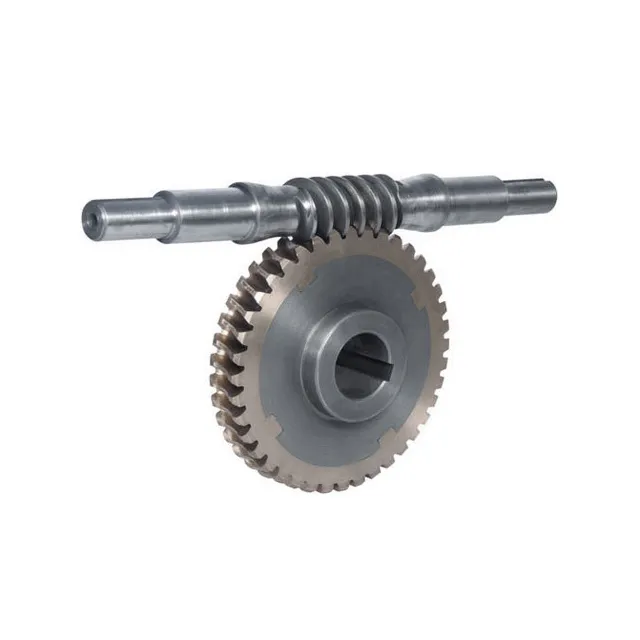
Solution: Regular acoustic monitoring and vibration analysis can catch these anomalies early. When noise exceeds 75 dB(A) at one meter from the motor housing, it’s time to schedule a detailed inspection. Replacing a degraded gear motor before catastrophic failure avoids elevator entrapment and regulatory fines. Raydafon Technology Group Co.,Limited supplies precision‑ground worm gear motors with noise levels kept below 65 dB(A) under full load, thanks to double‑sealed bearings and optimized tooth geometry.
| Sign | Measurement Range | Recommended Action |
|---|---|---|
| Grinding noise | >70 dB(A) continuous | Check gear backlash & lubricant condition |
| Knocking sound | Periodic impulse >80 dB peak | Inspect worm shaft runout; replace if deflection exceeds 0.05 mm |
| High-frequency whine | Frequency 1000‑3000 Hz | Examine bearing preload and oil viscosity |
Pain point scenario: A hotel elevator starts overshooting floors by a few centimeters, causing passengers to stumble. The controller logs frequent speed deviations, but the initial fix—recalibrating the encoder—only masks the underlying problem. Eventually the motor torque drops, revealing severe gear flank wear that reduces transmission accuracy.
Solution: Speed inconsistency often stems from worn gear teeth that change the effective reduction ratio. A healthy worm gear set maintains speed fluctuation within ±2% of nominal. Procurement teams should specify gear motors with case-hardened alloy steel worms and centrifugally cast bronze gears for superior wear resistance. Raydafon’s TRF series gear motors feature a labyrinth seal design and high‑retention lubricant to keep backlash within 0.1° over 20,000 operating hours, ensuring precise floor levelling and passenger comfort.
| Parameter | Healthy Range | Failing Indicator |
|---|---|---|
| Backlash | 0.08° – 0.15° | Exceeds 0.3° when worn |
| Speed deviation | ≤2% of rated rpm | >5% under rated load |
| Positioning accuracy | ±5 mm at landing | ±15 mm or more |
Pain point scenario: A freight elevator in a warehouse repeatedly trips its thermal overload relay during peak shifts. Workers notice a burning smell, and infrared cameras show gearbox surface temperatures climbing above 95°C. Prolonged high heat degrades lubricant and accelerates metal fatigue, leading to sudden lock‑up.
Solution: Overheating is often the final warning before insulation failure in windings or gear scoring. Install temperature sensors and set alarms at 80°C for continuous operation. For replacement, choose gear motors with oversized cooling fins and high‑temperature grease (working range -20°C to +120°C). Raydafon Technology Group Co.,Limited integrates thermal monitoring ports as standard, enabling predictive maintenance and reducing the risk of unplanned downtime.
| Component | Normal Temp (°C) | Critical Temp (°C) |
|---|---|---|
| Gearbox surface | 50 – 70 | >90 |
| Motor winding | 60 – 85 (Class F) | >105 |
| Lubricant sump | 55 – 75 | >90 (oxidation risk) |
Pain point scenario: Passengers in a residential high‑rise complain about sudden jolts during travel. Vibration sensors installed on the motor bracket read velocity amplitudes above 10 mm/s RMS, indicating severe imbalance caused by pitted bearings or a bent output shaft. Left unresolved, the entire traction sheave assembly can become misaligned, requiring a major overhaul.
Solution: Regular vibration trending with ISO 20816-1 guidelines helps predict bearing life. When RMS velocity exceeds 7.1 mm/s, schedule maintenance. Raydafon’s elevator gear motors are dynamically balanced to grade G2.5 and equipped with NSK or SKF tapered roller bearings that maintain vibration below 4 mm/s throughout the service interval, delivering smooth rides even in high‑cycle installations.
| Vibration Level (mm/s RMS) | Condition | Suggested Action |
|---|---|---|
| 0 – 4.5 | Normal | Routine monitoring |
| 4.5 – 7.1 | Alert | Check alignment and balance |
| >7.1 | Critical | Immediate bearing inspection or motor replacement |
Pain point scenario: Puddles of dark, gritty oil appear beneath the gearbox after a long weekend. The oil level in the sight glass has dropped by 20%, and laboratory analysis reveals high iron particle count and water ingress, both of which accelerate gear wear. Once lubrication fails, metal‑on‑metal contact destroys the worm gear within hours.
Solution: Inspect seals, gaskets, and breather plugs quarterly. Use synthetic gear oil with EP (extreme pressure) additives and replace it every 12 months or 2,000 operating hours. Raydafon Technology Group Co.,Limited supplies gear motors with triple‑lip, spring‑loaded seals and magnetic drain plugs that capture metal debris, extending oil life and protecting internal components. Procurement managers can also benefit from our custom‑fitted oil maintenance kits that simplify preventive checks.
| Oil Condition | Appearance | Recommended Interval |
|---|---|---|
| New | Clear amber | Baseline |
| Slightly used | Dark but transparent | Continue monitoring |
| Contaminated | Milky or metallic slurry | Immediate oil change and flush |
A: Subtle signs include slightly increased brake engaging time (delay over 0.3 seconds), a faint ozone smell from overheated windings, and a gradual rise in idle current draw greater than 10% of the nameplate rating. These early indicators are easy to ignore but can be easily tracked with simple clamp-meter checks and monthly log sheets. By the time they become obvious, secondary damage to the controller may have already occurred.
A: Immediate replacement is warranted when you observe visible metal flakes in the gear oil, a sudden drop in insulation resistance below 1 MΩ, or an unmistakable knocking sound that coincides with every revolution of the output sheave. Any of these conditions signals advanced mechanical degradation that cannot be repaired on site. Raydafon Technology Group Co.,Limited offers rapid shipment of pre‑configured gear motor units designed to match common car capacities and roping ratios, ensuring minimal downtime during emergency swaps.
When your elevator’s performance starts to slip, don’t wait for a full system crash. Every whine, every extra degree of heat, and every uneven stop carries a message about the gear motor’s health. By staying ahead of these warnings, you not only protect passenger safety but also optimize your procurement budget with reliable, long‑life components. For technical consultation or to request a sample specification sheet, reach out to our engineering team who can help match the right gear motor to your lift parameters.
At Raydafon Technology Group Co.,Limited, we engineer elevator gear motors that excel in demanding commercial and industrial applications. From our ISO‑certified factory, we deliver worm gear and helical gear drive solutions with power ranges from 2.2 kW to 45 kW, backed by a global support network. Explore our full product line and case studies at https://www.raydafon-power.com. To request a quote or discuss your specific elevator modernization project, email our sales team at [email protected]. We are ready to help you keep every rise smooth and reliable.
Li, Q., & Zhang, Y. (2021). Fault Diagnosis of Worm Gearboxes Using Vibration Signal Processing and Support Vector Machines. Journal of Mechanical Science and Technology, 35(7), 2981–2992.
Chen, X., Wang, R., & Liu, J. (2020). Thermal Runway Prediction in Elevator Traction Motors Using Embedded Temperature Sensors. IEEE Transactions on Industrial Electronics, 67(10), 8519–8528.
Lee, J. H., & Kim, S. (2019). Analysis of Gear Tooth Pitting Propagation in Elevator Drive Systems Under Cyclic Loading. Engineering Failure Analysis, 103, 462–475.
Park, M., & Choi, B. (2022). Lubricant Degradation Monitoring for Condition-Based Maintenance of Elevator Gear Motors. Tribology International, 167, 107420.
Rodriguez, A. M., & Silva, P. (2018). Acoustic Emission Techniques for Early Detection of Worm Gear Failures in Low-Speed Vertical Transportation. Structural Health Monitoring, 17(4), 932–941.
Gao, H., & Wu, Z. (2023). Remaining Useful Life Prediction of Elevator Gear Motors Using Recurrent Neural Networks. Reliability Engineering & System Safety, 235, 109231.
Thompson, D. S., & Evans, R. (2017). Comparative Study of Helical and Worm Gear Reducers for High-Rise Traction Applications. Elevator Technology, 22, 155–164.
Yamamoto, K., & Tanaka, T. (2021). Influence of Micro‑Pitting on Vibration Characteristics of High‑Speed Elevator Gear Units. Precision Engineering, 70, 98–107.
Martinez, L., & Johansson, P. (2020). Oil Debris Sensor Validation for On‑Line Condition Assessment of Industrial Gear Motors. Sensors and Actuators A: Physical, 315, 112290.
Gupta, A., & Sharma, S. (2022). Energy Efficiency and Thermal Performance of Advanced Elevator Gear Motor Designs. Energy Conversion and Management, 260, 115612.