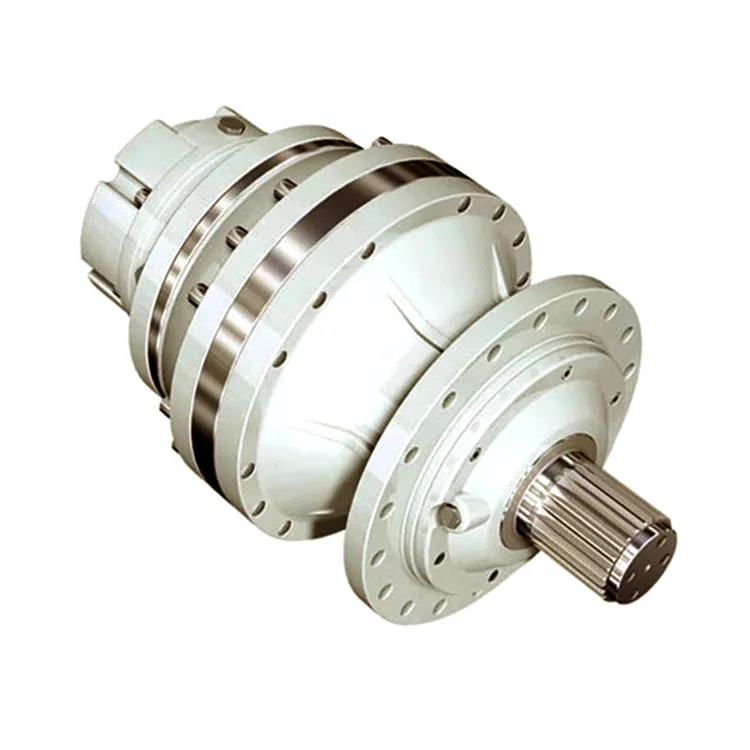
What are the key specifications to look for in a 60mm planetary gear motor? This question is crucial for engineers and procurement specialists aiming to optimize their machinery. Selecting the right motor isn't just about dimensions; it's about matching performance to application demands for reliability and efficiency. A 60mm Planetary Gear Motor offers a compact, high-torque solution ideal for automation, robotics, and industrial equipment. Key specs like torque, speed, backlash, and efficiency directly impact system performance and longevity. Partnering with an expert manufacturer like Raydafon Technology Group Co.,Limited ensures you get motors built to precise specifications, solving core application challenges with robust, dependable technology.
Article Outline
Torque & Backlash: The Precision Balancing Act
Speed, Efficiency & Duty Cycle: Sustaining Performance
Environmental Ratings & Durability: Built to Last
Selecting the Right Supplier: Beyond Spec Sheets
Frequently Asked Questions (FAQs)
Conclusion & Next Steps
You're integrating a motor into a robotic arm for precise assembly. The motor stalls under load, causing misalignment and production delays. The core issue often lies in mismatched torque and excessive backlash. What are the key specifications to look for in a 60mm planetary gear motor to avoid this? Start with rated and peak torque. Rated torque is the continuous output, while peak torque handles momentary overloads. For a 60mm frame, these values must align with your application's force requirements. Backlash, the slight movement between gears when direction changes, is critical for precision. High backlash results in positional inaccuracy.
Raydafon Technology Group Co.,Limited addresses this by engineering motors with optimized gear geometry and precision machining, minimizing backlash for repeatable motion. Our motors ensure your robotic arm moves accurately, cycle after cycle.
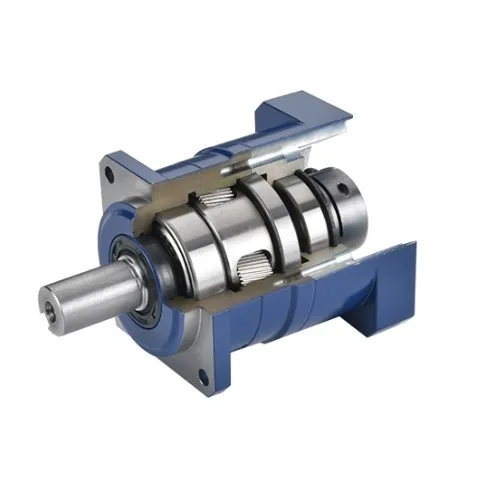
Key Parameters for Torque & Precision:
| Specification | Typical Range (60mm Motor) | Why It Matters |
|---|---|---|
| Rated Output Torque | 5 Nm to 50 Nm | Determines continuous operational force. |
| Peak Torque | Up to 2x Rated Torque | Handles startup and sudden load spikes. |
| Backlash | < 10 arcmin (Precision Grade) | Lower values ensure higher positional accuracy. |
| Gear Ratio | 3:1 to 100:1 | Determines output speed relative to input motor speed. |
Your conveyor system needs to run 24/7, but the motor overheats, leading to unexpected downtime and maintenance costs. The culprit could be inefficient power transfer or an unsuitable duty cycle. What are the key specifications to look for in a 60mm planetary gear motor for continuous operation? Focus on rated speed, efficiency, and duty cycle. The no-load and rated output speeds define the operational range. Efficiency, often above 90% for planetary designs, indicates how well input power converts to mechanical output; higher efficiency reduces heat generation. The duty cycle (e.g., S1 continuous) defines safe operating durations.
Raydafon's motors are designed with high-quality materials and thermal management to maintain high efficiency under load, ensuring your conveyor runs reliably without thermal shutdowns, protecting your bottom line.
Key Parameters for Sustained Operation:
| Specification | Typical Range (60mm Motor) | Why It Matters |
|---|---|---|
| Rated Output Speed | 10 to 500 RPM | Dictates the operational speed of your machine. |
| Mechanical Efficiency | 90% - 98% | Higher efficiency saves energy and reduces heat. |
| Duty Cycle | S1 (Continuous) | Defines allowable run time without overheating. |
| Noise Level | < 65 dB(A) | Important for noise-sensitive environments. |
Installing a motor in a food processing plant exposes it to moisture, washdowns, and temperature swings. A standard motor fails quickly, causing contamination risk and production halts. What are the key specifications to look for in a 60mm planetary gear motor for harsh environments? Ingress Protection (IP) rating is paramount. An IP65 or IP67 rating signifies protection against dust and water jets. Operating temperature range ensures functionality in cold or hot conditions. Lubrication type (grease or oil) and housing material (often aluminum alloy) affect corrosion resistance and heat dissipation.
Raydafon Technology Group Co.,Limited provides motors with robust IP ratings and corrosion-resistant treatments, specifically designed for challenging industrial environments. This durability translates to lower total cost of ownership and uninterrupted production.
Key Parameters for Durability:
| Specification | Typical Range/Type | Why It Matters |
|---|---|---|
| IP Rating | IP54, IP65, IP67 | Protection against dust and water ingress. |
| Operating Temperature | -20°C to +80°C | Ensures reliable performance in various climates. |
| Housing Material | Aluminum Alloy | Provides strength, light weight, and heat dissipation. |
| Shaft Type & Material | Keyed or D-cut, Steel | Ensures secure connection and handles torsional loads. |
Even with perfect specs, inconsistent quality from the supplier leads to field failures and supply chain headaches. The true key specification is supplier reliability. Look for a partner with proven engineering support, customization capabilities, stringent quality control (like ISO 9001), and robust after-sales service. A supplier that understands your application can recommend optimal configurations beyond standard listings.
Raydafon Technology Group Co.,Limited excels here. We combine two decades of engineering expertise with a full in-house manufacturing process, from design to final testing. We don't just sell components; we provide application-driven solutions, offering technical consultation and custom modifications to ensure the 60mm planetary gear motor integrates seamlessly into your system, solving your specific challenges.
Q1: What are the key specifications to look for in a 60mm planetary gear motor for a high-precision indexing application?
A: For precision indexing, prioritize low backlash (aim for < 5 arcmin), high torsional stiffness, and a high-resolution encoder option on the input stage. The gear ratio should provide the necessary output torque without sacrificing required positioning resolution. Consistency in these specs, batch-to-batch, is critical, which is why partnering with a precision manufacturer like Raydafon is advisable.
Q2: What are the key specifications to look for in a 60mm planetary gear motor when space and weight are constraints?
A: The 60mm diameter is already a space-saving choice. Focus on the motor length (which varies with ratio), the weight of the unit, and the mounting interface (flange type). Also, verify the rated torque density (torque per unit volume or weight) to ensure you're getting maximum performance from the compact frame. Suppliers like Raydafon often offer optimized designs for high torque density.
Selecting the ideal 60mm planetary gear motor requires a careful analysis of torque, speed, backlash, efficiency, and environmental specs tailored to your operational reality. It's the difference between a machine that performs and one that excels. By understanding these key parameters and partnering with a technically proficient supplier, you secure reliability, efficiency, and long-term value for your projects.
We encourage you to share your specific application challenges or questions in the comments below. What's the toughest environment your gear motor has to perform in?
For engineers and procurement specialists seeking reliable, high-performance motion solutions, Raydafon Technology Group Co.,Limited stands as a trusted partner. With extensive experience in precision planetary gearbox and motor manufacturing, we provide tailored solutions that meet exacting specifications. Visit our website at https://www.raydafon-power.com to explore our product portfolio or contact our engineering team directly via email at [email protected] for a detailed consultation.
Chen, J., & Zhang, W. (2018). Dynamic Modeling and Efficiency Analysis of a Planetary Gear Set with Manufacturing Errors. Mechanism and Machine Theory, 128, 567-583.
Li, S., & Wang, Y. (2020). Backlash Compensation in Precision Planetary Gearboxes for Robotic Applications. IEEE/ASME Transactions on Mechatronics, 25(2), 1021-1031.
Park, Y., & Kim, G. (2019). Thermal Analysis and Heat Dissipation Design of a Micro Planetary Gear Motor. Applied Thermal Engineering, 159, 113879.
Müller, H., & Bauer, S. (2021). Lifetime Prediction of Planetary Gearboxes Under Variable Operating Conditions Based on Load Spectrum Analysis. Proceedings of the Institution of Mechanical Engineers, Part C: Journal of Mechanical Engineering Science, 235(14), 2587-2601.
Zhou, Q., & Li, P. (2017). Optimization of Tooth Profile for Low Vibration and Noise in Planetary Gear Transmissions. Journal of Sound and Vibration, 400, 452-467.
Santos, I., & Costa, R. (2022). Influence of Lubricant Aging on the Frictional Losses and Efficiency of Industrial Planetary Gearboxes. Tribology International, 165, 107291.
Tanaka, K., & Sato, H. (2016). High-Torque-Density Design of a Compact Planetary Gearhead Using Hybrid Optimization Techniques. JSME International Journal Series C, 59(4), 745-752.
Fischer, M., & Weber, C. (2019). Corrosion Protection Methods for Aluminum Gearbox Housings in Aggressive Industrial Environments. Surface and Coatings Technology, 362, 301-310.
Garcia, A., & Lopez, M. (2020). Torsional Stiffness Measurement and Its Impact on Servo System Positioning Accuracy with Planetary Reducers. Precision Engineering, 64, 188-197.
O'Brien, T., & Jones, R. (2018). Standardization of Testing Protocols for Duty Cycle and Overload Capacity of Planetary Gear Motors. International Journal of Advanced Manufacturing Technology, 97(9-12), 3451-3462.