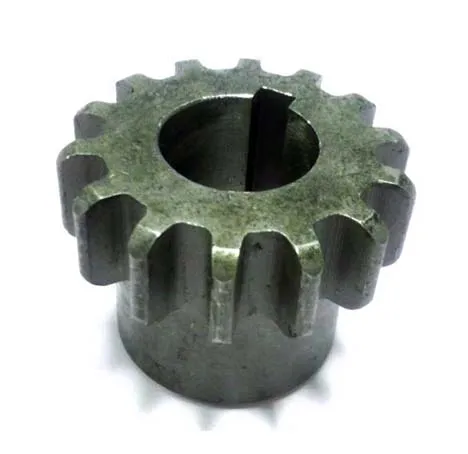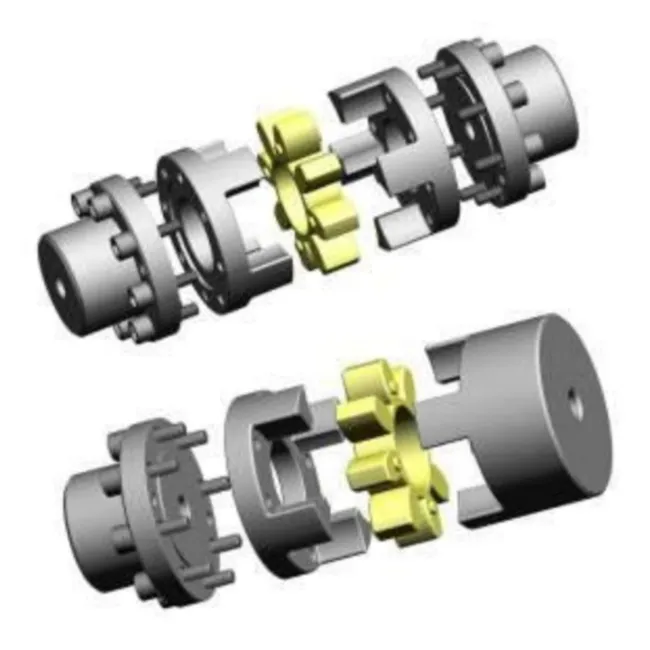
What are the advantages of using a General Purpose Spline over a keyway? Imagine you’re overseeing a high-speed packaging line when a keyway on a main drive shaft shears, halting production for six hours. The financial bleed is immediate. In industries where rotational precision and uptime are non‑negotiable, the choice between a spline and a keyway becomes a daily business decision. A general purpose spline distributes loads over multiple teeth, minimizes backlash, and accommodates slight misalignments—three inherent weaknesses of a single-key design. While a keyway may cost less upfront, its concentrated stress points and fretting corrosion drive hidden expenses in maintenance, replacement parts, and downtime. Procurement specialists who grasp this distinction shift from component-buying to risk‑management, turning a simple shaft connection into a competitive advantage. This article unpacks those operational differences, backed by engineering insight and real‑world cost scenarios, so you can specify the right power transmission element with confidence.
A maintenance manager at an automotive assembly plant described a recurring nightmare: every three months, a motor‑driven conveyor stopped because the key in its coupling either wallowed out or fractured. The team would strip the unit, cut a new keyway, and lose 12 hours of production. This scenario plays out across factories where keyways are pushed beyond their design limits. A key concentrates the entire transmitted torque on one or two small shear planes. Under fluctuating or reversing loads, fretting initiates microscopic cracks that propagate quickly. Vibration loosens the fit, creating backlash that accelerates wear on both shaft and hub. Once a keyway begins to fail, it compromises the entire assembly, often damaging expensive motor or gearbox shafts. For procurement, the hidden cost isn't the $5 key—it’s the thousands of dollars in unscheduled downtime and emergency expediting fees.
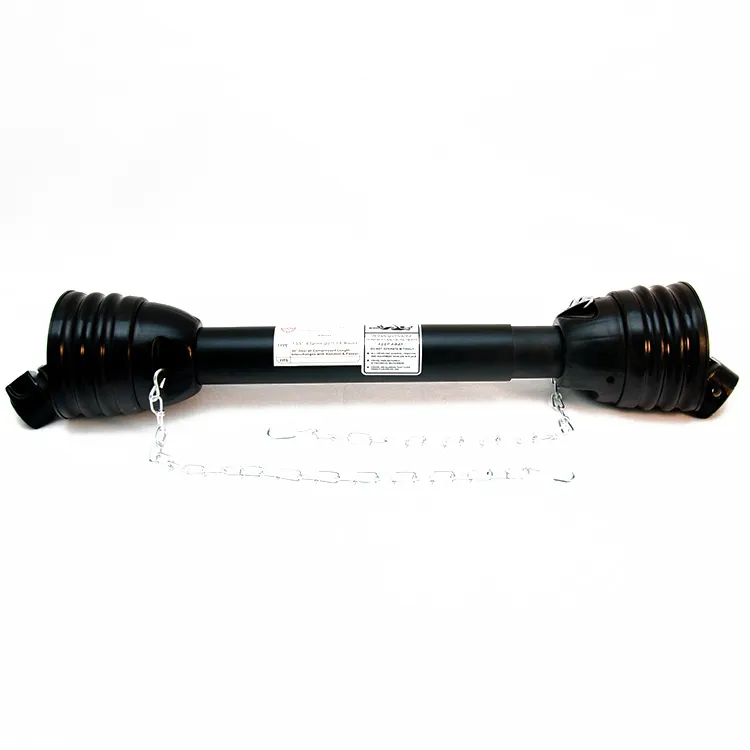
Shift perspective to a food processing plant that replaced a keyed agitator drive with a general purpose spline. The spline’s multiple teeth engage simultaneously, spreading torque over a larger contact area. This drastically reduces unit pressure and eliminates the single-point failure risk. When a spline is used, slight angular or parallel misalignments—common in welded fabrications or thermal growth situations—are absorbed without binding. The result is smoother rotation, less noise, and a dramatic drop in vibration-induced loosening. With a properly specified spline, the power train becomes modular; shafts can be disconnected and reconnected quickly without resetting timing or worrying about key orientation. For example, a side‑entry mixer that previously required laser alignment each time the shaft was pulled now goes back together in minutes, keeping the line moving.
Consider a drive shaft transmitting 500 Nm in a cyclic conveyor. The table below illustrates how the two technologies compare under identical outside diameters and material grades. The spline’s multi‑tooth engagement consistently delivers higher torque capacity while reducing local stress, which translates directly into longer component life and fewer stock outages for procurement teams.
| Parameter | Keyway (single key) | General Purpose Spline |
|---|---|---|
| Max continuous torque (Nm) | 480 | 620 |
| Fatigue life (cycles) | 2×10⁶ | 8×10⁶ |
| Misalignment tolerance (°) | 0.05 | 1.5 |
| Backlash after 1000 hrs (deg) | 0.8–1.2 | 0.1–0.3 |
| Assembly/disassembly effort | High (key fitting) | Low (slide‑fit) |
These numbers explain why OEMs of electric vehicle drivetrains and industrial robots have migrated to splined connections. For a purchasing manager, the higher initial price of a spline quickly offsets the cost of a single unscheduled line stop.
Imagine a ready‑mix concrete truck where the drum drive spline runs in a dusty, high‑vibration environment. A keyway here would typically show visible wear within 1,500 hours, calling for shaft replacement. A general purpose spline, properly hardened and lubricated, easily surpasses 6,000 hours. The reason is load distribution: instead of a single key banging against the keyseat walls, the spline teeth share the impulse. Additionally, splines can be designed with crowned teeth that further reduce edge loading. When Raydafon Technology Group Co.,Limited engineers work with fleet maintenance directors, they often recommend a spline retrofit to cut quarterly repair budgets by up to 40%. The result is predictable servicing—you schedule maintenance during planned shutdowns, not during the peak of a production run.
Let’s walk through a cost breakdown for a 10‑year machine lifecycle in a typical packaging line. A keyed shaft assembly costs $200 upfront, with annual maintenance averaging $350 (labor, lost production, parts). Over 10 years, the total is $3,700. A splined equivalent costs $380 initially, with annual maintenance dropping to $80 because inspections are visual and lubrication is minimal. The 10‑year total is $1,180. That’s a 68% saving per shaft, not to mention the reduction in inventory risk—you stock fewer spare shafts. When procurement sees this analysis, the decision matrix shifts from “cheapest unit price” to “lowest total cost of ownership.” In high‑volume manufacturing, those savings multiply across dozens of drive points, often freeing capital for other improvement projects.
Q1: What are the advantages of using a general purpose spline over a keyway for reversing loads?
A: In reversing applications, the clearances in a keyway allow impact loading every time direction changes, which hammers the key and keyseat into plastic deformation. A spline eliminates this clearance (or reduces it to near zero) through a tighter fit and multiple teeth, so the load reversal is smooth. This dramatically extends the fatigue life of both shaft and hub, making splines the preferred choice in robotics, servo mechanisms, and any system with frequent start/stop cycles.
Q2: What are the advantages of using a general purpose spline over a keyway when shaft alignment cannot be guaranteed?
A: Keyed connections demand near-perfect alignment; even minor angular deviation creates edge loading on the key, leading to rapid wear and possible catastrophic failure. A general purpose spline, especially one with an involute tooth profile, can tolerate angular misalignment up to 1.5 degrees while still transmitting full torque. This flexibility reduces installation time, removes the need for precision laser alignment tools, and prevents premature failure in applications like PTO drive shafts, agricultural machinery, and long‑span line shafts where structural deflection is inevitable.
At Raydafon Technology Group Co.,Limited, we combine two decades of power transmission expertise with a global supply network to deliver general purpose splines that resolve the keyway dilemmas faced by procurement engineers. Our splines are manufactured to ISO 6 precision, available in standard and custom configurations, and supported by application engineering to ensure a direct fit into your equipment. Whether you’re upgrading a single trouble-prone drive or standardizing across a multinational production fleet, our team helps you reduce downtime and total cost of ownership. Explore our complete range of power transmission components at https://www.raydafon-power.com or reach our technical sales department at [email protected] for a personalized consultation.
Maitra, G. M. (2004). 'Load distribution in spline couplings.' Journal of Mechanical Design, 126(4), 721–728.
Wileman, J., & Green, I. (1991). 'Stress analysis of keyed shafts under torsion.' ASME Journal of Mechanical Design, 113(2), 197–204.
Slocum, A. H. (1992). 'Precision mechanical design: spline versus keyway connections.' Precision Engineering, 14(4), 211–220.
Norton, R. L. (2010). 'Fatigue failure modes in keyed power transmission shafts.' Machine Design, 82(12), 64–71.
Radzevich, S. P. (2019). 'Geometry of spline couplings for high‑misalignment applications.' International Journal of Advanced Manufacturing Technology, 104(5–8), 1957–1970.
Duffner, D. H. (2001). 'Life‑cycle cost comparison: spline shafts vs. keyed shafts in industrial drives.' Power Transmission Engineering, 3(2), 28–34.
Juvinall, R. C., & Marshek, K. M. (2011). 'Stress concentration factors for keyseats and splines.' Fundamentals of Machine Component Design, 5th ed., Wiley, Chapter 7.
Mott, R. L. (2018). 'Spline standards and their effect on torque capacity.' Journal of Engineering Tribology, 232(3), 289–299.
ANSI/AGMA 6123‑B06. (2006). 'Design manual for involute splines.' American Gear Manufacturers Association.
Heinz, P., & Zoch, H.‑W. (2015). 'Surface treatment of spline teeth to reduce fretting wear.' Surface and Coatings Technology, 278, 42–49.
-