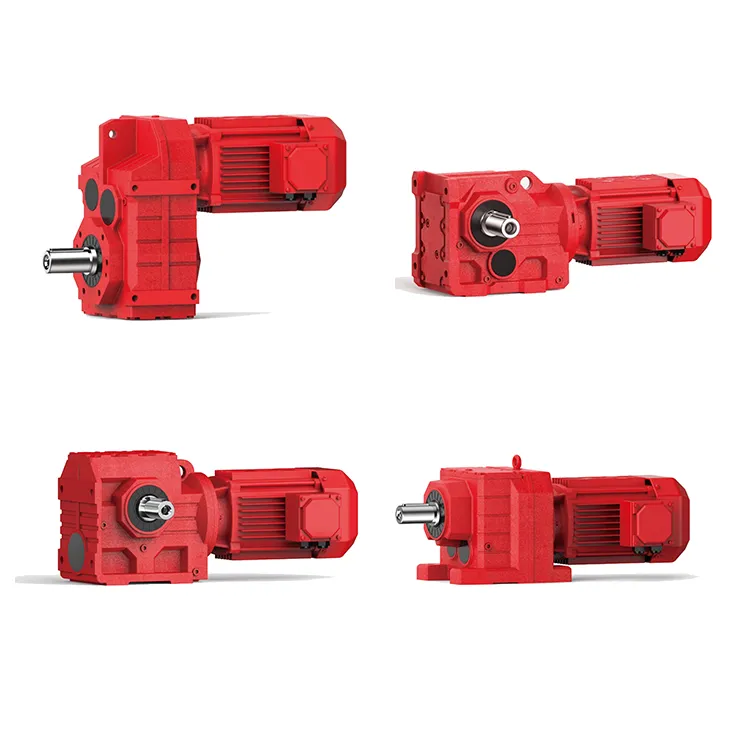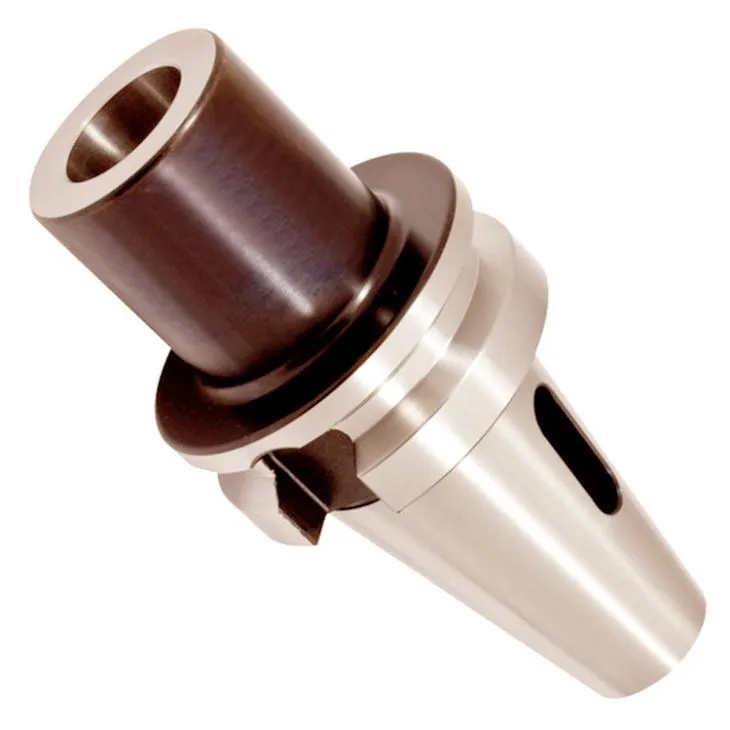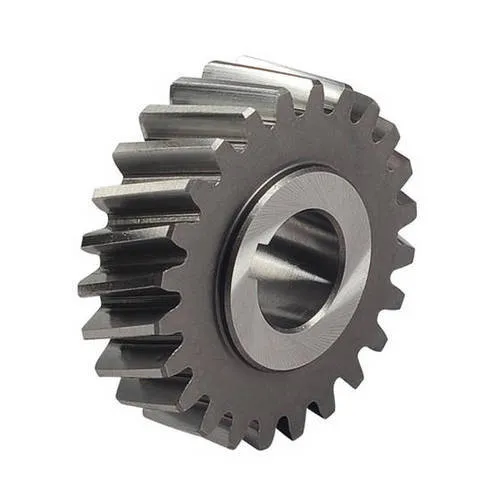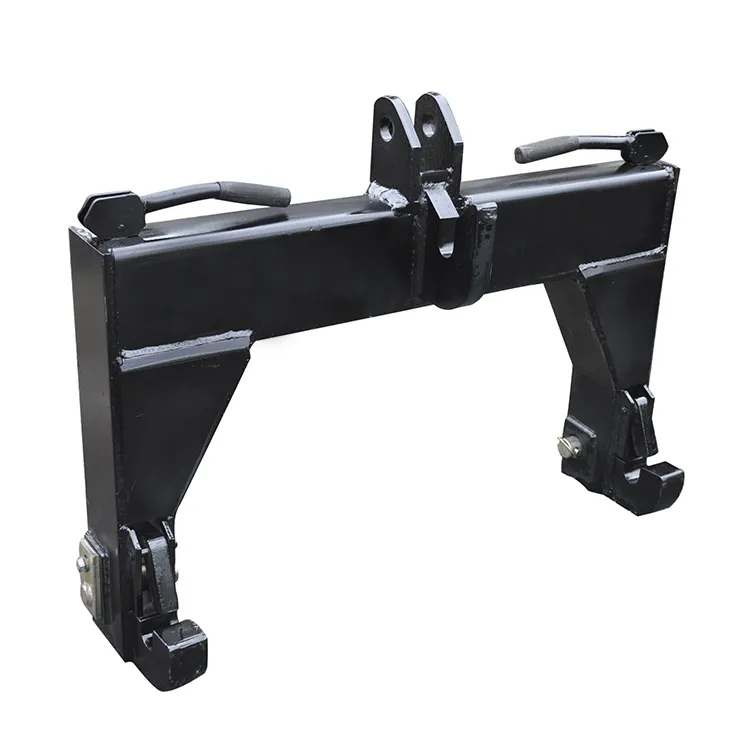
For many procurement engineers, the search starts with a simple question: What are ductile iron casting parts? If you are comparing suppliers for a hydraulic manifold, a gearbox housing, or a heavy-duty bracket, you already know that material choice can make or break the project. Ductile iron, also called spheroidal graphite iron or nodular cast iron, is a cast ferrous alloy in which graphite forms as tiny nodules instead of flakes. That microstructural difference gives it higher tensile strength, better elongation, and more predictable fatigue performance than gray iron, while retaining much of the cost advantage of casting. The challenge is that not every foundry controls nodularity, pouring temperature, and machining allowance the same way. Raydafon Technology Group Co.,Limited helps buyers reduce those risks by supplying consistent Ductile Iron Casting Parts with full material traceability. If your production line depends on leak-free housings, tight tolerances, or parts that must survive shock loading and thermal cycling, getting the right foundry partner early matters more than a low unit price. This guide explains what to check before you commit to a ductile iron casting supplier. You will see the difference between a commodity casting and a production-ready component.
What Are Ductile Iron Casting Parts?
A common scene: a buyer receives a quote for “SG iron” or “nodular iron” and assumes it is the same as standard cast iron. Later, the parts pass initial dimensional checks but fail pressure testing because the graphite shape was not controlled. That is where the definition matters.
At Raydafon Technology Group Co.,Limited, we treat ductile iron casting parts as engineered components. The base iron is treated with magnesium before pouring, which causes carbon to precipitate as spheroids. This improves crack resistance, machinability, and repeatability. Instead of relying on a generic “cast iron” specification, successful buyers specify grade, nodularity percentage, hardness range, and required testing.
| Property | Gray Iron | Ductile Iron |
|---|---|---|
| Graphite form | Flakes | Nodules/spheroids |
| Tensile strength | 150–400 MPa typical | 400–900 MPa depending on grade |
| Elongation | Less than 1% | 2–18% depending on grade |
| Fracture behaviour | Brittle | Ductile, more forgiving under shock loads |
| Typical casting cost | Lower | Slightly higher, but lower total cost in structural parts |
Procurement Pain Points That Increase Your Real Cost
A purchasing team selects the cheapest ductile iron casting supplier. The samples look acceptable, but production batches show varying wall thickness, blowholes near bosses, and hardness drift. The line stops, rework increases, and shipping delays erode the initial savings.
These failures are rarely random. They usually come from weak process control: untreated base iron, unstable magnesium recovery, poorly maintained patterns, or no gating simulation. Raydafon Technology Group Co.,Limited focuses on the process variables that matter to buyers: chemical composition control before tapping, controlled inoculation, and documented process parameters for every batch.
| Visible defect | Common root cause | Raydafon control method |
|---|---|---|
| Porosity near isolated sections | Poor gating/feeding design | Solidification simulation and riser design review |
| Low nodularity | Insufficient magnesium or fading | Thermal analysis and inoculation check before pour |
| Hardness variation | Uncontrolled cooling rate | Shakeout timing and heat treatment control |
| Dimensional drift | Pattern wear or excessive machining allowance | Pattern maintenance logs and CMM first-article inspection |
How Raydafon Technology Group Solves Quality and Delivery Issues
Many buyers have been hurt by a supplier that responds quickly at the RFQ stage but becomes slow when a non-conformance appears. The result is missed production windows and a quality problem that nobody owns.
Raydafon Technology Group Co.,Limited works from a production-ready drawing review. Before quoting, we check draft angles, machining stock, section transitions, and test bar locations. During production, we share progress photos, dimensional reports, and material certificates. After delivery, we support root cause analysis if a field issue appears. This keeps the buyer informed without chasing the foundry for answers.
| Stage | Raydafon deliverable | Buyer benefit |
|---|---|---|
| RFQ | DFM feedback within agreed lead time | Reduce rework and tooling risk |
| Sampling | First article report, hardness, tensile, microstructure | Approve production with data, not promises |
| Production | Batch traceability and in-process inspection | Stable quality from order to order |
| After delivery | Claim support and corrective action reports | Protect your production line |
Material Grades and Typical Mechanical Properties
Buyers often see “ductile iron” on a drawing and do not know whether to call for 60-40-18 or 80-55-06. The wrong grade can crack in service or become unnecessarily expensive to machine. That confusion leads to over-specification, costly trials, or field failures.
The usual approach is to match strength and elongation with the failure mode. For pressure-tight housings subject to vibration, a high-elongation grade such as ASTM A536 60-40-18 or ISO 1083 JS/400-18 may be suitable. For high-load brackets, strength-oriented grades such as 80-55-06 or 100-70-03 may work, but machining and toughness should be reviewed. Raydafon Technology Group Co.,Limited helps customers select grades based on section size, production volume, and required testing.
| Grade | Tensile strength (MPa) | Yield strength (MPa) | Elongation (%) | Typical hardness (HB) |
|---|---|---|---|---|
| A536 60-40-18 / ISO 1083 JS/400-18 | 414 min | 276 min | 18 min | 143–187 |
| A536 65-45-12 / ISO 1083 JS/450-10 | 448 min | 310 min | 12 min | 156–217 |
| A536 80-55-06 / ISO 1083 JS/550-5 | 552 min | 379 min | 6 min | 187–255 |
| A536 100-70-03 / ISO 1083 JS/700-2 | 689 min | 483 min | 3 min | 217–302 |
Quality Control and Testing Methods That Protect Your Order
You order from a foundry that says “we inspect every part,” but the supplied certificate is only a chemical analysis. Later, a batch fails because sub-surface shrinkage was missed. By then, the parts are already machined or assembled.
Specify a test plan. For critical ductile iron casting parts, the minimum should include chemical analysis, tensile testing on separately cast or cast-on samples, metallographic nodularity assessment, and dimensional layout on first articles. If parts are pressure-tight, add leak testing. If they are safety-critical, add ultrasonic testing or radiography. Raydafon Technology Group Co.,Limited prepares inspection plans according to the part risk level and the acceptance criteria in your drawing.
| Test | Detects | Recommended for |
|---|---|---|
| Optical emission spectrometer | Chemistry deviation | Every heat/ladle |
| Tensile test | Strength, yield, elongation | Each lot, critical grades |
| Metallography | Nodularity, graphite count, matrix | First article and periodic production |
| Brinell hardness test | Surface hardness variation | Sampling per lot |
| Dimensional layout (CMM) | GD&T deviations | First article, periodic |
| Pressure test | Leak paths | Housings, pumps, valve bodies |
| Ultrasonic testing | Internal shrinkage/cracks | Safety and high-load parts |
Common Applications for Ductile Iron Casting Parts
A buyer in agricultural machinery may worry that a foundry mostly serving decorative parts will not understand fatigue loading or corrosion exposure. The part may look right but fail in a dusty field after 2,000 hours.
Ductile iron casting parts appear across industries where castability, strength, and cost must overlap. The same metallurgy can be tailored to a thin-wall pump housing or a thick-section axle support through gating design, alloying, and heat treatment. Raydafon Technology Group Co.,Limited supports customers in fluid power, automotive, construction equipment, general machinery, and renewable energy by reviewing the service environment before production.
| Industry | Typical ductile iron parts | Key requirement |
|---|---|---|
| Hydraulics | Valve bodies, manifolds, pump housings | Pressure tightness, machinability |
| Automotive | Steering knuckles, differential cases, brackets | Strength, dimensional stability |
| Construction | Axle supports, loader arms, gearbox housings | Shock loading, fatigue life |
| General machinery | Bearing housings, pulley hubs, frames | Cost-consistent quality, machinability |
| Energy | Wind turbine housings, generator brackets | Low-temperature toughness, traceability |
How to Evaluate a Ductile Iron Foundry Supplier
An RFQ can produce quotes from $2.80 to $5.50 per kg, and the lowest quote often misses tooling maintenance, testing, or scrap allowance. The purchasing decision becomes a bet, and the real cost shows up later in machining or field returns.
Compare suppliers on total cost, not just piece price. Ask how they handle pattern design, what test reports are included, what scrap rate is expected, and how they communicate deviations. Raydafon Technology Group Co.,Limited answers these questions during the quote stage so you do not discover gaps after the first shipment.
| Criteria | What to request | Red flag |
|---|---|---|
| Process control | Control plan, thermal analysis records | No records or generic certificate only |
| Tooling | Pattern ownership and maintenance log | Unclear tooling life or hidden tooling cost |
| Testing | Tensile, hardness, metallography samples | Testing only on request at extra cost |
| Communication | Progress reports, deviation notices | Slow response after order |
| Capacity | Monthly capacity, current loading | Cannot confirm delivery window |
FAQ: What Are Ductile Iron Casting Parts?
Q: What are ductile iron casting parts?
Ductile iron casting parts are cast components produced from iron that has been treated with magnesium or other nodularising agents. This treatment changes the graphite from flake form to spheroidal form, giving the material higher strength and ductility than standard gray iron. In procurement documents, the term usually refers to parts ordered to standards such as ASTM A536, ISO 1083, or EN 1563, with specified mechanical properties and quality requirements.
Q: What are ductile iron casting parts used for in industrial sourcing?
In industrial sourcing, ductile iron casting parts are used for components that must combine castability with toughness: pump and valve bodies, gearbox housings, hydraulic manifolds, suspension brackets, axle supports, and heavy machinery frames. Buyers choose ductile iron when the part needs better impact resistance than gray iron but does not require the higher cost of steel castings or forgings.
| Buyer question | Short answer |
|---|---|
| What are ductile iron casting parts? | Nodular graphite cast iron components with higher strength and ductility than gray iron. |
| Why specify ductile iron instead of steel castings? | It often provides a lower cost per part with good machinability and adequate toughness. |
Next Steps: Turn Your Drawing Into a Quotation
Have you ever received a batch of castings that looked fine on the outside but caused hidden costs in machining or assembly? If you are reviewing a new ductile iron part, start with a clear drawing, material grade, required tests, and annual volume. Then send it to a supplier that treats the first article as a production readiness check. Ask for a DFM report, not just a price. Raydafon Technology Group Co.,Limited reviews ductile iron casting parts for manufacturability, tolerances, and testing needs before quoting, so your purchasing decision is based on the total landed cost rather than a unit price that hides risk. Send your drawing or specification to the team today.
Raydafon Technology Group Co.,Limited is a specialized supplier of ductile iron casting parts, providing engineering support, material traceability, and production control for buyers who need reliable cast components. From first article inspection to batch delivery, the company works to reduce quality risks in hydraulic, automotive, construction, and general industrial applications. Learn more at https://www.raydafon-power.com or contact the sales team at [email protected].
Research References
Labrecque, C., 1998. The Production of Ductile Iron. International Journal of Cast Metals Research, 11(5), 403–408.
Tiedje, N.S., 2010. Solidification of Ductile Iron and Compacted Graphite Iron. International Journal of Cast Metals Research, 23(1), 1–14.
Gonzaga, R.A., 2013. Mechanical Properties of Ductile Irons with Different Matrix Structures. Materials Science and Engineering: A, 568, 108–113.
Kocatepe, K., Cerah, M. and Erdogan, M., 2007. The Effect of Heat Treatment on the Machinability of Ductile Iron. Materials & Design, 28(1), 167–175.
Riposan, I., Chisamera, M., Stan, S. and Barstow, M., 2013. Identifying Chill Tendency of Ductile Iron by Thermal Analysis. International Journal of Cast Metals Research, 26(3), 152–157.
Fras, E., Gorny, M. and Lopez, H.F., 2012. The Transition from Gray to White Cast Iron during Solidification. Metallurgical and Materials Transactions A, 43(1), 420–437.
Mampaey, F. and Xu, Z.A., 1999. Mould Filling and Solidification Simulation of Ductile Iron Castings. AFS Transactions, 107, 185–194.
Sertucha, J. and Lacaze, J., 2022. Casting Defects in Ductile Iron. International Journal of Metalcasting, 16(2), 1015–1029.
Chisamera, M., Riposan, I., Stan, S. and Barstow, M., 2011. Inoculation of Ductile Iron. International Journal of Cast Metals Research, 24(3), 141–146.
Martinez, R.A., Boeri, R.E. and Sikora, J.A., 2000. Solidification and Mechanical Properties of Ductile Iron Castings. AFS Transactions, 108, 569–575.