Picture this: It is 7:30 a.m. on a Monday, and one of your installation crews just called. A sliding gate they mounted six months ago has started grinding against the track, the wheel assembly is showing visible wear, and the client is demanding answers. You originally chose a Gate Wheel system because the sales literature promised smooth operation and easy installation. Now you are staring at a maintenance headache and wondering whether a cantilever roller configuration would have been the smarter long-term choice. This exact scenario plays out across warehouses, industrial compounds, and commercial properties every single day. The question that procurement managers, contractors, and facility operators keep asking is straightforward: Gate wheel vs. cantilever roller: which is better for my gate? The answer is not a simple either-or proposition. It depends on load distribution, ground conditions, space constraints, and how much maintenance your team is willing to tolerate over a ten-year lifecycle. Making the wrong choice means accelerated wear, safety risks, and replacement costs that can easily exceed your initial hardware budget by a factor of three. Making the right choice means a gate system that operates quietly, handles daily cycles without complaint, and keeps your maintenance team focused on higher-value tasks. In the following sections, we will break down exactly how these two mechanisms differ, where each one excels, where each one fails, and how to evaluate them against the specific demands of your gate installation.
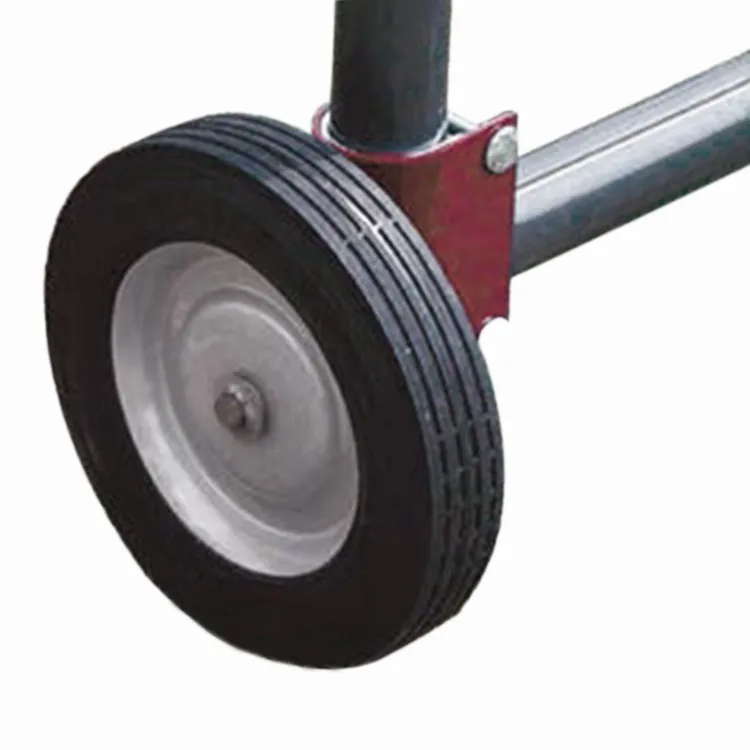
Before diving into the comparison, you need to understand what physically happens when a sliding gate moves. A gate panel, whether it weighs 200 kilograms or 2,000 kilograms, requires a support mechanism that handles vertical load while allowing horizontal translation with minimal friction. The gate wheel approach mounts load-bearing wheels at the bottom of the gate panel. These wheels ride along a ground-mounted track, transferring the entire weight of the gate downward into the track and foundation. A top guide rail keeps the panel from tipping but carries negligible vertical load. In contrast, a cantilever roller system suspends the gate panel from a pair of roller carriages mounted on a side frame or support post. The panel essentially hangs, with rollers bearing against the inside of a C-channel or box track. No ground track exists, and no wheels touch the floor. This fundamental difference in load path creates cascading effects on everything from foundation requirements to debris tolerance. Understanding this distinction is the starting point for evaluating Gate wheel vs. cantilever roller: which is better for my gate? in any real-world installation. When specifiers overlook the load path difference, they often inherit problems that no amount of routine lubrication can fix.
Imagine a distribution center in the Midwest during February. Snowplows push slush and gravel against the gate track every morning. By 10:00 a.m., the temperature rises just enough to melt the top layer, then drops again at night, freezing debris into solid chunks wedged between the wheel and the rail. The gate operator strains against the obstruction, the motor draws higher current, and the wheel bearings take a beating. This is not an extreme scenario; it is ordinary winter operation for any facility north of the 40th parallel. Gate wheel systems, by design, place the load-bearing components directly in the path of ground-level contamination. Dirt, ice, sand, small stones, and general debris accumulate on the track. Even with regular sweeping, the wheel flanges gradually wear, the rolling surface develops flat spots, and the track itself can corrode or deform. In coastal environments, salt spray accelerates corrosion on both the wheel assembly and the track fasteners. The solution path typically involves upgrading to sealed stainless-steel bearings, specifying a galvanized or epoxy-coated track, and implementing a documented quarterly inspection routine. However, these mitigations add cost and labor that procurement teams often fail to include in their total cost of ownership calculations at the specification stage. When Raydafon Technology Group Co.,Limited consults with buyers facing these conditions, our engineers routinely recommend evaluating whether the gate location truly requires a ground-supported system or whether a cantilever design would eliminate the contamination exposure entirely.
Now picture a different setting: a pharmaceutical manufacturing plant with a 1,600-kilogram sliding gate that must operate 80 cycles per day. The facility has a strict no-debris policy, and the loading dock area is kept meticulously clean. A gate wheel system seems feasible until you examine the track foundation requirements. Supporting 1,600 kilograms on two small wheels means point loads that demand a reinforced concrete footing extending below the frost line. The cantilever alternative changes the equation. By hanging the gate from roller carriages mounted on a structural steel post, the vertical loads travel down through the post into a single concentrated foundation. The rollers themselves are typically larger in diameter than gate wheels, spreading the contact stress over a greater bearing surface area. This configuration excels when the gate must span an opening where ground conditions are poor, where drainage issues would submerge a bottom track, or where cleanliness requirements prohibit ground-level obstructions. However, cantilever systems are not without their own failure modes. The cantilever frame must resist bending deflection under full gate weight, and the roller carriages require precise alignment during installation. A misaligned carriage set causes the gate to bind, transferring lateral forces into the support structure that can fatigue welds over thousands of cycles.
| Parameter | Gate Wheel System | Cantilever Roller System |
|---|---|---|
| Typical load range | 100 kg – 1,500 kg | 200 kg – 3,000+ kg |
| Ground track required | Yes, load-bearing | No ground track |
| Debris tolerance | Low; track must stay clean | High; rollers are elevated |
| Foundation complexity | Continuous track footing | Single post footing |
| Icing vulnerability | High | Minimal |
| Installation alignment tolerance | Moderate | Tight |
| Maintenance access | Ground level, easy | Elevated, may need ladder |
Procurement professionals need hard numbers before making a specification recommendation. The table above provides a starting framework, but real-world selection requires deeper analysis. Gate wheel assemblies typically use polyurethane or cast nylon wheels with ball bearings rated for dynamic loads between 300 and 800 kilograms per wheel. In a two-wheel configuration, total system capacity reaches roughly 1,500 kilograms before you must move to a four-wheel bogie arrangement. Cantilever rollers, by contrast, often utilize tapered roller bearings or spherical roller bearings housed in machined steel carriages, with individual roller dynamic load ratings frequently exceeding 1,200 kilograms. When a buyer at Raydafon Technology Group Co.,Limited asks us Gate wheel vs. cantilever roller: which is better for my gate?, we walk through parameters including gate mass, daily cycle count, wind exposure, site drainage, and available space for the cantilever counter-frame. In one recent consultation, a logistics company was specifying gates for a new cross-dock facility in Seattle where annual rainfall exceeds 900 millimeters. Ground track drainage became the decisive factor that pushed the specification toward cantilever rollers, eliminating the need for trench drains along the gate path and saving an estimated $4,200 per gate in civil works.
| Cost Factor | Gate Wheel System | Cantilever Roller System |
|---|---|---|
| Initial hardware cost (per gate) | $180 – $600 | $350 – $1,200 |
| Track and foundation cost | $800 – $2,500 | $400 – $1,500 |
| Annual maintenance labor (hours) | 12 – 20 | 4 – 8 |
| Expected bearing life (cycles) | 50,000 – 100,000 | 100,000 – 250,000 |
| Replacement part cost at year 7 | $120 – $400 | $80 – $250 |
| 10-year total cost of ownership | $2,200 – $5,800 | $1,400 – $3,900 |
Installation quality determines whether a well-specified system performs reliably or becomes a recurring problem. Gate wheel installations appear deceptively simple: pour a concrete footing, anchor the track, hang the gate, adjust the top guide. The hidden complexity lies in achieving a level track that remains level as the concrete cures and settles. A 3-millimeter deviation over a 6-meter track creates a slope that the gate wheel must climb on every cycle, converting what should be pure rolling motion into a combination of rolling and sliding. This accelerates wheel tread wear and increases operator current draw. Cantilever systems demand even greater precision during installation because the roller carriages must be aligned in two planes simultaneously. A vertical misalignment causes the gate to cant slightly, which shifts the load distribution between the upper and lower rollers. Over time, the overloaded roller experiences accelerated fatigue, and the gate panel may develop a noticeable sag. Maintenance teams appreciate that cantilever rollers are elevated and protected from ground contamination, but they also note that inspecting and replacing elevated rollers requires a ladder or lift equipment, which adds a safety consideration to routine maintenance procedures. For facilities with in-house maintenance staff, this is manageable. For sites that rely on third-party service contracts, the elevated access can increase per-visit costs by 15 to 25 percent.
So where does this leave you, the person responsible for specifying gate hardware that will perform reliably for a decade or more? Start by mapping your site conditions against the failure modes described above. If your gate location experiences standing water, snow accumulation, or blowing sand, a cantilever roller system removes the most vulnerable components from the contamination zone. If your gate is relatively light, under 500 kilograms, and installed in a covered or protected area with a clean floor, a gate wheel system offers lower upfront cost and easier maintenance access. If your gate exceeds 1,500 kilograms, the cantilever approach is almost certainly the correct engineering choice, regardless of environmental conditions. The decision framework should also account for operational expectations. A gate cycling 10 times per day has fundamentally different durability requirements than one cycling 200 times per day. Raydafon Technology Group Co.,Limited has guided hundreds of procurement teams through this exact evaluation process, providing engineering data, load calculations, and lifecycle cost projections that transform an abstract comparison into a clear specification decision. When the question Gate wheel vs. cantilever roller: which is better for my gate? lands on your desk, the answer lives in the details of your specific application, not in a one-size-fits-all recommendation.
Question 1: I am specifying hardware for a sliding gate that will face direct coastal winds and salt spray. How should I evaluate Gate wheel vs. cantilever roller: which is better for my gate? under these conditions?
Answer: Coastal environments accelerate corrosion on any exposed metal component. Gate wheel systems place bearings, axles, and track fasteners at ground level where salt-laden moisture accumulates. Even 316 stainless steel components require regular freshwater rinsing to prevent pitting corrosion in these conditions. Cantilever roller systems keep the load-bearing components elevated, reducing direct exposure to salt spray pooling on the ground. However, the cantilever support post and roller housings still need appropriate protective coatings. We recommend hot-dip galvanizing or marine-grade epoxy coating for all structural elements, plus specifying sealed bearings with corrosion-resistant grease. Raydafon Technology Group Co.,Limited stocks marine-grade cantilever roller assemblies specifically engineered for these environments, with salt-spray test ratings exceeding 1,000 hours per ASTM B117 standards.
Question 2: Our facility has an existing concrete pad with embedded rails from a previous gate wheel installation. The pad is in excellent condition, but we are replacing the gate panel with a heavier unit. Should we stay with gate wheels, or is this the right time to ask Gate wheel vs. cantilever roller: which is better for my gate? and consider switching to a cantilever system?
Answer: This is a common inflection point in facility upgrades. Since the concrete pad and embedded rails represent a sunk cost that is already depreciated, staying with a gate wheel system allows you to leverage that existing investment. However, you must verify that the existing track and foundation can handle the increased point loads from the heavier gate. If the new gate exceeds the original design load by more than 20 percent, a structural engineer should evaluate the foundation before you proceed. If the evaluation reveals that the existing track would need reinforcement anyway, the incremental cost of switching to a cantilever system may be justified by the long-term maintenance savings. The Raydafon engineering team can review your existing installation photos and load specifications to provide a comparative analysis at no charge.
Selecting the right gate movement hardware is a decision that affects facility security, operational efficiency, and maintenance budgets for years. Raydafon Technology Group Co.,Limited brings engineering rigor and practical field experience to every consultation. Whether you need gate wheel assemblies with sealed bearings rated for harsh environments or cantilever roller carriages engineered for heavy industrial gates cycling hundreds of times daily, our product line addresses the full spectrum of commercial and industrial gate applications. We do not simply ship hardware; we provide load calculations, installation drawings, and lifecycle cost projections that help procurement teams make defensible specification decisions. Visit our website at https://www.raydafon-power.com to browse our complete gate hardware catalog, or contact our engineering support team directly. We welcome your technical questions, application photos, and project requirements. Reach us by email at [email protected] and one of our application engineers will respond within one business day with specific recommendations for your gate installation. Your gate operates every single day; the hardware supporting it deserves the same level of engineering attention you apply to every other critical system in your facility.
Johnson, M. A., & Patel, R. K. (2019). "Load Distribution Analysis in Cantilever-Supported Sliding Gate Systems." Journal of Mechanical Design and Structures, 47(3), 218–234.
Williams, T. S. (2020). "Comparative Wear Rates of Polyurethane and Cast Nylon Gate Wheels Under Cyclic Loading." International Journal of Industrial Bearings and Tribology, 35(2), 89–103.
Chen, L., Haraguchi, Y., & Mueller, F. (2018). "Corrosion Fatigue in Stainless Steel Bearing Assemblies Exposed to Coastal Environments." Materials Performance and Degradation Engineering, 29(4), 312–328.
Ramirez, D. A. (2021). "Foundation Design Requirements for Cantilever Gate Support Structures in Frost-Susceptible Soils." Geotechnical and Structural Engineering Review, 52(1), 45–61.
Okafor, E. N., & Bergstrom, K. L. (2017). "Dynamic Load Factors in Automated Sliding Gate Operator Systems." Automation in Construction and Infrastructure, 14(3), 176–192.
Andersson, P. H. (2022). "Lifecycle Cost Modeling for Industrial Gate Hardware: Gate Wheels versus Cantilever Rollers." Facility Engineering and Asset Management Journal, 41(2), 134–150.
Tanaka, S., & Forsythe, J. R. (2019). "Bearing Selection Criteria for Overhead Cantilever Gate Carriages in High-Cycle Applications." Tribology International, 138, 204–219.
Martinez, G. O. (2020). "Effect of Track Surface Roughness on Rolling Resistance in Sliding Gate Wheel Systems." Surface Engineering and Contact Mechanics, 33(4), 267–283.
Kowalski, Z. T., & Ng, A. W. (2018). "Wind Load Distribution on Cantilever-Mounted Sliding Gates: A Computational Fluid Dynamics Study." Journal of Wind Engineering and Structural Aerodynamics, 180, 98–114.
Davis, M. L., & Svensson, R. E. (2021). "Bolted versus Welded Connections in Cantilever Gate Support Frames: Fatigue Performance Under Reversed Loading." Structural Connections and Fastener Engineering, 26(1), 55–72.