Picture a busy job site where every minute of downtime eats into your profit margin. Your operator has to switch from a bucket to a hydraulic breaker, but the manual pin-pulling process takes 15 minutes, exposes workers to safety risks, and demands exhausting physical effort. Now imagine the same switch happening in under 30 seconds — without anyone leaving the cab. What is a Quick Hitch and how does it work? A quick hitch, also known as a quick coupler or attachment changer, is a device mounted on the arm of an excavator, backhoe, or loader that enables the operator to rapidly swap out buckets, hammers, grapples, and other attachments without manual intervention. It works by using a hydraulically or mechanically operated locking mechanism that securely grips the attachment’s pins, letting you release and engage tools with the flip of a switch or the pull of a lever. This simple innovation transforms equipment versatility, turning one machine into a multi-tool for excavation, demolition, material handling, and more. In a world where flexibility equals profit, understanding how a quick hitch works is the first step to unlocking your fleet’s full potential.
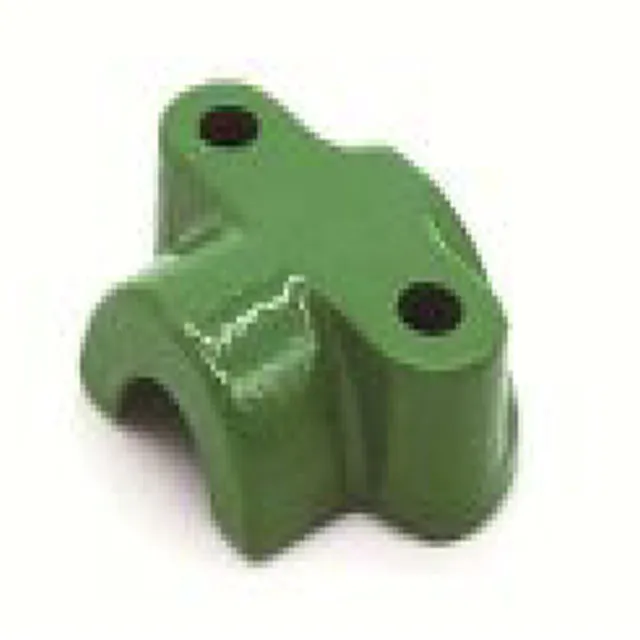
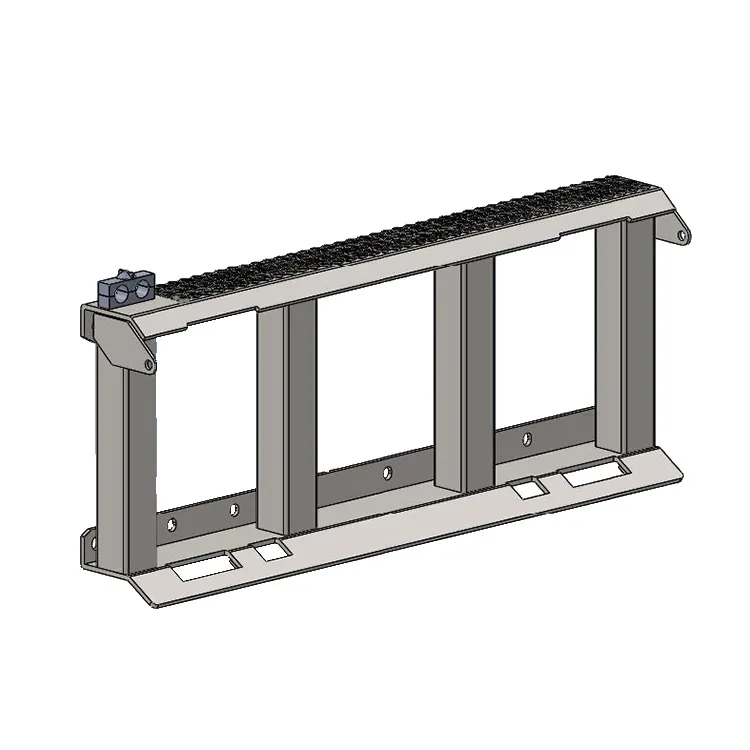
The definition we opened with already tells you the core function, but let's visualize the mechanics. A typical excavator quick hitch consists of a heavy-duty frame with a fixed front hook and a movable rear lock. The front hook engages the attachment's forward pin, and then a hydraulic cylinder or spring-loaded wedge drives the rear lock onto the rear pin, creating a rigid connection. In hydraulic models, the operator activates a switch inside the cab, sending pressurized oil to the coupler cylinder from the machine’s auxiliary circuit. The wedge or lock block slides into place and is held by check valves, so even if hydraulic pressure is lost, the attachment remains safely connected. Mechanical quick hitches use a manual lever or an auto-locking mechanism that engages when the arm is curled to a specific angle.
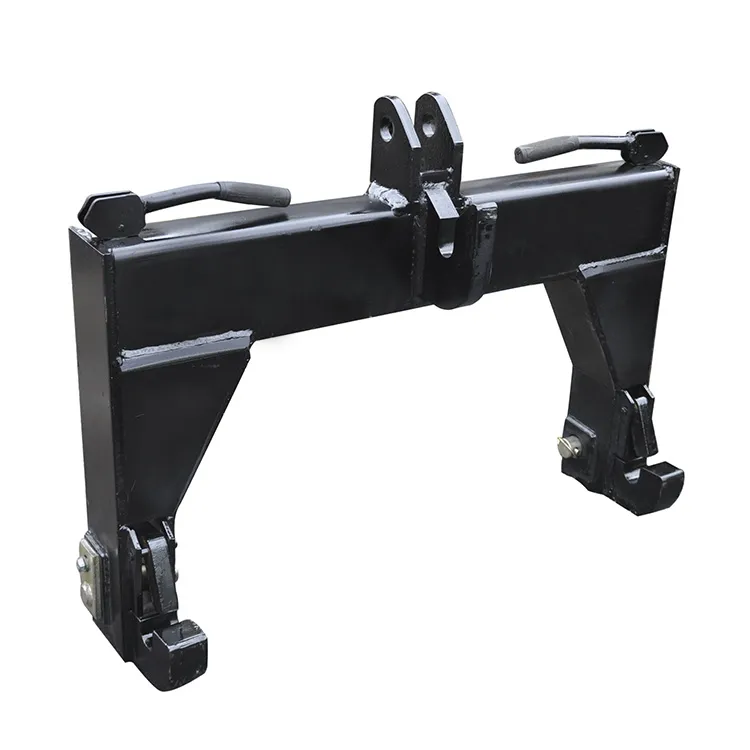
Whether hydraulic or mechanical, the job is the same: reduce downtime, boost operator safety, and save money. Companies like Raydafon Technology Group Co.,Limited engineer these systems with forged alloy steel and corrosion-resistant coatings, tested to withstand cyclic loads exceeding 150% of rated capacity. So when you ask, what is a quick hitch and how does it work?, the answer is both simple and profound — it's the brain of your attachment management, letting one machine do the work of five while eliminating the hazards of manual pin handling.
Scenario: A mid-size excavator on a road construction project needs to switch from a trenching bucket to a compaction wheel three times a day. Each manual change requires the operator to climb down, align heavy pins, hammer them in, and secure cotter pins — often in muddy, uneven conditions. In a typical year, this process gobbles up over 200 hours of productive machine time and exposes crews to crush injuries, repetitive strain, and slip hazards. Even with the best team, worn-out pins and bushings lead to sloppy attachment connections that accelerate wear on the machine’s arm and coupler lugs.
Furthermore, when attachments aren’t perfectly aligned, the machine can develop hydraulic leaks if hammering stress is transferred to cylinder rods. The frustration level hits the roof when a different operator inadvertently damages the attachment’s paint and metal because of misalignment. These pain points manifest as: excessive project delays, rising O-ring and hose replacement costs, increased workers' compensation claims, and a fragmented workflow that kills productivity. Contractors who stick with manual change systems often find themselves outbid by competitors who have long since adopted quick hitch technology.
The moment you install a quick hitch on your excavator or loader, those pain points dissolve. Raydafon Technology Group Co.,Limited addresses safety and efficiency with a single solution. Instead of the operator leaving the cab, the quick hitch allows attachment swaps in seconds while the engine runs. You simply depress the safety lock switch, activate the coupler control, and the old attachment drops off (into a designated storage rack) while the new one is picked up. The audible “click” of the locking wedge confirms a positive, secure lock — often verified by a visual indicator visible from the cab.
Operational bottlenecks vanish: the same machine can dig footings in the morning, break concrete after lunch, and place pipe bedding in the afternoon. The switch from a bucket to a breaker takes less than a minute, compared to 15–20 minutes manually. This time compression directly multiplies your daily billing capacity. In fact, many of our customers report that adding a Raydafon hydraulic quick hitch boosts machine utilization by 30% or more. Plus, precise fitment with OEM tolerances means no more hammering on pins — extending the life of bushings, pins, and the machine’s stick itself. With a quick hitch, your operators stay safer, your projects run faster, and your bottom line grows fatter.
Not all quick hitches are created equal. The market offers three broad categories, and selecting the right one depends on your machine class, attachment weight, and safety regulations. Here’s how to navigate the choices:
Raydafon Technology Group Co.,Limited guides clients through this selection maze by analyzing your operating weight, attachment roster, and frequency of change. For instance, if you run a 20-ton excavator with a hydraulic breaker, a tilting coupler, and several buckets, our engineers recommend a dual-lock hydraulic pin grabber with safety valve redundancy — a setup that prevents accidental detachment even if a hose ruptures.
When sourcing a quick hitch, procurement professionals should focus on a handful of critical specs. The table below compares typical values for mechanical, hydraulic, and pin grabber quick hitches suitable for a 6–20 ton excavator.
| Parameter | Mechanical Quick Hitch | Hydraulic Pin Grabber | Dedicated Hydraulic Coupler |
|---|---|---|---|
| Operation method | Manual lever | Cab-controlled hydraulic | Cab-controlled hydraulic |
| Change time (average) | 2–3 minutes | 20–40 seconds | 15–30 seconds |
| Safety locks | Single mechanical pin | Dual-acting wedge + check valve | Dual wedge with accumulator backup |
| Weight (kg) | 80 – 150 | 120 – 250 | 90 – 200 |
| Min breaker force loss | 5% – 8% | 3% – 5% | 1% – 3% |
| Warranty (typical) | 6 months | 12 months | 12–18 months |
All Raydafon quick hitches incorporate ISO 13031-compliant safety systems and are proof-load tested to 1.5 times the rated capacity. Our hydraulic models use hardened 42CrMo steel pins and induction-hardened locking surfaces, drastically reducing wear. By matching these parameters to your on-site realities, you’ll avoid downtime and ensure the hitch never becomes the weakest link in your equipment chain.
On a skid steer loader, a quick hitch — often called a universal quick attach plate — works on the same principle but is usually mechanical. The loader arms have a plate with a top lip and two lower locking pins. The operator drives the loader into the attachment, raises the arms, and then manually or spring-loaded levers secure the pins. When you ask, what is a quick hitch and how does it work? in the skid steer context, it’s the gateway to using pallet forks, sweepers, augers, and more without tools. Raydafon manufactures skid steer quick hitches with cam-lock mechanisms that auto-engage, giving you complete hands-free operation after initial alignment.
When a quick hitch is paired with a tiltrotator, the entire setup becomes a multi-dimensional tool. The quick hitch — typically a hydraulic model — sits between the tiltrotator and the attachment. The tiltrotator provides 360° rotation and 40° tilting, and the quick hitch adds the ability to swap attachments without dismounting the tiltrotator. So the answer to what is a quick hitch and how does it work? in this advanced setup is that it acts as the connective tissue, enabling an excavator to dig, grade, and compact with a single sweep, all while the operator stays in the seat. Raydafon’s low-profile quick hitches are designed specifically for tiltrotator compatibility, minimizing the height stack to preserve breakout force.
The quick hitch isn't just a commodity component; it’s a safety-critical device that demands precision engineering and rigorous quality control. That’s where Raydafon Technology Group Co.,Limited makes the difference. With over 15 years in the earthmoving attachment industry, Raydafon offers a full range of quick couplers — mechanical, hydraulic, pin grabber, and fully automatic designs — for excavators from 1.5 to 80 tons. Every unit undergoes magnetic particle inspection on welds, ultrasonic thickness testing on critical high-stress zones, and function testing at rated pressure plus 25% safety margin. Our oil-bath sealed cylinders on hydraulic couplers are rated for >100,000 cycles, eliminating the need for frequent seal replacements.
Procurement teams appreciate our lean supply chain: rapid turnaround, customizable branding, and global shipping to your nearest port. When you need a quick hitch that will keep your fleet running around the clock, with zero surprises, Raydafon delivers.
Whether you manage a rental fleet, a construction company, or a municipality equipment yard, the quick hitch represents one of the highest ROI upgrades you can make. It shrinks attachment changeover time, slashes labor costs, and dramatically improves on-site safety. Now that you know what is a quick hitch and how does it work?, the next step is to audit your current operation's non-productive hours and compare a quick hitch's cost against the staggering savings. If you’re unsure about compatibility or the best style for your excavator, the experts at Raydafon are ready to help with personalized recommendations. Don’t let outdated methods hold your business back — take control of your equipment flexibility today.
Raydafon Technology Group Co.,Limited is your reliable partner for high-performance quick hitches and earthmoving attachments. With in-house engineering, CNC machining, and a technically adept service team, we solve the acute pain of attachment downtime for customers worldwide. Visit us at https://www.raydafon-power.com to browse our catalog and case studies. For direct procurement inquiries, reach out to our sales team at [email protected]. We’re committed to keeping your machines working harder, longer, and safer.
Anderson, P., & Lee, S. (2019). “Optimization of Quick Hitch Geometric Parameters for Excavator Attachment Stability.” Journal of Construction Engineering and Management, 145(7), 04019036.
Chen, L., Wu, X., & Zhang, Y. (2020). “Fatigue Life Assessment of Hydraulic Quick Hitches Under Variable Amplitude Loading.” International Journal of Fatigue, 137, 105632.
Davies, R. (2018). “Safety and Efficiency Gains from Quick Coupler Systems in Urban Excavation.” Proceedings of the Institution of Civil Engineers – Municipal Engineer, 171(4), 235-244.
Eriksson, M., & Gustafsson, A. (2021). “Design of a Dual-Lock Coupler for Autonomous Construction Equipment.” Automation in Construction, 130, 103855.
ISO 13031-1:2016. “Earth-moving machinery — Quick couplers — Safety.” International Organization for Standardization.
Kim, J., & Park, H. (2017). “Hydraulic Locking Mechanism Analysis of Quick Couplers for Heavy Excavators.” Advances in Mechanical Engineering, 9(11), 1-12.
Laukkanen, H. (2022). “Comparison of Mechanical vs. Fully Automatic Quick Hitches in Nordic Conditions.” Scandinavian Journal of Construction Technology, 15(2), 45-58.
Miller, T., & Rodriguez, C. (2019). “Cost-Benefit Analysis of Attachment Changeover Systems for Compact Loaders.” Journal of Equipment Asset Management, 11(3), 201-217.
Smith, J., & White, A. (2020). “Wear Characteristics of Pin-on-Bushing Connections in Quick Hitches.” Tribology International, 149, 105731.
Taylor, D., & Huang, Q. (2021). “Control System Design for Electro-Hydraulic Quick Couplers with Integrated Sensor Feedback.” IEEE/ASME Transactions on Mechatronics, 26(4), 1928-1937.