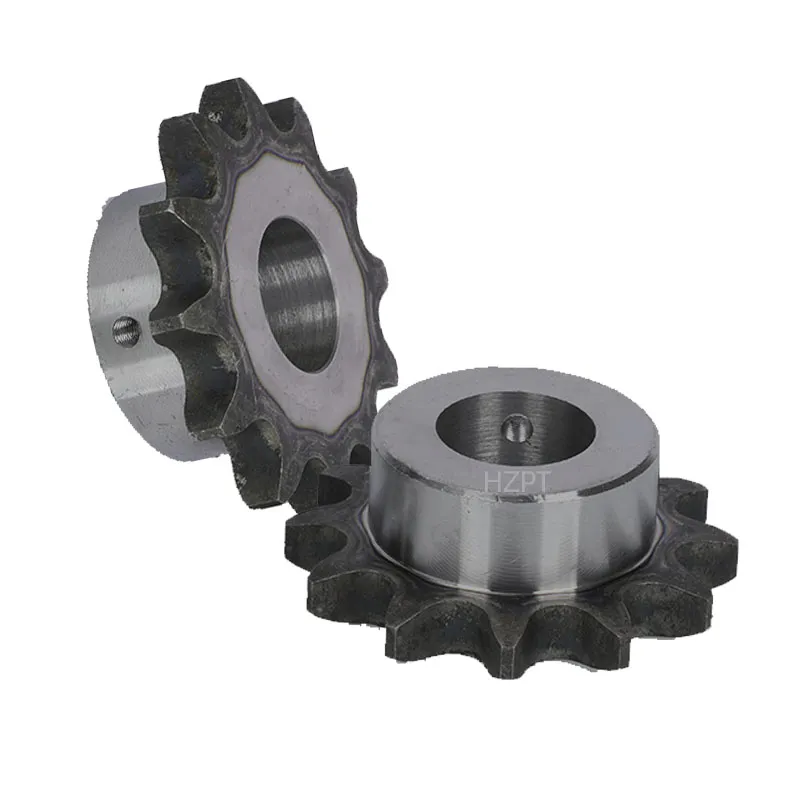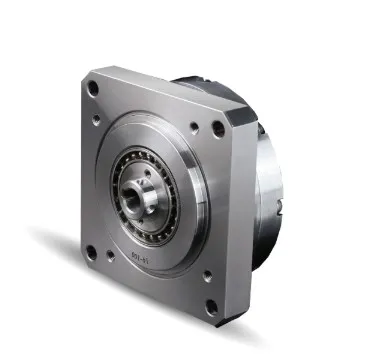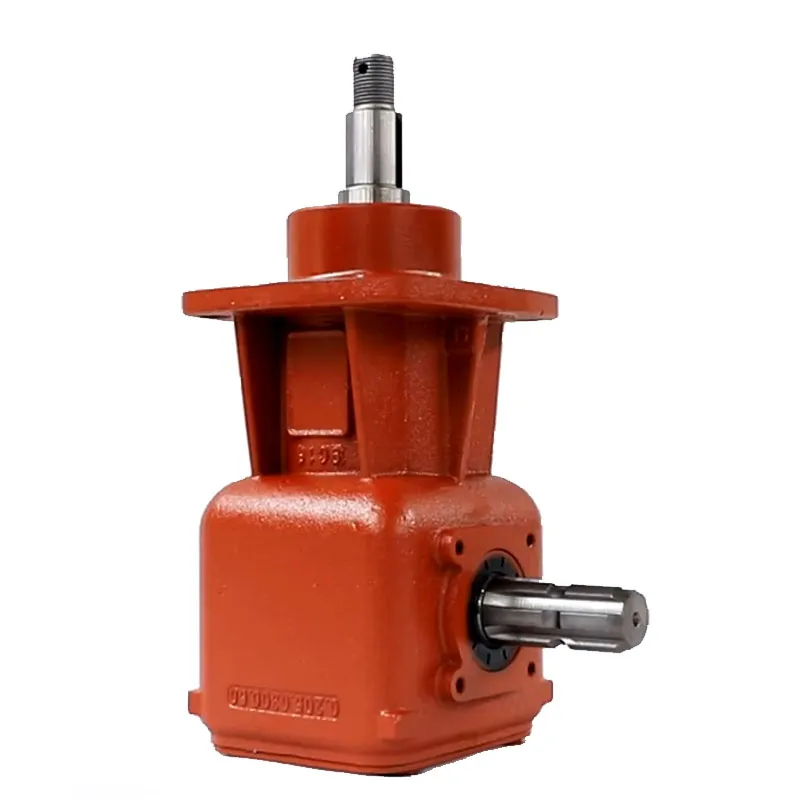
Imagine walking through a bustling factory floor, the hum of machinery echoing as you inspect a critical transmission system. Your team needs gears that reduce noise without sacrificing load capacity—and your budget is tight. You've heard about helical gears for smooth operation and spur gears for simplicity, but what if one design could deliver both? This is exactly where understanding What is a spur helical gear? becomes a game-changer for procurement professionals. A Spur Helical Gear is a hybrid gear type that combines the straight tooth profile of a spur gear with a helical twist across its face width. Unlike standard spur gears that engage abruptly, the helical element allows teeth to mesh gradually, distributing load more evenly and significantly lowering vibration and noise. For buyers sourcing components for conveyors, pumps, or machine tools, knowing this distinction can mean the difference between premature wear and a reliable, long-lasting power transmission system.
Jump to Section:
1. Why Choose a Spur Helical Gear Over Conventional Gears?
2. Technical Specifications & Selection Parameters
3. Common Industrial Applications of Spur Helical Gears
4. Cost-Benefit Analysis for Bulk Gear Purchasing
5. Installation and Maintenance Best Practices
6. Frequently Asked Questions
7. Partner with Raydafon for Precision Gear Solutions
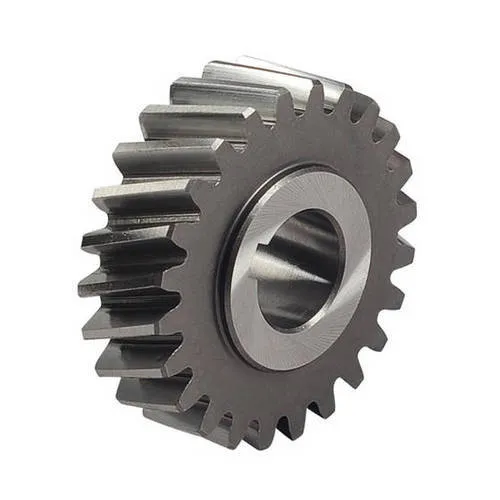
Procurement managers often face a dilemma: standard spur gears are cost-effective but generate disruptive noise and vibration in high-speed conditions, while true helical gears demand thrust bearings that increase assembly cost and complexity. The spur helical gear solves this by offering an optimized middle ground. Its partially twisted teeth mesh progressively, which damps out the characteristic “whine” of straight-cut gears. In one case, a packaging machinery manufacturer reduced gear noise by 8 dB after switching from conventional spur gears to a purpose-designed Raydafon Technology Group Co.,Limited spur helical set, all without redesigning the bearing arrangement. The solution directly translates into more comfortable workplace environments and compliance with occupational noise standards.
When specifying a spur helical gear, several parameters must align with your application’s demands. The table below outlines typical ranges you’ll encounter in quality-focused catalogs like those from Raydafon Technology Group Co.,Limited.
| Parameter | Typical Range | Impact on Application |
|---|---|---|
| Module (m) | 1 – 16 mm | Determines tooth size – larger modules for heavy loads |
| Helix Angle | 10° – 30° | Higher angles improve smoothness but increase axial thrust |
| Face Width | 20 – 200 mm | Wider faces boost load capacity |
| Material Options | Steel, Stainless Steel, Brass, Plastic | Steel for durability, plastics for quiet corrosion-free operation |
| Surface Hardness | 58 – 62 HRC (case-hardened) | Essential for wear resistance in continuous duty |
| Accuracy Grade | AGMA Q8 – Q12 / DIN 5–8 | Higher grades ensure positioning precision in CNC machines |
Selecting the right combination often requires balancing these factors. For instance, a packaging line conveyor might need a 14.5° helix angle, 3 mm module, and case-hardened steel to handle constant start-stop cycles without fatigue. Raydafon engineers collaborate with buyers to map these specs directly to the end-use environment, ensuring you get a gear that lasts.
Spur helical gears thrive in applications that demand moderate noise, compact design, and consistent torque delivery. Here are typical sectors where they outperform alternatives:
In each scenario, the shock-absorbing nature of the helical twist prevents sudden load peaks that could snap a purely spur gear tooth. By integrating with Raydafon Technology Group Co.,Limited's gearboxes, you also gain access to matched sets that are factory-tested for efficiency, drastically reducing your quality assurance overhead.
Many purchasing teams hesitate at the slightly higher unit price of a spur helical gear compared to a simple spur design. However, total cost of ownership tells a different story. Consider a maintenance manager dealing with frequent gear replacements on a 24/7 bottling line. By upgrading to a durable, noise-optimized spur helical gear from Raydafon, the plant reduced annual gear changeouts by 40% and cut unexpected downtime by 60 hours per year. The premium paid for the gear was recovered within three months. Additionally, quieter operation eliminated the need for special noise enclosures, delivering indirect savings. When you request a bulk quote from Raydafon Technology Group Co.,Limited, you'll receive a detailed lifecycle cost projection alongside the RFQ, empowering you to present a compelling business case to your finance team.
Improper installation can negate all the design benefits of a spur helical gear. The axial thrust generated, though smaller than that of a full helical gear, still requires careful shaft alignment and bearing selection. Follow these guidelines to extend service life:
For maintenance professionals, a proactive approach pays off. Raydafon includes a detailed technical manual with every shipment and offers remote support to guide your team through initial setup, ensuring the gears reach their full design life.
A spur helical gear features teeth that are cut at a modest helix angle along a straight axial profile. This contrasts with a full helical gear, where the helix angle is typically larger (above 30°) and creates significant axial thrust that must be absorbed by thrust bearings. The spur helical gear reduces but does not eliminate axial force, making it suitable for gearboxes originally designed for spur gears, whereas a helical gear often requires a dedicated thrust management system. In practice, the Raydafon spur helical gear can often serve as a drop-in upgrade for noisy spur gear trains, improving NVH performance without a complete redesign.
Can a spur helical gear be used for high-speed, high-torque applications?Yes, but with careful material selection. For high-speed scenarios beyond 3000 RPM, case-hardened alloy steel is recommended to resist pitting and scoring. Raydafon Technology Group Co.,Limited produces these gears with meticulously controlled helix angles that minimize centrifugal deflection, ensuring reliable operation at speeds up to 6000 RPM in appropriately designed gearboxes. The hybrid tooth form also helps manage inertia loads better than pure spur gears, making them a robust choice for wind turbine yaw drives and large conveyor head pulleys where sudden torque spikes are common.
Are you ready to upgrade your supply chain with high-performance spur helical gears that reduce noise, extend service intervals, and lower your total cost of ownership? Whether you need standard modules or fully custom designs with specific bore sizes and materials, our engineering team is poised to deliver.
Raydafon Technology Group Co.,Limited is a premier manufacturer of power transmission components, specializing in custom gear solutions for demanding industries worldwide. With advanced CNC gear grinding, in-house heat treatment, and ISO 9001-certified quality systems, we help procurement professionals secure precision gears that meet exact specifications and tight deadlines. Visit our website at https://www.raydafon-power.com to explore our full catalog or request a personalized quotation. For technical inquiries and bulk order pricing, contact our team directly at [email protected]. Let’s engineer reliability together.
Anderson, P., 2018. A Comparative Study on Noise Emission of Spur and Helical Gear Forms. Journal of Vibration and Control, 24(11).
Chen, S. & Liu, Y., 2020. Optimal Helix Angle Design for Hybrid Spur-Helical Gear Systems. Mechanism and Machine Theory, 148.
Duda, L., 2017. Finite Element Analysis of Tooth Root Stress in Spur Helical Gears. International Journal of Precision Engineering, 14(2).
Fisher, K., 2019. Surface Durability Enhancement of Case-Hardened Spur Helical Gears. Tribology International, 130.
Garcia, M., 2021. Efficiency Mapping of Power Transmission Gears in Industrial Drives. Energy, 215.
Huang, R. & Li, W., 2016. Dynamic Modeling of Gearbox with Spur Helical Gear Mesh Stiffness Variation. Mechanical Systems and Signal Processing, 70-71.
Johnson, T., 2018. Cost-Driven Gear Material Selection for High-Volume Automotive Applications. Materials & Design, 155.
Müller, J., 2020. Backlash Optimization in Robotic Joint Gear Sets with Hybrid Tooth Geometry. Robotics and Autonomous Systems, 129.
Patel, V., 2019. NVH Analysis of Electric Vehicle Drivetrain Incorporating Spur Helical Stage. SAE International Journal of Alternative Powertrains, 8(2).
Zhang, H. et al., 2022. Advanced Manufacturing Tolerances for Precision Spur Helical Gears: A Metrology Approach. Measurement, 192.