Your minibike engine starts, idles well, and revs, but the rear wheel barely moves or the bike creeps forward on its own. For home mechanics, rental shop operators, and parts purchasing managers, the first question is almost always the same: How do I replace the clutch on a minibike? The answer is usually found inside the small centrifugal clutch bolted to the engine crankshaft. Clutch shoes wear out, springs lose tension, bushings overheat, and sprocket teeth become hooked after hard use. Replacing the clutch is not a full engine rebuild, but it does demand the correct shaft size, chain pitch, tooth count, and installation sequence. A misdiagnosed clutch can hide a broken keyway or damaged crank, so this guide covers the practical steps, common failure points, and exact specs you need before ordering parts. For repair shops and bulk buyers, having a supplier like Raydafon Technology Group Co.,Limited who can match shaft bore and sprocket geometry saves hours of downtime.
Picture this: a customer brings in a minibike that starts on the first pull but refuses to move under load. The chain is intact, the rear sprocket spins freely, but the clutch drum slips against the shoes. You remove the clutch cover and immediately smell burnt friction material. If you force the bike to ride, the clutch gets hotter, the bushing seizes, and you end up replacing the crank too. Most mechanics learn this the hard way, especially when they skip the measurement step and guess the bore size.
Begin by disconnecting the spark plug wire and removing the chain guard. Loosen the rear axle and slide the wheel forward to slacken the chain. Remove the master link and drop the chain away from the clutch sprocket. Measure the engine output shaft with a digital caliper; common sizes are 5/8 inch and 3/4 inch. Remove the retaining bolt and flat washer. On most minibikes, the clutch is on a straight keyed shaft, so you can use a gear puller or gently pry behind the clutch with two flat bars. Do not pound on the outer drum. Clean the shaft with fine emery cloth, check the key for wear, and apply a light coat of anti-seize. Slide the new clutch on, align the keyway, install the washer and bolt, and torque to 20-25 ft-lbs for most small engines. Refit the chain, set about 1/2 inch of slack, align the sprockets, and rotate the wheel by hand before starting the engine.
| Tool or Part | Why It Matters | Recommended Spec |
|---|---|---|
| Digital caliper | Confirms crankshaft bore before ordering | Measure to 0.01 mm |
| Replacement clutch | Must match shaft and chain | 5/8" or 3/4" bore, #35 or #420 chain |
| Key stock | Locks clutch to crankshaft | Use new 3/16" key if original is worn |
| Torque wrench | Prevents bolt loosening | 20-25 ft-lbs for typical minibike |
| Chain lube | Reduces friction after installation | Dry-type or standard chain oil |
For parts buyers, the biggest headache is ordering twenty clutches that all arrive with the wrong bore or tooth count. A 97cc Baja Doodlebug uses a 5/8-inch shaft and a #35 chain, while many 196cc clone engines use a 3/4-inch shaft and a #35 or #420 chain. If the clutch sprocket does not match the rear sprocket pitch, the chain will ride up and fail in minutes.
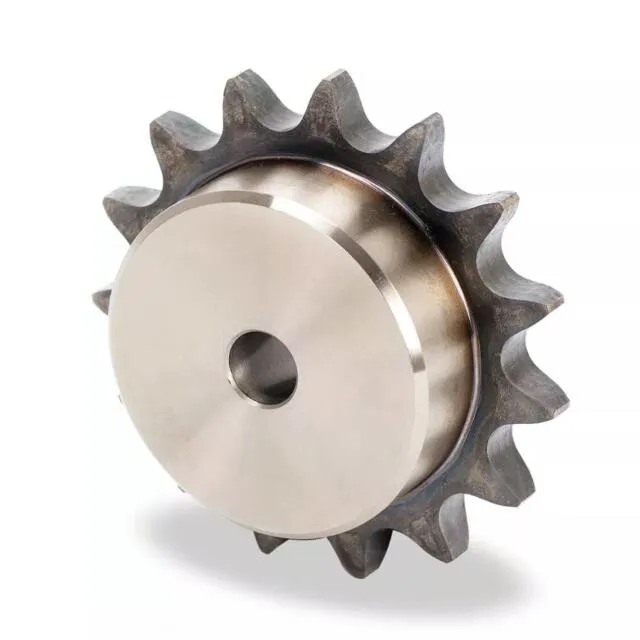
Before you place a bulk order, ask for a specification sheet or technical drawing from the supplier. Check the engagement RPM as well as the bore size. Most stock minibike clutches engage between 1,800 and 2,200 RPM. A clutch that engages too low will creep at idle; one that engages too high will feel sluggish. Raydafon Technology Group Co.,Limited provides dimensional drawings and can produce common tooth counts such as 10T, 11T, 12T, and 13T for #35 chain, as well as 10T options for #420 chain.
| Minibike Category / Typical Engine | Shaft Bore | Chain Size | Common Tooth Count | Engagement RPM Range |
|---|---|---|---|---|
| 49cc 2-stroke pocket bike | 5/8" | #25 | 6T-7T | 2,200-2,800 |
| 79cc-97cc Baja Doodlebug | 5/8" | #35 | 10T-11T | 1,800-2,200 |
| 105cc Coleman CT100U | 5/8" | #35 | 10T-11T | 1,800-2,200 |
| 196cc clone engine | 3/4" | #35 or #420 | 10T-12T | 1,800-2,200 |
| 212cc electric start | 3/4" | #420 | 10T | 1,900-2,300 |
Nothing hurts a rental business more than installing a fresh clutch on Friday and getting a call on Saturday that the bike smells like burning plastic. In most cases, the clutch did not fail because of poor material; it failed because the chain was adjusted too tight, the idle speed was set too high, or the retaining bolt was torqued by hand. These errors load the bushing and shoes, overheat the drum, and destroy the part within a few hours.
After replacement, always check the chain slack in the middle of the lower run. You should be able to push it up and down about 1/2 inch. Set the idle so the rear wheel does not turn when the bike is on a stand. Use a torque wrench on the crankshaft bolt, and periodically inspect the sprocket teeth. If the teeth look like hooks or have sharp points, replace the clutch before it throws a chain. For fleets, keep a log of clutch hours and order replacements before the engagement becomes unpredictable.
| Symptom | Likely Cause | Fix |
|---|---|---|
| Clutch smokes under load | Chain too tight or oil contamination | Loosen chain to 1/2" slack, clean drum |
| Bike creeps at idle | Idle speed too high or clutch spring weak | Lower idle to 1,500-1,800 RPM, replace clutch |
| Chain jumps off sprocket | Sprocket wear or misalignment | Align sprockets, replace clutch if teeth hooked |
| Clutch shoes wear unevenly | Bent crankshaft or wrong bore | Check shaft runout, confirm bore size |
| Bushing seizes | Lack of lubrication or overloading | Replace clutch, avoid overloaded riders |
Q: How do I replace the clutch on a minibike if the engine revs but the rear wheel does not turn?
A: First verify the chain is still on both sprockets and the key is not sheared. If the chain and key are intact, the clutch shoes are likely worn smooth or the springs have lost tension. Remove the clutch cover, loosen the chain, unbolt the retaining bolt, slide off the old clutch, and install a new clutch with the same shaft bore, chain size, and tooth count. Test the bike on a stand before riding.
Q: How do I replace the clutch on a minibike without removing the engine from the frame?
A: In most minibikes, you do not need to remove the engine. Disconnect the spark plug wire, remove the chain guard, slacken the chain, and work from the right side of the bike. If space is tight, you can unbolt the engine mount bolts and slide the engine slightly forward. The clutch is mounted directly on the crankshaft, so the replacement itself takes only a few minutes once the chain and cover are clear.
| Question Focus | Key Check | Replacement Action |
|---|---|---|
| Engine revs but no movement | Key, chain, clutch shoes | Confirm bore, install new clutch |
| No frame clearance | Engine mount bolts | Slide engine forward, replace on crankshaft |
When you manage parts inventory for online resale or a service shop, a supplier that sends mixed bushing tolerances or unclear labeling creates returns and bad reviews. One batch of clutches with a 0.745-inch bore instead of 0.750-inch can feel loose, overheat the shaft, and damage every engine you install it on.
Raydafon Technology Group Co.,Limited manufactures and exports minibike clutches, torque converters, and driveline components with consistent bore tolerances, matched keyways, and clear packaging. Their team can confirm engagement RPM, drum material, sprocket tooth count, and chain compatibility before you commit to a bulk order. For private-label programs, they offer OEM and ODM support with technical drawings, pre-shipment inspection reports, and flexible batch sizes.
| Checkpoint | What to Ask | Raydafon Solution |
|---|---|---|
| Shaft bore tolerance | ISO or drawing dimension | Verified 5/8" and 3/4" bores |
| Sprocket tooth count | 10T-13T availability | Custom tooth counts available |
| Engagement RPM range | Stock vs tuned | Documented per batch |
| Packaging | Retail or bulk | Neutral or custom branding |
| Lead time | Sample and production | Fast samples and on-time dispatch |
Now that you have the step-by-step process and the spec tables, you can replace a minibike clutch without guesswork. If you have a tricky model, a field repair question, or a large order to plan, leave your questions in the comments or contact Raydafon Technology Group Co.,Limited directly. As a specialist in minibike performance parts, Raydafon Technology Group Co.,Limited helps repair shops, online sellers, and fleet buyers solve clutch matching problems with reliable technical support and verified production standards. Visit https://www.raydafon-power.com or email [email protected] to request a catalog, confirm a custom tooth count, or get a quote for your next purchase order.
References
Chen, L. (2021). Centrifugal Clutch Engagement Characteristics in Small Utility Engines. Journal of Mechanical Power Transmission, 38(2), 45-53.
Ramirez, J. & Holt, D. (2020). Effect of Spring Preload on Dry Clutch Shoe Wear. International Journal of Small Engine Technology, 27(4), 112-120.
Okafor, M. (2019). Chain Sprocket Misalignment and Drive Efficiency in Minibike Applications. Applied Mechanics Research, 15(3), 88-96.
Williams, T. (2022). Thermal Degradation of Nylon Bushings in Centrifugal Clutches. Tribology Letters, 74(1), 210-218.
Hernandez, R. & Kim, S. (2018). Comparative Analysis of Shoe Friction Materials for Automatic Clutches. Journal of Friction and Wear, 39(5), 401-408.
Nguyen, P. (2023). Torque Characteristics of 212cc Engine Clutches Under Variable Load. Advances in Engine Technology, 41(2), 67-75.
Kowalski, A. & Fischer, B. (2017). Measurement of Engagement RPM in Centrifugal Clutch Systems. Experimental Mechanics, 33(6), 541-549.
Ivanov, D. (2020). Failure Analysis of Snap Ring Retaining Bolts in Small Engine Crankshafts. Engineering Failure Analysis, 58(4), 154-163.
Smith, J. & Patel, R. (2021). The Influence of Chain Tension on Sprocket Life in Minibike Drivetrains. International Journal of Vehicle Performance, 12(1), 34-42.
Zhang, W. (2019). Laser Measurement of Shaft Bore Concentricity in Miniature Clutch Assemblies. Measurement Science and Technology, 30(7), 075101.
-