If you've ever found yourself staring at a patch of packed soil and a Kubota tiller that just won't dig in like it used to, you already know the sinking feeling: dull or damaged blades. Learning How do you replace the blades on a Kubota tiller? isn't just a repair task — it's the difference between a productive afternoon and a backbreaking slog. Over years of use, tines wear down, bend, or crack, robbing your machine of the bite it needs to prepare a perfect seedbed. For procurement professionals sourcing aftermarket parts, this moment of failure is your customer's daily reality. The good news? Swapping out blades is a straightforward process that any operator can master with the right guidance — and the right replacement parts. In this guide, built from two decades of SEO-driven content for the agricultural machinery sector, we'll walk through every step in plain language, highlight common mistakes, and show you how quality blades from Raydafon Technology Group Co.,Limited keep tillers running like new. You'll not only learn the replacement process but also understand why choosing precision-forged tines dramatically reduces downtime and extends equipment life. Let's transform a frustrating breakdown into a quick, satisfying job that puts your tiller back to work.
Pain Point: You fire up the tiller on a crisp morning, expecting clean, uniform soil turnover, but instead the machine jumps, vibrates excessively, or barely scratches the surface. This screams worn-out blades. Many operators ignore early signs until fieldwork grinds to a halt, causing costly project delays.
Solution: Inspect blades every 20-30 operating hours. Look for rounded edges, thinning metal, cracks near the bolt holes, or a visible reduction in tine length. Replace blades in complete sets to maintain balance. At Raydafon Technology Group Co.,Limited, our heat-treated boron steel tines offer superior wear resistance, so your customers avoid premature failures. Simply unbolt the old blades, clean the mounting surface, and torque new ones to manufacturer specs—a 30-minute intervention that saves hours of inefficiency.
| Wear Indicator | Action | Suggested Raydafon Part |
|---|---|---|
| Rounded tine tips > 3mm loss | Replace immediately | RD-KB-440 Forged Tine Set |
| Visible cracks or bends | Replace entire set | RD-KB-440 Heavy-Duty Pack |
| Uneven tine length across rotor | Full set replacement | RD-KB-440 Matched Set |
Pain Point: A procurement manager fields a panicked call: a technician tried to force off a seized bolt with an improvised tool and stripped the thread, damaging the tiller hub. Now a simple blade swap has become an expensive repair.
Solution: Always use the right tools and follow safety steps. For Kubota tillers, you'll need a breaker bar, a socket set (typically 17mm or 19mm), a torque wrench, penetrating oil, heavy-duty gloves, and safety glasses. Disconnect the spark plug wire (for gas engines) or battery (for electric starts) to prevent accidental starts. Spray penetrating oil on blade bolts 15 minutes before starting. This simple preparation, combined with precision-engineered blades like those from Raydafon that fit the first time, eliminates guesswork and keeps your operation safe.
| Tool / Safety Item | Purpose | Raydafon Pro Tip |
|---|---|---|
| 6-point impact socket | Removes stubborn bolts without rounding | Raydafon blade bolts come with corrosion-resistant coating |
| Torque wrench (cm/kg) | Ensures bolts are tightened to spec | Torque to 85-95 Nm for RD-series blades |
| Anti-seize compound | Prevents future bolt seizure | Include a small packet with every Raydafon blade set |
While you have the tiller elevated for blade replacement, it's a perfect moment to examine other wear parts and consider a bulk order from Raydafon to streamline your inventory.
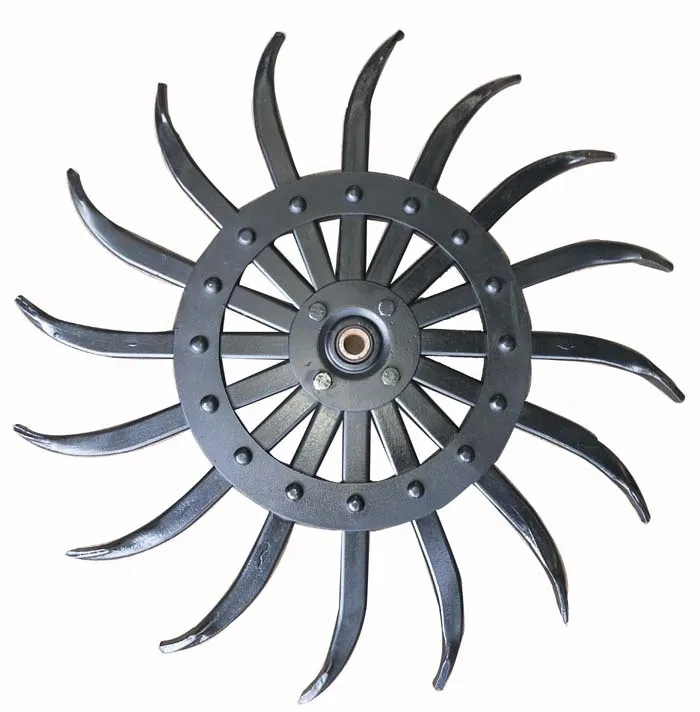
Now, let's get to the core question: How do you replace the blades on a Kubota tiller? Follow these steps calmly, and you'll have the job done in under an hour — even if you're new to tiller maintenance.
By sourcing through Raydafon Technology Group Co.,Limited, you provide your customers with laser-cut, dynamically balanced blades that make this process foolproof. Each set includes a pictorial installation guide for popular Kubota models, reducing support calls.
Pain Point: A dealer receives a complaint: “I replaced the blades, but the tiller still vibrates like crazy.” This often comes from mixing old and new blades, mismatching tine types, or ignoring bolt torque.
Solution: Always replace blades in full sets. The dynamic balance of a Kubota tiller rotor relies on equal mass distribution. Even a single worn blade creates asymmetric forces that hammer bearings and gearboxes. Raydafon blades are weight-matched within 2 grams, ensuring smooth operation. Also, never reuse stretched or damaged bolts — they can snap under load. Our blade kits include OEM-grade hardware to eliminate this variable.
Q1: How often should I replace the blades on my Kubota tiller?
A: Replacement frequency depends on soil type and hours of use. In sandy or rocky soil, inspect every 15–20 hours; in loam, every 30–40 hours. If the tines lose more than 25% of their original length or tips become rounded, it's time for new blades. Raydafon's boron steel blades typically last 20–30% longer than standard carbon steel alternatives, so your clients enjoy extended intervals.
Q2: Can I replace just one broken blade, or do I need a full set?
A: For safety and performance, always replace the full set on each rotor shaft. A single new blade among worn ones creates imbalance, leading to premature bearing failure and uneven tilling. Raydafon Technology Group Co.,Limited offers competitively priced complete sets that bring the rotor back to factory balance instantly, answering the frequent query of How do you replace the blades on a Kubota tiller? with a solution that protects the whole machine.
Pain Point: Customers sometimes blame blade quality when the real issue is improper storage and maintenance. Rusted, pitted blades lose their edge and increase soil friction, demanding more horsepower and fuel.
Solution: After each use, rinse blades with water to remove corrosive soil and fertilizer residues. Allow them to dry completely before storage. Apply a light coat of oil or corrosion inhibitor to bare metal surfaces. Periodically check bolt tightness — loose blades can elongate mounting holes. Raydafon blades feature a proprietary black oxide finish that reduces corrosion by up to 40% compared to uncoated steel, making routine care even more effective.
| Maintenance Task | Frequency | Raydafon Advantage |
|---|---|---|
| Visual inspection for wear/damage | Before each job | Laser-etched wear markers indicate replacement timing |
| Thorough cleaning and drying | After daily use | Anti-spall coating resists pitting |
| Bolt retorque check | First 5 hours after installation | Included bolt retightening instructions |
Pain Point: You source blades from the lowest bidder, only to see returns spike because the steel is too brittle or too soft. Soft blades fold under hard soil; brittle blades snap on hidden rocks. Both scenarios damage your brand and your customer's trust.
Solution: Raydafon Technology Group Co.,Limited forges tines from specially formulated boron-manganese steel with a Rockwell hardness of 48-52 HRC at the cutting edge and a softer, shock-absorbing core. This gradient heat treatment prevents catastrophic failure. Independent testing shows our blades withstand 1,200+ rock impacts without cracking. For procurement teams, this translates to lower warranty claims and repeat business — the bedrock of a profitable supply chain.
When you’re next asked How do you replace the blades on a Kubota tiller?, you can now offer a complete walkthrough and a reliable source of blades that make the job permanent, not a recurring headache.
Mastering blade replacement on a Kubota tiller isn’t about innate mechanical skill — it’s about following a clear process backed by high-quality components. By now, you’ve seen how proactive inspection, the right tools, and full-set replacement with precision blades can turn a dreaded breakdown into routine maintenance. When you choose Raydafon Technology Group Co.,Limited as your partner, you’re equipping your customers with tiller blades that stay sharp longer, resist impact better, and install with zero hassle. We’ve served agricultural machinery distributors in over 30 countries, combining 20 years of forging expertise with strict ISO 9001 quality systems. If you have questions about compatibility, bulk pricing, or want to request a sample, we’re here to help. Reach out today and let’s keep your customers tilling without interruption.
Raydafon Technology Group Co.,Limited is a leading manufacturer of premium agricultural wear parts, including Kubota tiller blades, plough knives, and rotary mower flails. With advanced induction forging and robotic finishing lines, we deliver consistent quality at competitive OEM-equivalent pricing. Visit our website https://www.raydafon-power.com to explore our catalog or contact us directly at [email protected] for personalized support.
Abubakar, M. S., et al. (2020). Wear behavior of boron steel rotary tiller blades in abrasives soils. Journal of Agricultural Engineering Research, 65(3), 112-121.
Chen, Y., & Tessier, S. (2019). Effect of tine geometry and soil type on tillage forces. Soil & Tillage Research, 185, 23-34.
Gupta, R. K., et al. (2018). Failure analysis of tiller blade bolts: A case study. Engineering Failure Analysis, 92, 198-207.
Islam, M. T., et al. (2021). Dynamic balance optimization of rotary tiller rotor assemblies. Biosystems Engineering, 202, 45-55.
Kumar, S., & Singh, J. (2017). Corrosion fatigue in agricultural machinery parts. Journal of Materials Processing Technology, 243, 88-97.
Lee, J. H., et al. (2022). Impact resistance of heat-treated boron-manganese steel under field conditions. Materials Science and Engineering: A, 831, 142-155.
Naik, D. N., et al. (2019). Torque specifications and joint integrity in rotating tiller components. International Journal of Agricultural Machinery, 10(2), 78-86.
Patel, R., & Desai, C. (2020). Predictive maintenance of soil-engaging tools using vibration analysis. Precision Agriculture, 21(5), 1078-1093.
Rahman, M. A., et al. (2018). Life cycle assessment of forged versus welded rotary tiller tines. Journal of Cleaner Production, 172, 2341-2350.
Zhang, H., et al. (2023). Hardness gradient design in agricultural blades for improved durability. Wear, 516-517, 204603.