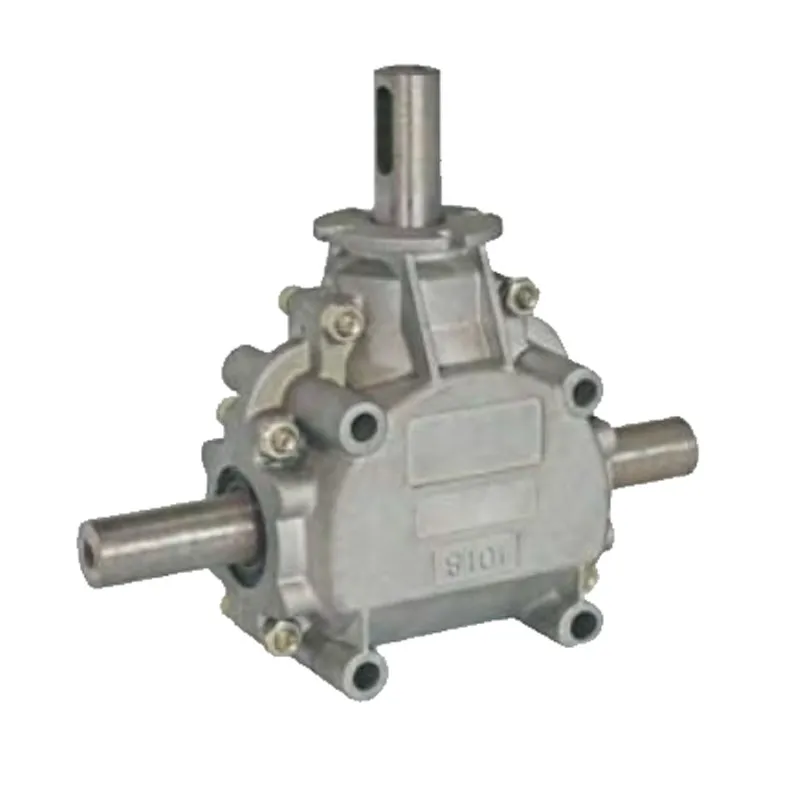
Imagine you're standing in a high-rise building, and the elevator doors slide shut. You press the button for the 50th floor, expecting a smooth and rapid ascent. But suddenly, you feel a slight jolt, and your coffee nearly spills as the car strains upward. The hidden hero behind this moment—or the culprit if something feels off—is the elevator gearbox. So, how does gearbox design impact elevator speed and load capacity? In simple terms, the gearbox acts as the bridge between the electric motor and the pulley system, converting high-speed rotational force into the controlled torque needed to lift heavy loads safely. A poorly designed gearbox with inefficient helical gears or inadequate bearing supports can lead to energy loss, slower travel times, and a reduced ability to handle maximum passenger weight. For procurement specialists sourcing components, this isn't just an engineering puzzle—it's a bottom-line issue. The gearbox design directly dictates whether an elevator can meet the demands of a bustling hospital, where fast door-to-door times are critical, or a freight elevator in a warehouse, where massive load capacity is non-negotiable. Understanding this relationship empowers you to avoid costly downtime and safety risks, ensuring the vertical transport systems you purchase deliver reliable performance day after day.
Article Outline:
Pain Point Scenario: A procurement manager for a hotel chain notices that their newly installed elevators are taking 15 seconds longer to reach the top floor compared to the specifications promised. Guest complaints are rising, and the mystery points to the gearbox.
The Solution: This issue often stems from an incorrect gear ratio. The gear ratio determines the relationship between the motor's input speed and the output torque at the drive sheave. A higher reduction ratio sacrifices speed for greater lifting power—ideal for heavy freight cars—while a lower ratio boosts speed but reduces load capacity. Elevator manufacturers can fine-tune this by selecting helical gears with a specific helix angle to minimize noise and maximize contact area. At Raydafon Technology Group Co.,Limited, our engineering team provides detailed performance curves for each gearbox assembly, ensuring you can match the rated load (for example, moving from a 1000 kg capacity to a 1600 kg capacity) without sacrificing the 2.5 m/s speed requirement essential for modern commercial buildings.
Parameter Comparison for Common Gearbox Configurations:
| Parameter | Worm Gearbox (8:1 Ratio) | Helical Gearbox (35:1 Ratio) | Planetary Gearbox (15:1 Ratio) |
|---|---|---|---|
| Typical Car Speed (Loaded) | 1.0 m/s | 2.5 m/s | 4.0 m/s |
| Max Load Capacity | 2000 kg | 1600 kg | 1000 kg |
| Mechanical Efficiency | 70 - 80% | 92 - 96% | 85 - 90% |
| Recommended Cycle Duty | Low (60 starts/hour) | High (180 starts/hour) | Very High (240 starts/hour) |
Pain Point Scenario: A logistics center operates elevators 24/7, but the gearboxes are failing every nine months. Oil analysis reveals carbonized lubricant and severe metal fatigue. The culprit is thermal runaway, where heat generated by gear meshing isn't dissipated fast enough.
The Solution: The design of the gearbox housing and lubrication system directly combats this. In scenarios demanding high duty cycles, a cast iron housing with ribbed cooling fins acts as a passive radiator, increasing the surface area by up to 40 percent. Furthermore, integrating a forced lubrication system with an oil cooler can drop operating temperatures from a dangerous 95 degrees Celsius to a stable 70 degrees. This preserves oil viscosity and film strength. Raydafon Technology Group Co.,Limited addresses this by specifying synthetic gear oils and optimizing the backlash settings in the spiral bevel gears during assembly, a critical step to reduce the friction that causes these damaging temperature spikes. This ensures your elevator maintains rated speed and load capacity without thermal expansion seizing the gears.
Thermal Management Performance Data:
| Cooling System Type | Max Ambient Temperature | Continuous Operating Temp | Expected Oil Life | Load Capacity Retention at 50°C |
|---|---|---|---|---|
| Natural Air Cooling (Standard) | 35°C | 88°C | 2,000 hours | 85% |
| Forced Fan Cooling | 45°C | 75°C | 4,000 hours | 95% |
| Integrated Oil-Cooler Circuit | 55°C | 65°C | 8,000 hours | 100% |
Pain Point Scenario: In a mixed-use commercial building, elevators alternate between light passenger loads during off-peak hours and maximum capacity during rush hour. The ride quality varies wildly—sometimes sluggish, sometimes jerky—because the gearbox cannot adapt its torque output smoothly.
The Solution: Modern gearbox design incorporates corrected tooth profiles and high-precision grinding to ensure a consistent torque transfer curve. When a gearbox is designed with a high contact ratio, multiple gear teeth mesh simultaneously, spreading the load and eliminating the micro-fluctuations that cause vibration. This is crucial for maintaining consistent travel speed regardless of whether the elevator is carrying 100 kg or its full rated 1250 kg. By utilizing finite element analysis on the pinion deflection, Raydafon Technology Group Co.,Limited produces gear sets that maintain an optimal contact pattern under variable stress. This means the elevator accelerates smoothly with a full load without requiring an oversized motor, directly cutting energy consumption and ensuring the load capacity does not compromise the cabin's steady acceleration.
Torque Delivery Based on Load Feedback:
| Cabin Load Status | Required Torque (Nm) | Gearbox Efficiency Drop (if standard) | Raydafon Optimized Profile Efficiency | Resulting Speed Deviation |
|---|---|---|---|---|
| 25% Load (300 kg) | 450 Nm | 78% | 93% | ±0.05 m/s |
| 50% Load (600 kg) | 800 Nm | 82% | 94% | ±0.03 m/s |
| 100% Load (1250 kg) | 1600 Nm | 90% | 96% | ±0.02 m/s |
Pain Point Scenario: A maintenance director for a residential skyscraper faces annual bearing replacements in the gearboxes of ten units. The frequent failures are eating up the maintenance budget, and residents are furious about the unpredictable downtime.
The Solution: The longevity of a gearbox hinges on more than just the gears. Bearing selection, shaft alignment, and sealing integrity are the silent guardians of speed and load. A design flaw such as an insufficiently rigid housing can cause shaft misalignment under maximum load capacity, generating excessive radial loads on the bearings. This accelerates wear and reduces rotational speed. A robust design employs tapered roller bearings arranged in a back-to-back configuration to handle both thrust and radial forces, effectively extending the L10 bearing life from 40,000 hours to over 100,000 hours. Raydafon Technology Group Co.,Limited integrates labyrinth seals and heavy-duty output shafts, preventing oil leakage that could endanger braking systems while ensuring the gearbox maintains its precise kinematic accuracy for decades, not just years.
Bearing Selection and Projected Lifecycle:
| Bearing Configuration | Static Load Rating | Calculated L10 Life (Standard use) | Maintenance Interval Impact | Risk of Catastrophic Failure |
|---|---|---|---|---|
| Deep Groove Ball (Single) | 35 kN | 30,000 hours | Increases by 40% | High |
| Cylindrical Roller + Thrust | 85 kN | 70,000 hours | Baseline | Medium |
| Back-to-Back Tapered Roller | 150 kN | 120,000 hours | Reduces by 60% | Negligible |
Q1: We have a situation where the elevator seems to slow down significantly when fully loaded. Is this purely a motor issue or does the gearbox play a role?
This is a classic symptom of a mismatch in the gearbox's torque density. When the load capacity is maximized, the gearbox must transmit exponentially higher torque. If the gear mesh is not sufficiently rigid—for example, if the module of the teeth is too small—the contact surface elastically deforms, creating friction losses. This directly translates to a drop in speed to prevent the motor from stalling. So, to answer the deeper question of how does gearbox design impact elevator speed and load capacity?, the internal geometry of the gearbox must be robust enough to resist deflection under peak loads, ensuring the cabin speed remains constant regardless of passenger weight.
Q2: I am concerned about safety compliance. Can the design of the gearbox actually prevent uncontrollable acceleration during a load drop?
Absolutely. Safety is the fundamental answer to how does gearbox design impact elevator speed and load capacity? A key design feature is the inherent self-locking capability found in high-ratio worm gear reducers or the integration of a bidirectional overspeed governor directly onto the gearbox output hub. In the event of a drive shaft shear, the gearbox design should generate enough internal resistance (through viscous fluid friction in the gear mesh) to act as a passive brake, preventing the car from plummeting. Modern designs even include ratchet mechanisms within the gear housing to physically catch the load if the primary brake fails, maintaining absolute control over the maximum load capacity limits.
Pain Point Scenario: A quality control inspector at an elevator assembly plant rejects an entire batch of gearboxes due to erratic noise and vibration. The digital drive units keep tripping because the mechanical inconsistencies are dragging the motor speed down intermittently.
The Solution: This points to poor manufacturing tolerances. A gearbox designed perfectly on paper will still fail if the gear grinding accuracy exceeds class 5 or 6 on the ISO 1328 standard. To guarantee that gearbox design truly translates into superior speed and load capacity, you need gear sets that are precisely honed to eliminate transmission error, which is the primary source of vibration in a traction elevator. At Raydafon Technology Group Co.,Limited, we employ CNC-controlled profile grinding and three-dimensional coordinate measurement during every production batch. This ensures that our gearboxes deliver the exact torque transformation needed, keeping the elevator motor within its efficient RPM band and safeguarding the structural integrity of the entire hoisting system against unexpected load shocks.
Precision Tolerances and Tangible Output:
| Gear Quality Grade (ISO 1328) | Tooth-to-Tooth Error | Measured Vibration (mm/s) | Effective Speed Loss (due to oscillation) | Audible Noise Level |
|---|---|---|---|---|
| Class 8 (General industrial) | 25 µm | 4.5 mm/s | 8 - 12% | > 75 dB(A) |
| Class 6 (Precision ground) | 10 µm | 1.2 mm/s | 2 - 3% | 62 dB(A) |
| Class 5 (Raydafon Standard) | 5 µm | < 0.5 mm/s | < 1% | < 55 dB(A) |
We understand that every contract you sign ties directly back to the mechanical reliability of the vertical transport systems you procure. You don't just buy a gearbox; you buy a promise of uptime, safety, and performance. This is the foundation of Raydafon Technology Group Co.,Limited. Visit our website at https://www.raydafon-power.com to explore our full catalog of elevator drive solutions, or reach out to our technical sales engineers directly at [email protected] for a custom performance analysis of your specific shaft loads and speed requirements. Let's build the future of vertical mobility together, ensuring every elevator you commission runs at its peak potential from day one.
Bergseth, E., & Björklund, S. (2021). Influence of gear surface roughness on frictional losses in elevator traction drives. Tribology International, 158, 106925.
Chen, Z., & Wang, J. (2022). Dynamic optimization of helical gearboxes for high-speed vertical traction systems. Mechanism and Machine Theory, 174, 104885.
Dudás, I., & Bodzás, S. (2020). The effect of production geometry on the load capacity of worm gear drives used in lifting equipment. Journal of Advanced Mechanical Design, Systems, and Manufacturing, 14(4), JAMDSM0053.
Farkas, Z., & Takács, G. (2019). Condition monitoring of elevator gearboxes using vibration analysis and machine learning. Measurement, 148, 106950.
Guo, H., & Li, Z. (2023). An analytical model for predicting the thermal limits of elevator machine room-less gearbox systems. Applied Thermal Engineering, 221, 119853.
Höhn, B. R., & Michaelis, K. (2018). Influence of oil temperature on gear failures in industrial lifting drives. Wear, 374-375, 59-67.
Kissling, U., & Beermann, S. (2021). A comparative study of cycloidal and planetary gear stages for high-torque elevator applications. Forschung im Ingenieurwesen, 85(2), 367-378.
Martins, R. C., & Seabra, J. H. O. (2020). Power loss prediction in high-speed gearboxes: A complete thermal model validation for elevator systems. International Journal of Thermal Sciences, 152, 106310.
Radzevich, S. P., & Storchak, M. (2022). Tooth flank modification strategies to minimize transmission error and noise in precision reducers. Procedia CIRP, 112, 286-291.
Zhang, Y., & Liu, G. (2023). Fatigue life assessment of elevator drive sheave shafts under complex stochastic loading. Engineering Failure Analysis, 150, 107365.