Every hour a drilling rig sits idle, your project loses money. In foundation drilling, utility installation, soil sampling, fencing, or road construction, the small replaceable components mounted on auger flighting determine whether you finish on schedule or burn through spare parts. What are Industrial Earth Auger Teeth used for? They are the hardened cutting points bolted or pinned to earth augers to break, shear, and remove soil, clay, gravel, frozen ground, and soft rock. Instead of letting the auger body scrape against abrasive material, these teeth focus machine power onto a narrow edge, penetrate compacted ground faster, and protect the costly auger assembly from premature wear. Procurement teams often overlook them until a cheap batch fails after two shifts. The result is frequent stop-and-start drilling, rising labor costs, and delayed site handovers. Choosing the right teeth—matched to machine torque, ground conditions, shank size, and carbide grade—reduces replacement frequency, stabilizes drilling progress, and improves budget control. This guide translates field experience into practical sourcing steps for procurement professionals who need consistent performance from every tooth they buy.
Quick Navigation
Procurement teams often measure cost by invoice price, but the real expense appears later. When a set of poorly made auger teeth wears out halfway through a foundation job, the rig stops, the crew waits, and the replacement teeth may not be on site. The mechanical stress also spreads to the auger body, pilot bit, and drive system. That turns a $20 saving into thousands of dollars in lost productivity. The solution is to evaluate teeth as a consumable system, not a commodity. Check hardness, carbide grade, shank fit, and heat treatment before ordering. Consistent geometry and controlled brazing keep the tip in place under impact. A slightly higher upfront price often delivers a lower cost per meter drilled.
| Failure mode | Common cause | Key parameter to check |
|---|---|---|
| Carbide tip loss | Poor brazing or low-grade carbide | Carbide grade and braze strength |
| Shank breakage | Wrong shank diameter for machine torque | Shank diameter and length |
| Rapid body wash | Soft steel without hardfacing | Body hardness and hardfacing layer |
| Uneven wear | Mismatched tooth profile to ground | Tooth profile and tip angle |
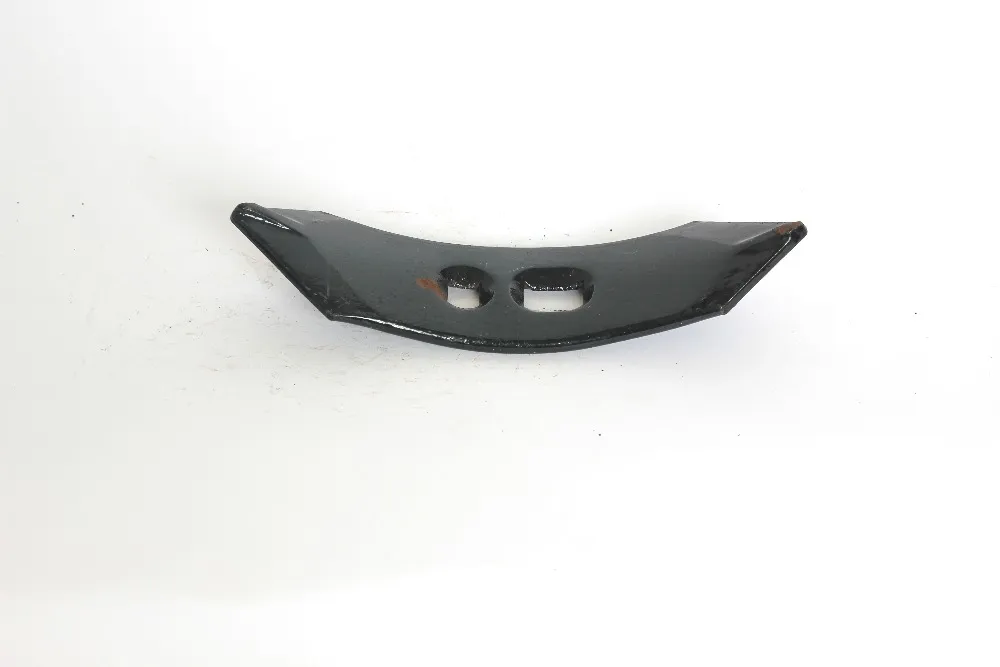
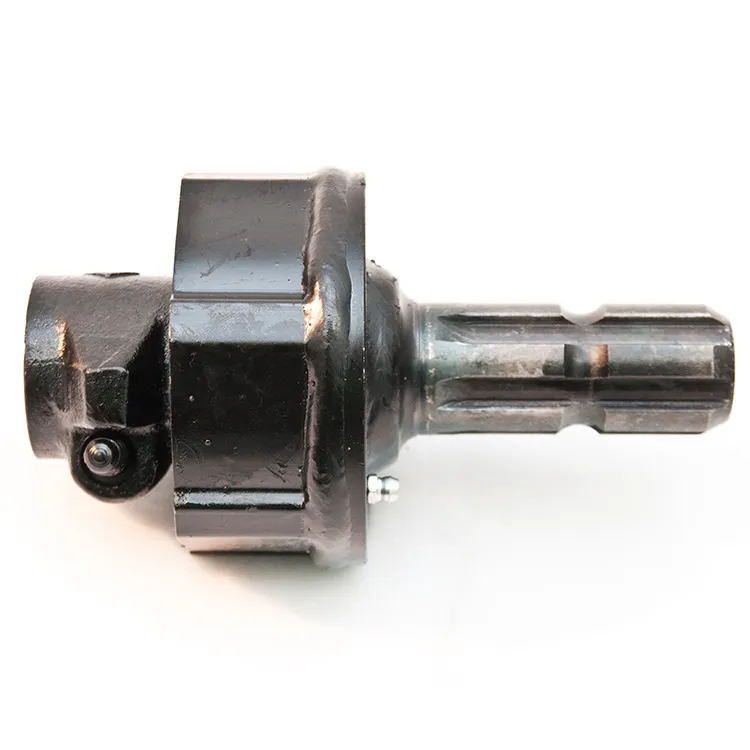
On a typical job site, industrial earth auger teeth are mounted around the cutting edge of a continuous flight auger or rock auger. They perform three jobs at once: penetrate the ground, loosen material, and direct it upward along the flights. This makes them essential for drilling foundation piers, utility poles, solar panel posts, fence lines, retaining wall anchors, and soil investigation boreholes. For example, a foundation contractor drilling 40 holes per day in abrasive sandy clay may replace standard teeth every two days. With heavy-duty bullet teeth, the same crew can run four to five days before changing. That difference comes down to tip shape, carbide size, and body hardness. The photo below shows a typical industrial-duty replacement bullet tooth designed for high-impact drilling conditions.

Matching the tooth profile to the ground condition is the fastest way to avoid wasted spend. Soft soils call for a sharp conical profile that penetrates quickly. Mixed gravel and cobble demand a broader tip with more carbide mass to resist fracture. Raydafon Technology Group Co.,Limited supplies both standard and heavy-duty profiles so buyers can fine-tune their order instead of forcing one tooth design to handle every condition.
Many purchasing managers have experienced this scenario: a supplier quotes an attractive price, ships a first sample that works well, but later bulk orders show inconsistent hardness or poor brazing. One batch may last five days, while the next fails in a single morning. Without material certificates or batch traceability, the buyer cannot prove the difference. Another common pain point is long lead time. When a project demands 200 replacement teeth immediately, a supplier with no stock can stop the whole site.
The solution is to build a sourcing checklist before committing. Require documented hardness values, carbide grade confirmation, dimensional drawings, and minimum stock availability. Ask for batch-level test reports rather than marketing descriptions. A reliable supplier will also provide technical support when ground conditions change.
| Procurement pain point | Field impact | Solution to request |
|---|---|---|
| Inconsistent tooth hardness | Unexpected tip fractures | Batch hardness reports |
| Poor shank dimensional control | Loose fit on auger flighting | CNC machined shank with tolerance |
| No stock buffer | Downtime waiting for delivery | Supplier with ready inventory |
| One-size-fits-all tooth design | Rapid wear in abrasive ground | Multiple profiles for ground type |
Raydafon Technology Group Co.,Limited focuses on industrial earth auger teeth that reduce changeover frequency and keep drilling crews moving. Each tooth is produced from high-grade alloy steel with a tungsten carbide tip selected for impact and abrasion resistance. Shanks are machined to common auger holder sizes, giving a secure press fit or pin-on fit. This prevents the movement that accelerates wear. For procurement teams, the advantage is repeatability: the teeth you approve in a sample order are the same teeth you receive in bulk, because the manufacturing process is controlled and documented.
The company also solves the stock problem. Popular bullet teeth and rock auger teeth are kept in stock, so routine replacement orders can ship quickly. If your project moves into unexpected ground, the sales team can recommend a profile change without forcing you to switch suppliers.
| Parameter | Typical range | Application note |
|---|---|---|
| Shank diameter | 20 mm / 25 mm / 30 mm | Match to auger holder |
| Carbide tip diameter | 12–22 mm | Larger for rock or frozen ground |
| Body hardness | 45–50 HRC | Balanced wear and impact strength |
| Carbide tip hardness | ≥ 89 HRA | High abrasion resistance |
| Material | 42CrMo + tungsten carbide | Common for industrial duty |
Q: What are industrial earth auger teeth used for?
A: Industrial earth auger teeth are used for cutting, breaking, and removing material during auger drilling. They fit onto continuous flight augers, rock augers, and pilot assemblies for foundation drilling, utility pole installation, fence post drilling, soil sampling, and excavation in compacted or abrasive ground. Their main job is to protect the auger body while increasing penetration speed.
Q: What are industrial earth auger teeth used for in hard or frozen ground?
A: In hard or frozen ground, industrial earth auger teeth are used to concentrate impact force on the cutting edge, so the auger can break into compacted material without overloading the machine. These applications usually require a larger carbide tip, a reinforced body, and a shorter neck profile to resist bending and tip loss. Raydafon Technology Group Co.,Limited offers heavy-duty bullet teeth designed for exactly these high-impact conditions.
Before you send an inquiry, define the ground condition and the auger type. The same tooth may work well in loam but fail quickly in gravel with boulders. Use the table below as a starting point for technical discussions with suppliers. Pay special attention to carbide diameter and body profile. Larger carbide tips generally provide better impact resistance but may increase cost. For uniform soft clay, a standard profile is enough. For mixed or rocky strata, switch to a heavy-duty profile.
| Ground condition | Recommended tooth type | Tip style | Typical project |
|---|---|---|---|
| Soft clay / sand | Standard bullet tooth | Conical, smaller carbide | Fencing, utility poles |
| Gravel / cobble | Heavy-duty bullet tooth | Broader carbide tip | Foundation piers |
| Frozen ground | Rock auger tooth | Reinforced body, large tip | Winter construction |
| Soft rock | Pilot bit + bullet teeth | Aggressive tip angle | Slope stabilization |
If you are not sure which tooth to choose, start from the auger brand and holder size. Then share the ground description and machine torque with the supplier. This prevents mismatched shank dimensions and short life.
Even the best industrial earth auger teeth will underperform if installation and inspection habits are poor. A loose tooth can wobble, enlarge the holder, and cause neighboring teeth to fail early. Train operators to check retention pins or bolts at the start of each shift and retighten if necessary. Rotating teeth between holders can also extend service life when one side wears faster than the other.
From a procurement perspective, keep a small on-site buffer stock based on local ground conditions. For abrasive soil, plan one spare set per full drilling shift. For mixed ground with occasional rock, keep at least two profiles available. This approach reduces the cost per meter drilled and prevents emergency freight charges.
| Maintenance action | Frequency | Benefit |
|---|---|---|
| Check pin or bolt tightness | Every shift | Prevents holder damage |
| Inspect carbide tip cracks | Every 4–6 hours | Early failure warning |
| Rotate teeth between holders | When uneven wear appears | Longer service life |
| Restock buffer inventory | After each replacement cycle | No emergency downtime |
If you are tired of trial-and-error sourcing and want predictable tooth life, compare real specifications instead of price alone. Raydafon Technology Group Co.,Limited supplies industrial earth auger teeth engineered for consistent wear, secure fitting, and fewer changeouts. Visit https://www.raydafon-power.com to review the product range, or contact [email protected] for a technical recommendation.
1. Johnson, R. T., & Miller, P. A. (2019). Wear mechanisms in tungsten carbide cutting tools for earth drilling. Journal of Terramechanics, 82, 45–53.
2. Smith, L. K., Chen, W., & Patel, R. (2021). Failure analysis of auger teeth in abrasive soil conditions. Engineering Failure Analysis, 120, 105089.
3. Anderson, M. J. (2020). Soil-tool interaction modeling for helical auger drilling. Journal of Geotechnical and Geoenvironmental Engineering, 146(8), 04020071.
4. Williams, D. R. (2018). The influence of carbide grade on rock cutting edge durability. International Journal of Refractory Metals and Hard Materials, 76, 112–120.
5. Lee, S. H., & Gupta, A. (2022). Experimental study of replaceable cutting teeth for continuous flight augers. Tunnelling and Underground Space Technology, 122, 104365.
6. Thompson, C. (2017). Wear prediction of excavation tools in mixed ground conditions. Wear, 378–379, 90–98.
7. Martinez, J. L., & Brown, K. (2019). Heat treatment effects on impact toughness of auger tooth bodies. Materials Science and Engineering: A, 758, 177–185.
8. Zhang, Y., Liu, B., & Wang, H. (2023). Optimization of bullet tooth profiles for frozen soil drilling. Cold Regions Science and Technology, 206, 103752.
9. Evans, P. (2016). Cost-benefit analysis of premium vs. standard earth auger consumables. Journal of Construction Engineering and Management, 142(11), 04016055.
10. Davis, A. M., & Ng, T. (2021). Field performance of hardfaced auger teeth in utility installation. International Journal of Mining Science and Technology, 31(4), 687–695.
-