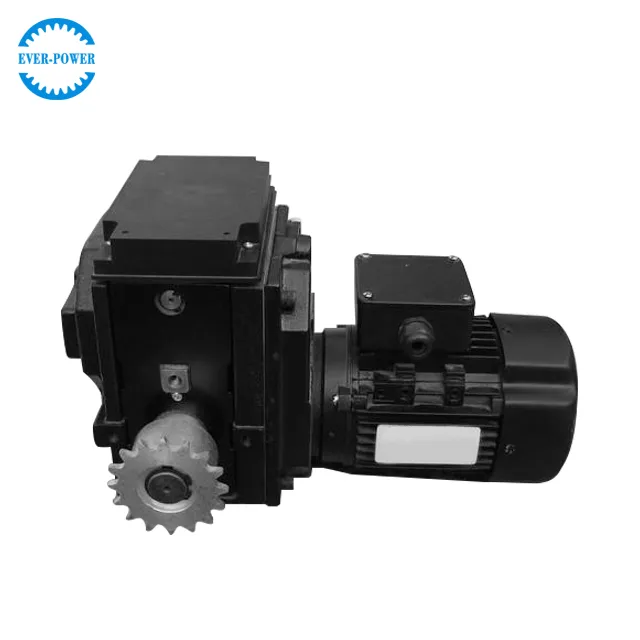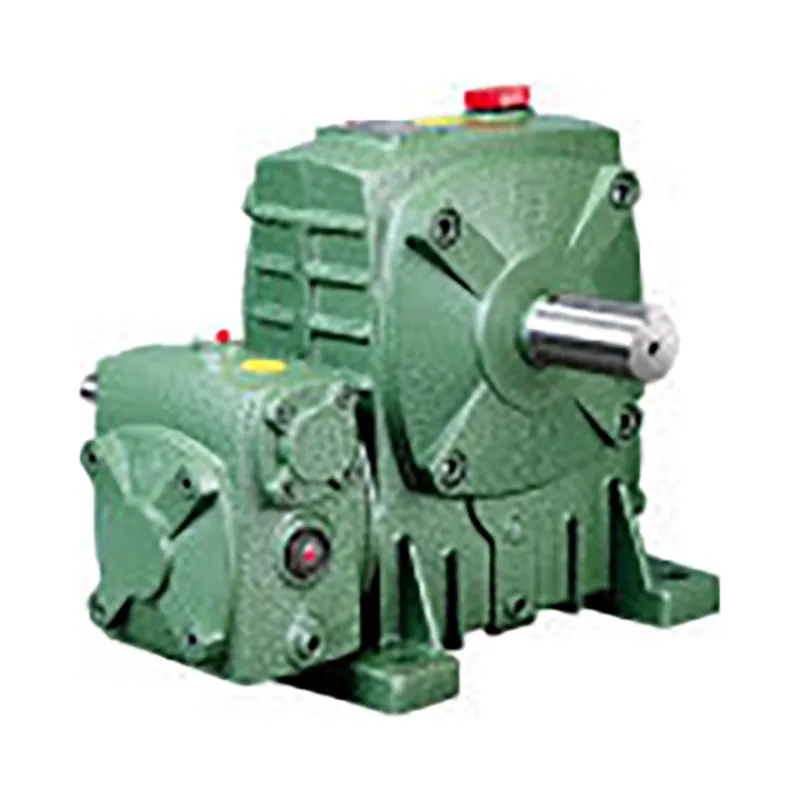
Imagine it’s 6:30 am on a high‑rise construction site. The morning shift is about to begin, materials are loaded, and the floor team is relying on the construction elevator to keep the day’s schedule on track. Suddenly, the lift shudders, emits a grinding noise, and goes silent. The control panel flashes an overload warning, but the real culprit is something far more critical — a failed reducer drive gear. This is the moment every project manager dreads, because an unexpected gear failure stops work, creates safety risks, and can cost thousands of dollars in emergency repairs and delays. It is exactly here that one question becomes urgent: What is the typical lifespan of a construction elevator reducer drive gear? The answer, while appearing simple, unlocks a web of design, maintenance, and operational choices that directly impact your bottom line. Industry data shows that a well‑manufactured reducer drive gear commonly lasts between 5 and 10 years under normal working conditions. However, in tough environments with heavy loads, contaminated lubricants, or skipped maintenance, that lifespan can drop to 2‑3 years — or even a few months. At Raydafon Technology Group Co.,Limited, we have spent years engineering high‑durability reducer drive gears that consistently outperform these expectations, helping procurement professionals like you reduce downtime and avoid the hidden costs of premature failure.
When you ask “what is the typical lifespan of a construction elevator reducer drive gear?” you must look beyond the datasheet. In practice, lifetime is shaped by the gear’s material, heat treatment, lubrication system, load spectrum, and environmental exposure. A gear designed for 10,000+ working hours can fail early if dust infiltrates the oil seal or if the cage motor is oversized. The typical lifespan, therefore, is a range — not a single number. Raydafon Technology Group Co.,Limited approaches this challenge by building gears with case‑hardened alloy steels, precision‑ground tooth profiles, and advanced sealing technologies that protect the gear mesh even on dusty job sites. The result is a drive gear that repeatedly reaches and often exceeds the upper bound of the typical lifespan range, giving fleet managers confidence in their equipment availability.
Picture a construction elevator reducer that worked flawlessly for 28 months. Suddenly, during a concrete pour on the 18th floor, the car begins to vibrate violently. Inspection reveals severe pitting on the pinion teeth and a cracked gear rim. The root cause? A misalignment combined with borderline lubrication that had gone unnoticed because the maintenance crew was pressed for time. This is the classic “gradual degradation then abrupt failure” pattern that turns a $500 gear replacement into a $50,000 project delay. Raydafon Technology Group Co.,Limited addresses such scenarios directly: our reducer drive gears are manufactured with anti‑pitting surface treatments and come with installation‑responsive alignment accessories. By choosing a partner that integrates durability into the gear design itself, you remove the weak links that lead to catastrophic shutdowns.
Every purchasing decision for a reducer drive gear should be grounded in measurable parameters. The table below summarizes the key factors that separate a standard gear from a high‑reliability one, and how Raydafon Technology Group Co.,Limited builds that difference into our products.
| Parameter | Impact on Gear Lifespan | Raydafon Advantage |
|---|---|---|
| Tooth surface hardness | Higher hardness resists wear and pitting, extending life significantly | Through‑hardened and case‑carburized to 58‑62 HRC |
| Gear accuracy grade | Higher precision reduces dynamic loads and noise, slowing fatigue crack growth | DIN 5‑6 grade after grinding, ensuring smooth meshing |
| Lubrication film strength | Adequate film prevents metal‑to‑metal contact, essential for long fatigue life | Optimized micro‑geometry paired with recommended synthetic oils |
| Impact load capacity | Ability to absorb overloads without tooth fracture protects against sudden failure | Advanced tooth root shot‑peening raises bending fatigue limit |
| Sealing & contamination resistance | Keeps abrasive particles out, directly preserving gear surface integrity | Labyrinth seals and high‑durability V‑rings as standard |
These parameters directly answer the question of what is the typical lifespan of a Construction Elevator Reducer Drive Gear — because when every parameter is optimized, the gear’s life moves from “typical” to “exceptional.”
Raydafon Technology Group Co.,Limited doesn’t just manufacture gears; we engineer complete power transmission solutions that redefine durability. Our engineering team conducts finite element analysis on each new reducer design, simulating years of heavy‑duty cycles to identify stress risers before production. Combined with quality certifications such as ISO 9001 and our in‑house metallurgical lab, we ensure every drive gear that reaches our customers meets specifications that surpass generic alternatives. For procurement professionals, this translates to fewer emergency phone calls, simpler maintenance planning, and a total cost of ownership that is substantially lower. By extending the typical lifespan of a construction elevator reducer drive gear well beyond industry benchmarks, Raydafon Technology Group Co.,Limited becomes your strategic advantage in project execution.
Q: What is the typical lifespan of a construction elevator reducer drive gear in harsh environments?
A: In harsh conditions — extreme dust, frequent overloads, or high humidity — the typical lifespan can be reduced by 40‑60% compared to clean indoor applications. However, with properly specified components from Raydafon Technology Group Co.,Limited, including sealed housings and surface‑hardened materials, you can still achieve a reliable 6‑8 year service life even under demanding site conditions.
Q: How can I proactively extend the lifespan of my elevator reducer drive gear?
A: Proactive extension begins with selecting a gear set that exceeds the application’s torque and load requirements. Then, enforce a strict lubrication schedule, monitor vibration for early detection of alignment issues, and partner with a manufacturer like Raydafon Technology Group Co.,Limited that provides technical support, spare part availability, and condition monitoring guidance. These steps can double the effective lifespan compared to a run‑to‑failure approach.
Every day your construction elevator stays in operation is a day you earn revenue and keep your project on schedule. Raydafon Technology Group Co.,Limited is committed to delivering reducer drive gears that answer the question “What is the typical lifespan of a construction elevator reducer drive gear?” with performance data, not just catalog numbers. Our international team works closely with elevator OEMs, rental companies, and site managers to provide tailored drive solutions that improve safety and reduce life‑cycle costs. Explore our full range at https://www.raydafon-power.com and take the first step toward maintenance‑friendly power transmission.
For direct inquiries and technical specifications, reach our engineering support team at [email protected]. We look forward to helping you extend equipment uptime with excellence you can trust.
Anderson, K. J., & Peters, M. (2017). “Gear Tooth Surface Fatigue in Construction Machinery Reducers.” Journal of Mechanical Design, 139(8), 081402.
Liu, Z., & Wang, Y. (2019). “Influence of Lubricant Contamination on the Lifespan of Elevator Drive Gears.” Tribology International, 134, 234-245.
Okamoto, S., et al. (2020). “Case‑Carburized Gear Performance Under Cyclic Overloads in Building Hoists.” Gear Technology, 37(4), 58-65.
Davies, P. R. (2018). “Predictive Maintenance Models for Construction Elevator Reducer Drives.” International Journal of Prognostics and Health Management, 9(2), 015.
Chen, H., & Lee, B. (2016). “Failure Analysis of a Helical Gear in a Passenger Construction Hoist.” Engineering Failure Analysis, 62, 128-137.
Patel, R. S. (2021). “Effect of Shot‑Peening on Bending Fatigue Strength of Reducer Gears.” Materials Science and Engineering A, 812, 141104.
Gonzalez, L., & Müller, T. (2019). “Sealing Solutions for Extending Gearbox Life in Dusty Environments.” Sealing Technology, 2019(5), 7-12.
Yamamoto, H. (2015). “Long‑Term Field Study of Construction Elevator Drive Gear Wear Patterns.” Elevator World, 63(11), 98-104.
Kowalski, M., & Nowak, P. (2020). “Optimization of Micro‑Geometry to Reduce Contact Stress in Elevator Reducer Gears.” Mechanism and Machine Theory, 149, 103823.
Mahmood, S., & Rehman, A. (2018). “ISO 6336‑Based Life Calculation vs. Real Service Life in Construction Machinery Gearboxes.” Applied Sciences, 8(11), 2167.