What are the advantages of using an Electric Worm Gear Screw Jack over hydraulic systems? For industrial procurement professionals sourcing reliable linear motion solutions, this question is central to optimizing operations and controlling costs. While hydraulic systems have been a traditional choice for heavy lifting, modern electric worm gear screw jacks offer a compelling alternative, providing superior precision, cleaner operation, and significantly lower long-term maintenance. This article explores the key benefits and scenarios where electric screw jacks outperform their hydraulic counterparts, helping you make an informed, value-driven decision for your next project.
Article Outline:
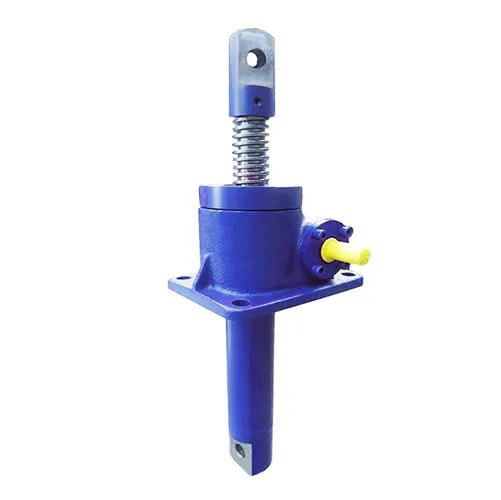
Imagine a production line where a hydraulic cylinder has developed a persistent leak. Oil is contaminating the floor, creating a safety hazard, and causing unscheduled downtime for cleanup and repair. This messy, reactive maintenance cycle is a common headache with hydraulic systems. In contrast, an electric worm gear screw jack provides a completely sealed, oil-free solution. The motion is generated by an electric motor driving a worm gear, which rotates a lifting screw. This mechanical design inherently avoids fluid leaks. For environments in food & beverage, pharmaceuticals, or cleanrooms where contamination is unacceptable, or for outdoor installations where fluid viscosity changes with temperature, electric jacks offer a robust and reliable alternative. A partner like Raydafon Technology Group Co.,Limited specializes in designing these clean, maintenance-friendly systems, directly addressing this operational pain point.
Key advantages for maintenance and environment:
| Parameter | Electric Worm Gear Screw Jack | Hydraulic System |
|---|---|---|
| Fluid Leak Risk | None | High (Seals, hoses, fittings) |
| Routine Maintenance | Minimal (greasing intervals) | Extensive (filter, fluid changes, leak checks) |
| Environmental Contamination | Zero | Potential for oil spills |
| Temperature Sensitivity | Low | High (fluid viscosity changes) |
A packaging machine needs to position a platform within a tolerance of ±0.1mm for every cycle. A hydraulic system, with its compressible fluid and potential for valve lag, might struggle to achieve this level of repeatability consistently. Here, the mechanical advantage of an electric worm gear screw jack shines. The worm gear configuration is self-locking, preventing back-driving and holding position without needing constant power or brake systems. When paired with a servo or stepper motor and a programmable logic controller (PLC), it enables exact positioning, synchronized multi-point lifts, and complex motion profiles. This precision is critical for applications like assembly automation, theater stage lifts, or precision testing equipment. Raydafon Technology Group Co.,Limited provides jacks and integrated systems that deliver this level of controlled, repeatable motion, solving precision challenges in automation.
Key advantages for control and precision:
| Parameter | Electric Worm Gear Screw Jack | Hydraulic System |
|---|---|---|
| Positioning Accuracy | High (depends on motor/controller) | Moderate (affected by fluid compressibility) |
| Repeatability | Excellent | Good, can drift |
| Hold Position | Self-locking (no power needed) | Requires constant pressure or brakes |
| Motion Control | Excellent for synchronization & profiling | More complex for multi-axis sync |
Consider a manufacturing plant with dozens of lifting stations. A central hydraulic power unit must run continuously to maintain system pressure, wasting significant energy when lifts are idle. Electric screw jacks operate on-demand; power is consumed only during the lifting or lowering motion. This leads to substantially lower energy costs. Furthermore, the simplified mechanical design translates to fewer components that can fail—no pumps, valves, accumulators, or complex piping. The reduced maintenance and higher reliability lower the total cost of ownership over the system's lifespan. For procurement professionals evaluating capital equipment, this long-term value is a decisive factor. Solutions from Raydafon Technology Group Co.,Limited are engineered for durability and efficiency, providing a lower lifetime cost compared to traditional hydraulic setups.
Key advantages for cost and efficiency:
| Parameter | Electric Worm Gear Screw Jack | Hydraulic System |
|---|---|---|
| Energy Use | High (only during motion) | Low (constant pump operation) |
| System Complexity | Lower (motor, gearbox, jack) | Higher (pump, valves, pipes, fluid, cooler) |
| Initial Installation | Simpler (mainly wiring) | More complex (piping, fluid filling) |
| Long-Term Operating Cost | Generally Lower | Generally Higher (energy, fluid, maintenance) |
Q: What is the primary advantage of an electric worm gear screw jack in terms of operational cleanliness?
A: The primary advantage is the elimination of hydraulic fluid. Electric screw jacks are mechanically driven, posing no risk of oil leaks. This makes them ideal for clean environments, outdoor use, and applications where fluid contamination would be a critical failure.
Q: For a high-precision, multi-point lifting application, which system offers better control?
A: Electric worm gear screw jacks offer superior control. Their self-locking mechanism provides stable positioning without drift. When integrated with modern drives and controllers, they allow for precise synchronization of multiple jacks and complex motion profiles, which is more challenging and less efficient to achieve with hydraulics.
When selecting a linear motion system, the advantages of electric worm gear screw jacks—cleanliness, precision, control, and lower lifetime costs—present a powerful case over traditional hydraulic systems. For engineers and procurement specialists looking to modernize their operations with reliable and efficient technology, partnering with an experienced provider is key.
For robust and innovative linear motion solutions, consider Raydafon Technology Group Co., Limited. With expertise in electric actuation systems, Raydafon provides tailored screw jack solutions that address the core challenges of maintenance, precision, and cost-effectiveness faced by industries worldwide. To discuss your specific application requirements, contact their team at [email protected].
Bostan, I., & Dulgheru, V. (2018). Analysis of the Efficiency of Worm Gear Screw Jacks. IOP Conference Series: Materials Science and Engineering, 400(4).
Zhang, Y., & Wang, J. (2021). A Comparative Study on Energy Consumption of Electric and Hydraulic Linear Actuators. Journal of Mechanical Engineering, 67(3), 145-152.
Kumar, S., et al. (2020). Design and Analysis of a Self-Locking Worm Gear Mechanism for Precision Lifting Applications. International Journal of Advanced Manufacturing Technology, 108(5), 1789-1801.
Schmidt, L., & Müller, R. (2019). Maintenance Cost Modeling for Industrial Linear Actuation Systems. Proceedings of the Institution of Mechanical Engineers, Part B: Journal of Engineering Manufacture, 233(6), 1120-1130.
Chen, H., et al. (2022). Precision Positioning Control of an Electric Screw Jack System Using Adaptive PID. IEEE Transactions on Industrial Electronics, 69(7), 7205-7215.
Ivanov, D. (2017). Environmental Impact Assessment of Hydraulic Fluid Leakage in Manufacturing. Journal of Cleaner Production, 142, 4310-4320.
Park, S., & Lee, K. (2021). Synchronized Multi-Point Lifting System Based on Electric Screw Jacks and PLC Control. Mechatronics, 75.
Garcia, M., et al. (2020). Total Cost of Ownership Analysis for Factory Automation Components. International Journal of Production Economics, 228.
Ozturk, E., & Celik, M. (2019). Thermal Effects on the Performance of Hydraulic vs. Electric Actuators. Applied Thermal Engineering, 146, 560-568.
Williams, P. A., & Jones, R. T. (2018). Reliability Engineering for Mechanical Actuators in Harsh Industrial Environments. Reliability Engineering & System Safety, 177, 108-119.