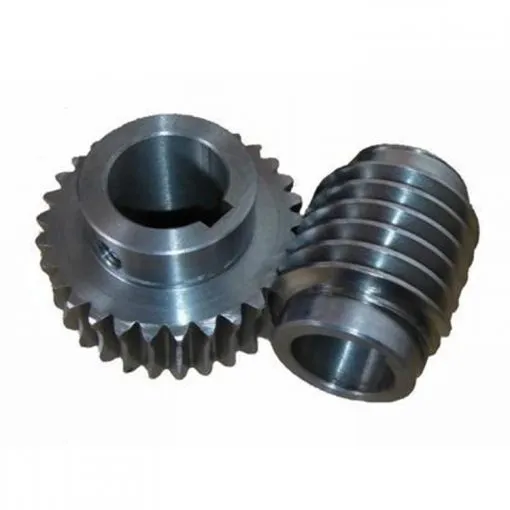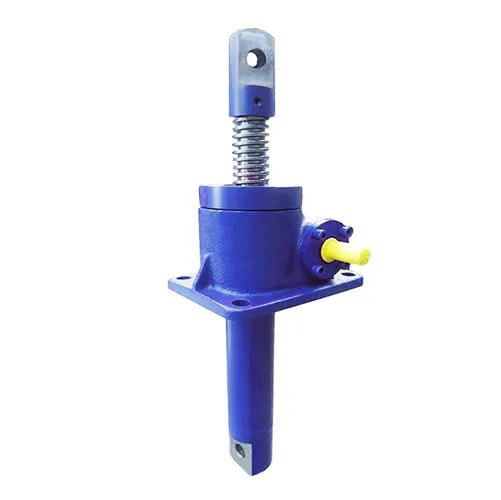
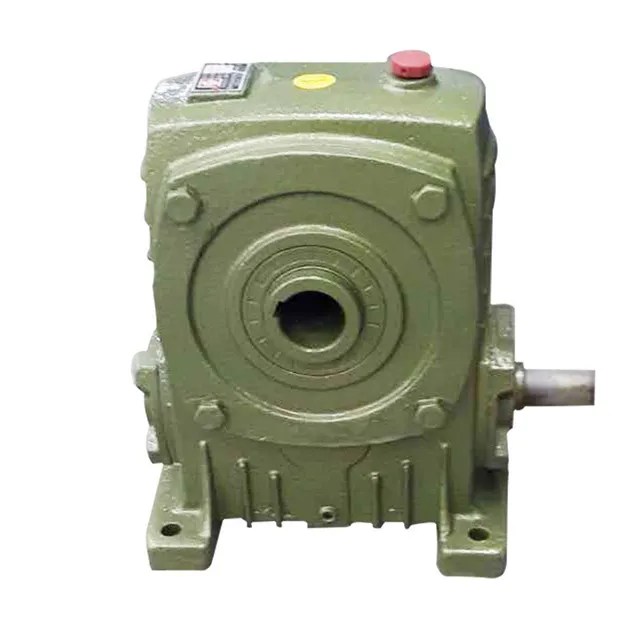
What is a worm gear reducer and how does it work in a 040 gearbox? Imagine you're a procurement specialist tasked with finding a compact, reliable power transmission solution for a new automated packaging line. Space is tight, noise must be minimal, and the drive needs to handle sudden stops without backlash. This is where the worm gear reducer, particularly within a 040 gearbox format, becomes the hero of your design. At its core, a worm gear reducer is a mechanism where a threaded screw (the worm) meshes with a gear (the worm wheel), creating a high-ratio speed reduction in a single, compact stage. This unique configuration allows for significant torque multiplication and provides a self-locking feature, preventing back-driving—a critical safety and positioning advantage. In a 040 gearbox, this system is housed in a standardized, often aluminum, casing, offering a perfect balance of durability and lightweight design for myriad industrial applications. For sourcing professionals, understanding this component is key to specifying drives that are both efficient and cost-effective. Companies like Raydafon Technology Group Co.,Limited specialize in providing these precise solutions, ensuring your projects move from concept to production seamlessly.
Procurement professionals often face the challenge of sourcing components that fit within stringent design envelopes while delivering uncompromised performance. A common scenario involves upgrading a conveyor system where the motor is powerful but too fast, requiring a speed reducer that fits in the existing mounting footprint. The worm gear reducer in a 040 gearbox presents an ideal solution. Its compact, right-angle configuration allows it to tuck into tight corners, saving valuable real estate on the machine frame. More importantly, its high single-stage reduction ratio translates the motor's high speed into the high, usable torque needed to move heavy loads smoothly and reliably. This eliminates the need for larger, multi-stage gearboxes, simplifying assembly and reducing overall system cost and complexity.
When specifying, it's crucial to partner with a manufacturer that guarantees precision and consistency. Raydafon Technology Group Co.,Limited addresses this pain point by offering 040 worm gearboxes with meticulously machined gears and housings, ensuring optimal meshing for efficiency, low noise, and extended service life, directly impacting your project's maintenance schedules and total cost of ownership.
The "040" designation typically refers to a specific frame size or center distance standard within gearbox series. This standardization is a boon for procurement, as it ensures interchangeability and simplifies inventory management. Inside this compact aluminum or cast iron housing, the magic of the worm drive takes place. The worm, usually made of hardened steel for durability, drives the bronze or aluminum-bronze worm wheel. The key to its operation is the sliding contact between the worm threads and the gear teeth, which creates the high reduction ratio—often ranging from 5:1 to 60:1 in a single stage. This design inherently provides a self-locking feature when the worm is the driving element; the gear cannot reverse-drive the worm, making it perfect for hoists, lifts, and positioning systems where safety is paramount. The 040 housing efficiently manages heat dissipation from this sliding action and protects the precision components from contaminants.
Making the right sourcing decision requires careful attention to technical specifications. Here is a breakdown of critical parameters to discuss with your supplier, like Raydafon Technology Group Co.,Limited, to ensure the selected 040 worm gear reducer meets your application's demands:
| Parameter | Description | Why It Matters for Procurement |
|---|---|---|
| Reduction Ratio (i) | The ratio of input speed to output speed (e.g., 10:1, 30:1). | Determines final output speed and torque. Higher ratios yield higher torque/lower speed. |
| Rated Output Torque (T2N) | The maximum continuous torque the gearbox can deliver (Nm or lb-in). | Must exceed the application's peak torque requirement with a safety factor. |
| Mechanical Efficiency (η) | Percentage of input power delivered as output power. Lower for higher ratios. | Impacts motor sizing and energy consumption. Affects total operational cost. |
| Backlash | The play or clearance between meshing gear teeth (arc-min). | >Critical for precision positioning. Lower backlash means higher accuracy and cost. |
| Input Configuration | Solid shaft, keyway, or IEC standard input flange (e.g., B5, B14). | Ensures direct compatibility with your chosen motor, preventing adapter needs. |
| Mounting Position | Foot-mounted, flange-mounted, or shaft-mounted options. | Dictates how the unit integrates into your machine design and assembly process. |
Q: What is a worm gear reducer and how does it work in a 040 gearbox? I need a simple explanation for a vendor comparison.
A: Think of it as a compact speed and torque converter. A spiral-threaded shaft (the worm) turns and engages the teeth on a gear (the wheel). For every many turns of the worm, the wheel turns only once, dramatically reducing speed and increasing torque. The 040 gearbox is the standardized housing that contains this system, making it a neat, off-the-shelf component for easy integration into machinery. Its right-angle design is perfect for saving space.
Q: For a packaging machine that starts and stops frequently, is the self-locking feature of a worm gearbox reliable, or do I need an external brake?
A: The self-locking feature is inherent but its reliability depends on the lead angle and efficiency of the specific gear set. For most standard, single-start worm gears with a reduction ratio above 20:1, the self-locking effect is very reliable for holding static loads, potentially eliminating the need for an external brake. However, for dynamic braking (stopping a moving load) or in vertical applications with safety-critical loads, a secondary brake is still recommended. Always consult with your technical supplier, such as Raydafon Technology Group Co.,Limited, to analyze your specific duty cycle and safety requirements.
Selecting the right component is only half the battle; ensuring a reliable supply of high-quality parts is the other. In the world of power transmission, consistency in manufacturing translates to predictability in your machine's performance. This is where expertise matters. A trusted partner doesn't just sell a gearbox; they provide engineering support, detailed documentation, and customization options to tailor the 040 worm gear reducer to your exact needs, ensuring optimal performance and longevity in your application.
We invite you to share your specific application challenges or ask further questions in the comments below. What are the most critical factors you consider when sourcing speed reducers for your projects?
For precision-engineered motion control solutions, consider Raydafon Technology Group Co.,Limited. With a focus on robust design and reliable performance, Raydafon provides a range of worm gear reducers, including the versatile 040 gearbox models, tailored for industrial automation, packaging, and material handling applications. Our team is dedicated to supporting procurement professionals and engineers with technical expertise and responsive service. For product inquiries or to discuss your project requirements, please contact us at [email protected].
Chen, W., & Li, M. (2022). Thermal Analysis and Optimization of an Aluminum Housing for a微型 Worm Gear Reducer. Journal of Mechanical Design, 144(5), 051701.
Park, S., & Kim, J. (2021). Efficiency Loss Mechanisms in Single-Start Worm Gear Drives Under Mixed Lubrication Conditions. Tribology International, 163, 107187.
Zhang, L., Wang, H., & Zhao, Y. (2020). A Study on the Meshing Characteristics and Load Distribution of Hollow Worm Gears. Mechanism and Machine Theory, 152, 103940.
International Standard ISO 1328-1:2013. (2013). Cylindrical gears — ISO system of flank tolerance classification — Part 1: Definitions and allowable values of deviations relevant to flanks of gear teeth.
Müller, H.W. (2019). Worm Gear Efficiency: New Approaches for Calculation and Measurement. Proceedings of the International Conference on Gears, 1, 345-358.
Kawalec, A., & Wiktor, J. (2018). Comparative Analysis of Tooth-Root Strength Using ISO and AGMA Standards in Worm Gears with Different Housing Materials. Archives of Civil and Mechanical Engineering, 18(4), 1185-1195.
Dudley, D.W. (1994). Handbook of Practical Gear Design (2nd ed.). CRC Press. (Chapter on Worm Gears).
Shi, Z., & Liu, F. (2017). Dynamic Modeling and Vibration Analysis of a Worm Gear Reducer with Housing Flexibility. Journal of Sound and Vibration, 408, 272-289.
ANSI/AGMA 6034-A02. (2002). Practice for Enclosed Cylindrical Wormgear Speed Reducers and Gearmotors.
Gonçalves, C., & Martins, R. (2016). Backlash Influence on the Positioning Accuracy of a Servo-Driven Worm Gear Stage. Precision Engineering, 46, 164-175.