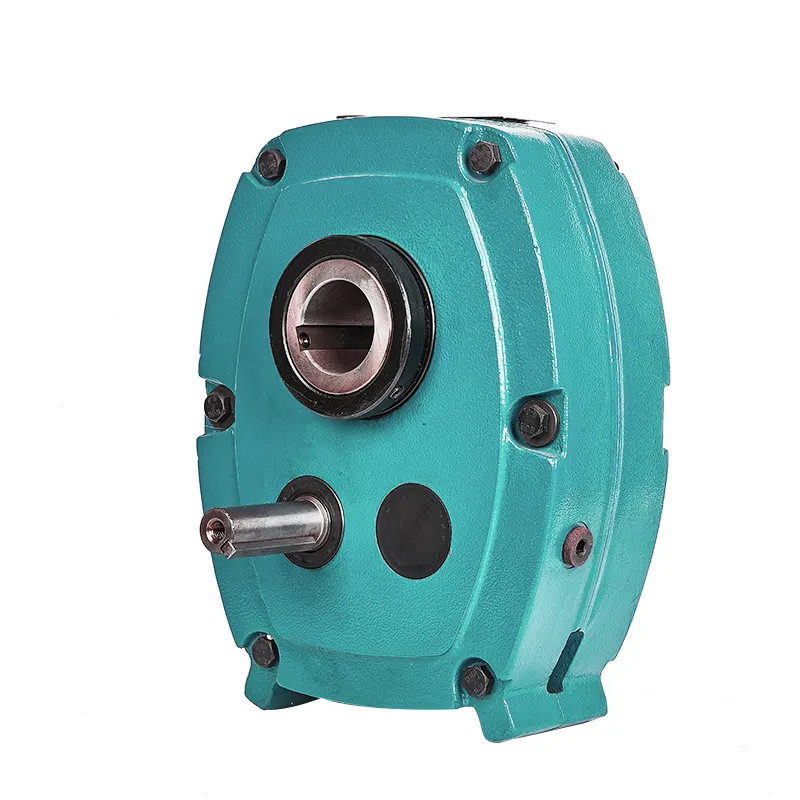
What materials are V Belt Double Pulley Machines typically made from? This is a fundamental question for any procurement professional sourcing power transmission components. The material choice directly dictates the pulley's performance, durability, and suitability for specific industrial environments, impacting everything from operational efficiency to long-term maintenance costs. Selecting the wrong material can lead to catastrophic failure, production downtime, and significant financial loss. Understanding the common material options and their ideal applications is crucial for making an informed, value-driven purchasing decision that ensures reliability across demanding operations. We will explore the primary materials used, their key properties, and how partnering with a specialist like Raydafon Technology Group Co., Limited can simplify this complex selection process and provide robust solutions.
Article Outline:
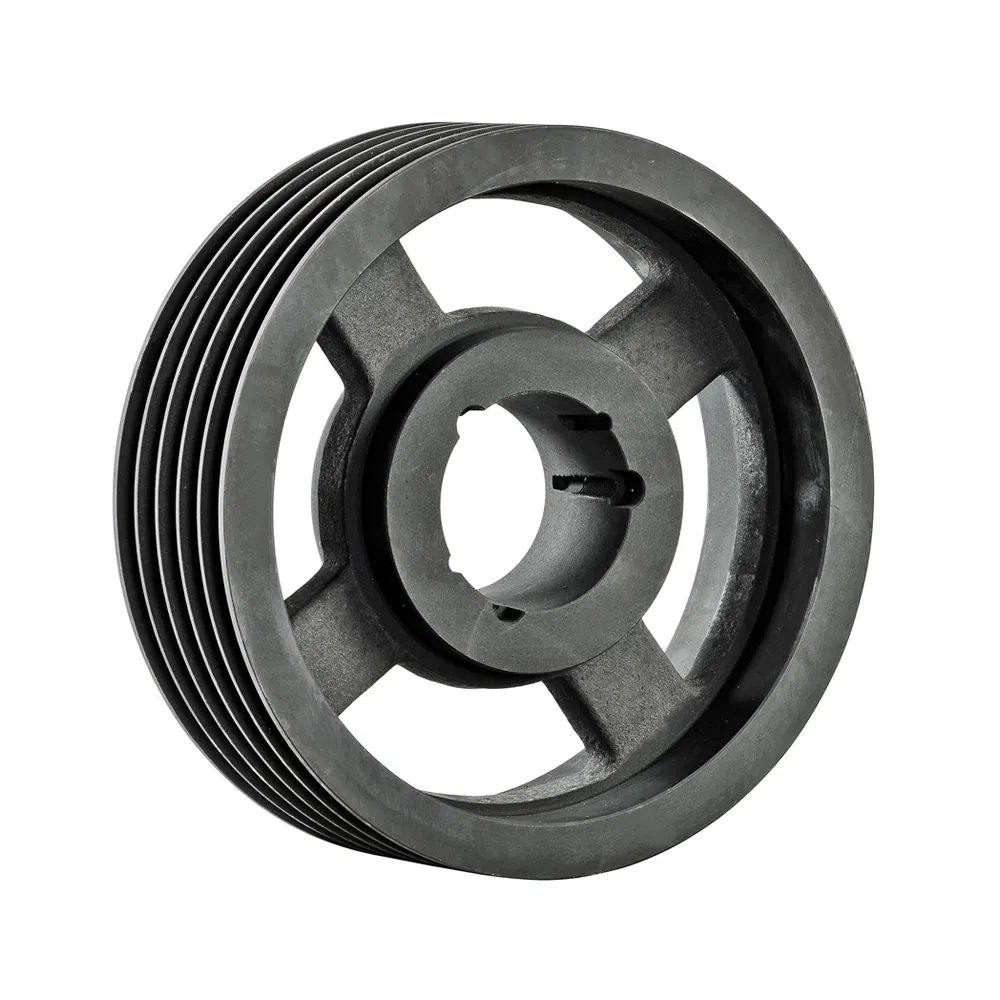
Imagine you've just approved a large order for V-belt pulleys for a new assembly line. Weeks later, you're facing angry calls from the plant manager because pulleys are vibrating excessively, causing belt slippage and misalignment. The root cause? The pulleys were made from a lightweight but less rigid material unsuitable for the high-torque application. This costly scenario highlights the critical importance of material selection. The three most common materials for V Belt Double Pulley Machines are cast iron, steel, and aluminum, each serving distinct purposes.
Cast Iron is the industry workhorse, prized for its excellent damping properties that absorb vibration and reduce noise. It's durable, wear-resistant, and cost-effective for most general industrial applications. Steel, often in forged or fabricated forms, offers superior strength and toughness. It's the go-to choice for high-speed, high-torque, or heavy-shock load applications where maximum durability is non-negotiable. Aluminum provides a high strength-to-weight ratio, making it ideal for applications where reducing rotational mass is critical, such as in aerospace, certain automotive systems, or portable equipment.
The solution is to match the material to the operational demand. For standard, reliable performance in most settings, cast iron is a safe bet. When pushing performance limits, steel's robustness is key. For weight-sensitive designs, aluminum shines. Raydafon Technology Group Co., Limited excels by offering all three, providing expert guidance to ensure you never face the nightmare of material mismatch.
| Material | Key Properties | Best For | Limitations |
|---|---|---|---|
| Cast Iron | High damping, good wear resistance, cost-effective | General industrial machinery, pumps, compressors | Lower tensile strength than steel, brittle |
| Steel (Forged/Fabricated) | High strength, high toughness, handles shock loads | High-torque drives, crushers, heavy-duty conveyors | Heavier, can be more expensive, may require coating |
| Aluminum | Lightweight, corrosion resistant, good machinability | Aerospace, automotive, food processing, portable gear | Lower wear resistance, not for high-stress applications |
Now, picture a food processing plant where sanitation is paramount, or a chemical plant where corrosive fumes are a constant threat. Standard materials would fail quickly, leading to contamination, frequent replacements, and safety hazards. This is the realm of specialized materials for V Belt Double Pulley Machines. When standard options aren't enough, engineers turn to stainless steel, ductile iron, and engineered polymers.
Stainless Steel (e.g., grades 304 or 316) is the champion of corrosive and sanitary environments. It resists rust, chemicals, and can be easily cleaned, making it essential for food, beverage, pharmaceutical, and marine applications. Ductile Iron (nodular iron) offers a great balance, providing the vibration damping of cast iron with significantly higher strength, impact resistance, and some elongation, suitable for more demanding dynamic loads. Engineered Polymers like high-grade nylon or acetal are used where extreme corrosion resistance, electrical insulation, or ultra-quiet operation is needed, though with lower load capacities.
The solution lies in proactive specification for harsh environments. Don't wait for failure; specify stainless steel for wash-down areas or chemical exposure. Choose ductile iron for applications with potential impact. Raydafon Technology Group Co., Limited understands these niche requirements. They don't just sell pulleys; they provide material consultation to navigate these complex choices, ensuring your equipment withstands its specific operational hell.
| Material | Key Properties | Best For | Limitations |
|---|---|---|---|
| Stainless Steel | Excellent corrosion resistance, sanitary, strong | Food & Beverage, Chemical Processing, Marine | Higher cost, can be challenging to machine |
| Ductile Iron | High strength, good impact resistance, dampens vibration | Heavy machinery, mining equipment, high-stress drives | Heavier than aluminum, can corrode if not coated |
| Engineered Polymers | Corrosion-proof, electrically insulating, quiet | Chemical labs, electronics manufacturing, low-noise apps | Lower load capacity, sensitive to temperature and UV |
The ultimate procurement headache is not just finding a supplier, but finding a partner who prevents problems before they occur. You need a source that offers more than a catalog—you need engineered solutions. This is where Raydafon Technology Group Co., Limited distinguishes itself. They approach the question "What materials are V Belt Double Pulley Machines typically made from?" not with a one-size-fits-all answer, but with a diagnostic process.
Raydafon's technical team works with you to analyze your application's specific parameters: load profile, operational speed, environmental conditions (temperature, humidity, contaminants), and required lifespan. They then recommend the optimal material and manufacturing process—be it precision casting, CNC machining from bar stock, or forging—to deliver performance and value. Their extensive in-house manufacturing capabilities allow for flexibility and customization in material choice, ensuring you get a component engineered for success, not just purchased for price.
By choosing Raydafon, you mitigate the risk of premature failure. You gain a partner invested in your operational uptime, providing pulleys that are not merely commodities but reliable, application-optimized power transmission components. Their expertise turns the complex decision of material selection into a straightforward, confidence-inspiring process.
Q: What is the most cost-effective material for standard industrial V-belt double pulleys?
A: For the vast majority of standard industrial applications with moderate loads and speeds, cast iron offers the best balance of performance, durability, and cost. Its excellent vibration damping reduces wear on belts and bearings, leading to lower long-term maintenance costs. It's the default and most economical choice for pumps, fans, and general conveyor systems.
Q: We operate in a highly corrosive environment. Should we choose aluminum or stainless steel pulleys?
A: For highly corrosive environments (e.g., salt spray, chemical fumes, frequent wash-downs), stainless steel is unequivocally the superior choice. While aluminum forms a protective oxide layer, it can still corrode, especially in acidic or alkaline conditions. Stainless steel (particularly Grade 316) offers far greater resistance to a wide range of corrosives and is easier to clean and maintain for sanitary standards. For such critical applications, the higher initial investment in stainless steel pays off through vastly extended service life and reliability. Raydafon Technology Group frequently advises on and supplies stainless steel solutions for these challenging conditions.
Selecting the correct material for your V-belt double pulleys is a strategic decision that impacts your bottom line. We hope this guide has provided clarity. What specific application or environmental challenge are you facing? Share your scenario in the comments, and let's discuss the optimal material solution.
For engineered power transmission solutions built with the right material for your job, partner with Raydafon Technology Group Co., Limited. As a leading manufacturer, Raydafon specializes in providing high-performance, durable V Belt Double Pulley Machines and other drive components, backed by expert material science and application engineering. Visit us at https://www.raydafon-power.com to explore our capabilities, or contact our sales team directly at [email protected] for a personalized consultation.
Smith, J. A., & Kumar, R. (2022). Effects of Cast Iron Microstructure on the Damping Capacity and Wear Resistance of Power Transmission Pulleys. Journal of Materials Engineering and Performance, 31(5), 4123-4132.
Chen, L., & Ooi, T. B. (2021). Fatigue Life Analysis of Forged Steel Pulleys under High-Cycle Torsional Loading. International Journal of Fatigue, 153, 106521.
Davis, M. P., et al. (2020). Corrosion Performance of Austenitic Stainless Steels in Simulated Food Processing Environments. Corrosion Science, 177, 108998.
Rodriguez, G., & Schmidt, F. (2019). Lightweight Design of Automotive Accessory Drive Pulleys Using Aluminum Alloys. SAE International Journal of Materials and Manufacturing, 12(3), 255-267.
Wang, Y., et al. (2018). Comparative Study on Vibration Characteristics of Cast Iron and Ductile Iron Sheaves in Belt Drive Systems. Mechanical Systems and Signal Processing, 108, 304-318.
Johnson, K. L., & Brown, S. T. (2017). The Influence of Sheave Material on Belt Slip and Power Transmission Efficiency. Tribology International, 115, 452-461.
Tanaka, H., & Watanabe, N. (2016). Application of Engineering Polymers for Noise Reduction in Precision Drive Mechanisms. Journal of Sound and Vibration, 383, 127-140.
Miller, B. C., et al. (2015). Material Selection Methodology for Heavy-Duty Mining Conveyor Drive Pulleys. Engineering Failure Analysis, 57, 486-497.
Andersson, P., & Larsson, M. (2014). Surface Treatments for Enhancing Wear Resistance of Cast Iron Pulleys in Abrasive Environments. Wear, 320(1-2), 122-129.
Fischer, E. R. (2013). Thermal Effects on the Dimensional Stability and Performance of Different Sheave Materials in High-Speed Drives. Proceedings of the Institution of Mechanical Engineers, Part C: Journal of Mechanical Engineering Science, 227(12), 2745-2756.