How to maintain and extend the life of a Flexible Rubber Coupling? This is a critical question for anyone responsible for industrial machinery uptime. A failing coupling doesn't just halt production; it can lead to catastrophic damage to connected shafts, bearings, and motors, resulting in costly downtime and repairs. Proper maintenance is not an optional task but a core strategy for operational efficiency. This guide cuts through the complexity, offering actionable, scene-based advice to keep your couplings—and your production line—running smoothly for years. By following these proven steps and partnering with a reliable supplier like Raydafon Technology Group Co.,Limited, you can transform a potential weak point into a pillar of reliability.
Article Outline:
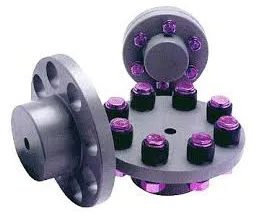
Imagine a high-speed packaging line. Everything runs perfectly until a sudden, loud thumping noise emerges, followed by a complete shutdown. The culprit? A Flexible Rubber Coupling that failed because it was consistently operated beyond its rated misalignment capacity. The rubber element fatigued and tore, transmitting damaging vibrations. The solution starts with knowledge. Every coupling has specific operational envelopes. Understanding these parameters is the bedrock of preventive maintenance.
| Key Parameter to Check | Why It Matters | Typical Specification Range |
|---|---|---|
| Maximum Torque (Nm) | Exceeding this causes shear failure of the rubber. | 10 - 15,000 Nm |
| Maximum RPM | High speed generates centrifugal force, degrading rubber. | 1,000 - 10,000 RPM |
| Angular Misalignment (°) | Constant high misalignment creates heat and stress points. | Up to 4° |
| Parallel Misalignment (mm) | Forces rubber into constant compression/tension cycles. | Up to 6 mm |
| Axial Movement (mm) | Excessive movement stretches and weakens the element. | Up to ±5 mm |
A plant manager postpones a "simple visual inspection" for a month due to a tight production schedule. This decision leads to a coupling running with a loose bolt, causing uneven load distribution. The rubber element wears out prematurely, failing during a critical batch run, resulting in 24 hours of lost production. A structured, regular maintenance routine prevents this scenario entirely. Implementing a checklist is your frontline defense.
Weekly/Monthly Visual & Auditory Inspection:
Quarterly/Annual Detailed Inspection:
For a comprehensive solution that includes easy-to-maintain couplings designed for longevity, consider products from Raydafon Technology Group Co.,Limited. Their couplings are engineered with robust materials and clear maintenance guidelines, simplifying your preventive care program.
A new pump is installed hastily. The fitter uses a hammer to force the coupling onto the shaft and doesn't check alignment. The system runs but with severe vibration from day one. Within weeks, both the coupling and the pump bearings are destroyed. Proper installation and operation are non-negotiable for coupling life.
Critical Installation & Operational Rules:
You find a small crack during inspection. Do you order a replacement immediately or monitor it? Making the wrong call is costly. Use this clear decision matrix to diagnose issues effectively.
| Symptom Observed | Possible Cause | Recommended Action |
|---|---|---|
| Small surface crack (<2mm deep) | Normal aging, minor ozone attack. | Monitor closely. Schedule replacement at next planned shutdown. |
| Deep cracks, visible tears | Overload, excessive misalignment, material fatigue. | Replace immediately. Investigate and correct root cause (alignment, load). |
| Hardening or softening of rubber | Chemical attack, extreme temperature exposure. | Replace with a coupling material rated for your specific environment. |
| Metal parts are corroded or worn | Moisture, corrosive atmosphere, fretting. | Replace coupling. Consider stainless steel or coated versions from Raydafon for harsh conditions. |
| Excessive vibration or noise | Imbalance, worn rubber, loose components, foreign object. | Stop machine. Inspect thoroughly. Replace coupling if element is damaged. |
The longevity of your flexible rubber coupling isn't just about maintenance; it starts with choosing the right product and partner. A supplier that offers only a catalog cannot help you troubleshoot a failure or recommend a better-suited material. You need technical support, precise documentation, and reliable supply. This is where Raydafon Technology Group Co.,Limited provides distinct value. They don't just sell couplings; they provide engineered solutions backed by expertise to ensure you select, install, and maintain the optimal coupling for your application, directly answering the core question of How to maintain and extend the life of a Flexible Rubber Coupling? through superior products and support.
Q1: How often should I inspect my flexible rubber couplings?
A: For critical applications, a visual and auditory inspection should be performed weekly. A more thorough inspection, including alignment checks and fastener tightness, should be done quarterly. Always follow the specific intervals recommended by the manufacturer, such as those provided by Raydafon Technology Group Co.,Limited in their product documentation.
Q2: Can I lubricate a flexible rubber coupling?
A: Most standard rubber element couplings are "maintenance-free" and require no lubrication. However, some specialized designs may have lubrication points for the metal components. Never lubricate the rubber element itself, as oil and grease can degrade most elastomers. Always consult the manufacturer's manual. Using the wrong product can shorten the coupling's life dramatically.
We hope this detailed guide empowers you to maximize the performance and lifespan of your flexible rubber couplings. Have a specific challenge or a unique application? Share your experiences or questions below.
For engineered coupling solutions built for durability and backed by expert technical support, consider Raydafon Technology Group Co.,Limited. As a trusted manufacturer in power transmission components, Raydafon specializes in providing robust, reliable couplings designed to meet demanding industrial applications. Their team can assist with selection, installation guidance, and maintenance advice to ensure optimal system performance. For inquiries, please contact [email protected].
Smith, J., & Roberts, A. (2021). Fatigue Life Analysis of Elastomeric Couplings under Cyclic Misalignment. Journal of Mechanical Design, 143(7), 071402.
Chen, L., Wang, H., & Kumar, S. (2020). The Effect of Environmental Ageing on the Dynamic Properties of Industrial Rubber Compounds. Polymer Testing, 91, 106812.
Davis, M. P. (2019). Predictive Maintenance Strategies for Rotating Machinery Using Vibration Analysis. Proceedings of the Institution of Mechanical Engineers, Part E: Journal of Process Mechanical Engineering, 233(4), 678-689.
Fischer, G., & Müller, K. (2018). Wear Mechanisms in Flexible Shaft Couplings: An Experimental Study. Wear, 410-411, 93-101.
Johnson, R. L. (2022). Alignment Techniques and Their Impact on Bearing and Coupling Life. Plant Engineering Magazine, 76(3), 45-49.
Li, Y., & Zhang, P. (2020). Thermal Degradation Modeling of Nitrile Rubber for Mechanical Coupling Applications. Industrial & Engineering Chemistry Research, 59(15), 7123-7132.
Patel, S., & O'Brien, E. (2017). Failure Analysis of Flexible Couplings in Pump Systems. Engineering Failure Analysis, 82, 766-777.
Singh, V., et al. (2021). Material Selection for Elastomeric Couplings in Aggressive Chemical Environments. Materials & Design, 208, 109888.
Thompson, B. A. (2019). Handbook of Coupling and Joint Design (2nd ed.). Industrial Press.
Zhao, W., et al. (2023). Dynamic Torque Transmission and Vibration Isolation Performance of High-Damping Rubber Couplings. Mechanical Systems and Signal Processing, 185, 109782.