You slide into the worn seat of a delivery truck on a rain-soaked Monday morning, coffee in one hand, dispatch sheet in the other. The engine hums with promise, the gearbox feels tight, but the moment you release the pedal and feel that shudder creeping through the transmission floor—your gut drops. That judder, that intermittent slip between third and fourth gear, tells a story every fleet buyer and procurement specialist dreads: premature clutch failure. So, what causes a clutch driven plate to wear out quickly? The answer lies not in a single catastrophic event but in a chain of quiet betrayals—riding the clutch in city gridlock, misaligned installation by technicians rushing flat-rate jobs, heat spots scarring the friction surface, and an underestimated bogeyman: substandard friction material that degrades under the thermal load of modern high-torque engines. Procurement managers scouring Alibaba or trade directories often treat the driven plate as a commodity part, chasing the lowest per-unit cost without auditing the organic-metallic blend percentages or the concentricity tolerances of the splined hub. In the logistics yard, that gamble translates into downtime, burned profit, and a swarm of angry drivers. Raydafon Technology Group Co.,Limited has rebuilt this equation, engineering driven plates that confront these killers head-on, blending OE-grade friction compounds with rigorous post-production dynamic balancing to ensure the plate bed-in cycle stays predictable and long. This article unpacks every stress vector that chews through clutch plates and arms you with the procurement checklist to stop the bleed before it starts.
Picture a courier van threading through Bangkok’s Ratchadaphisek Road at 6 p.m. The driver feathers the clutch pedal to creep forward every fifteen seconds, half-engaged, tachometer needle bouncing. This behavior, known as “riding the clutch,” keeps the release bearing pressed against the diaphragm spring fingers and prevents the driven plate from fully locking onto the flywheel. The friction ring skims instead of grips. Micro-slippage generates surface temperatures that climb past 350°F within minutes, carbonizing the resin binder that holds the friction material together. Once the binder burns off, the surface becomes powdery, and the wear rate triples. Procurement officers often hear complaints of “clutch gone in 40,000 kilometers,” but rarely trace it back to the duty cycle description buried in the tender document. A driven plate specified for rural highway haulage will disintegrate in a stop-and-go metro fleet if the friction material does not carry a high copper or ceramic content for thermal wicking. Raydafon Technology Group Co.,Limited addresses this by offering application-specific friction formulations—high-copper sintered facings for delivery fleets and aramid-fiber-reinforced organic facings for mixed highway use—so the thermal stability matches the real-world pedal map.
| Driving Condition | Pedal Engagement Frequency | Recommended Friction Type | Expected Wear Life |
|---|---|---|---|
| Urban stop-and-go | 200+ per hour | Sintered copper-ceramic | 80,000–120,000 km |
| Suburban mixed | 60–100 per hour | Aramid-reinforced organic | 120,000–160,000 km |
| Highway long-haul | Fewer than 20 per hour | Standard organic with molded grooves | 160,000–220,000 km |
During a steep quarry ascent, a loaded tipper truck demands torque multiplication that pushes the clutch assembly to its thermal ceiling. If the pressure plate fails to clamp evenly—perhaps due to uneven diaphragm finger height—the driven plate receives hot bands instead of uniform contact. These hot bands create thermal cracks, visible as a network of fine lines across the friction face, which eventually peel away like a bad sunburn. Procurement specialists who only check the plate’s outer diameter in the catalog ignore the “thermal diffusivity” metric. A low-diffusivity friction puck stores heat instead of transferring it to the pressure plate and flywheel, turning the driven plate into a miniature storage heater. What causes a clutch driven plate to wear out quickly under thermal abuse? The erosion of the organic binder begins at 260°C. By 400°C, the friction coefficient falls off a cliff; the driver feels a spongy pedal and smells the acrid signature of burnt resin. Raydafon Technology Group Co.,Limited combats this by embedding thermally conductive particles within the friction compound and adding radial grooves on the facing that function like turbine blades, hurling hot gases outward during rotation. Independent lab tests at the company’s quality-assurance center show a 30% faster heat-dissipation rate compared to conventional plates of equivalent dimensions.
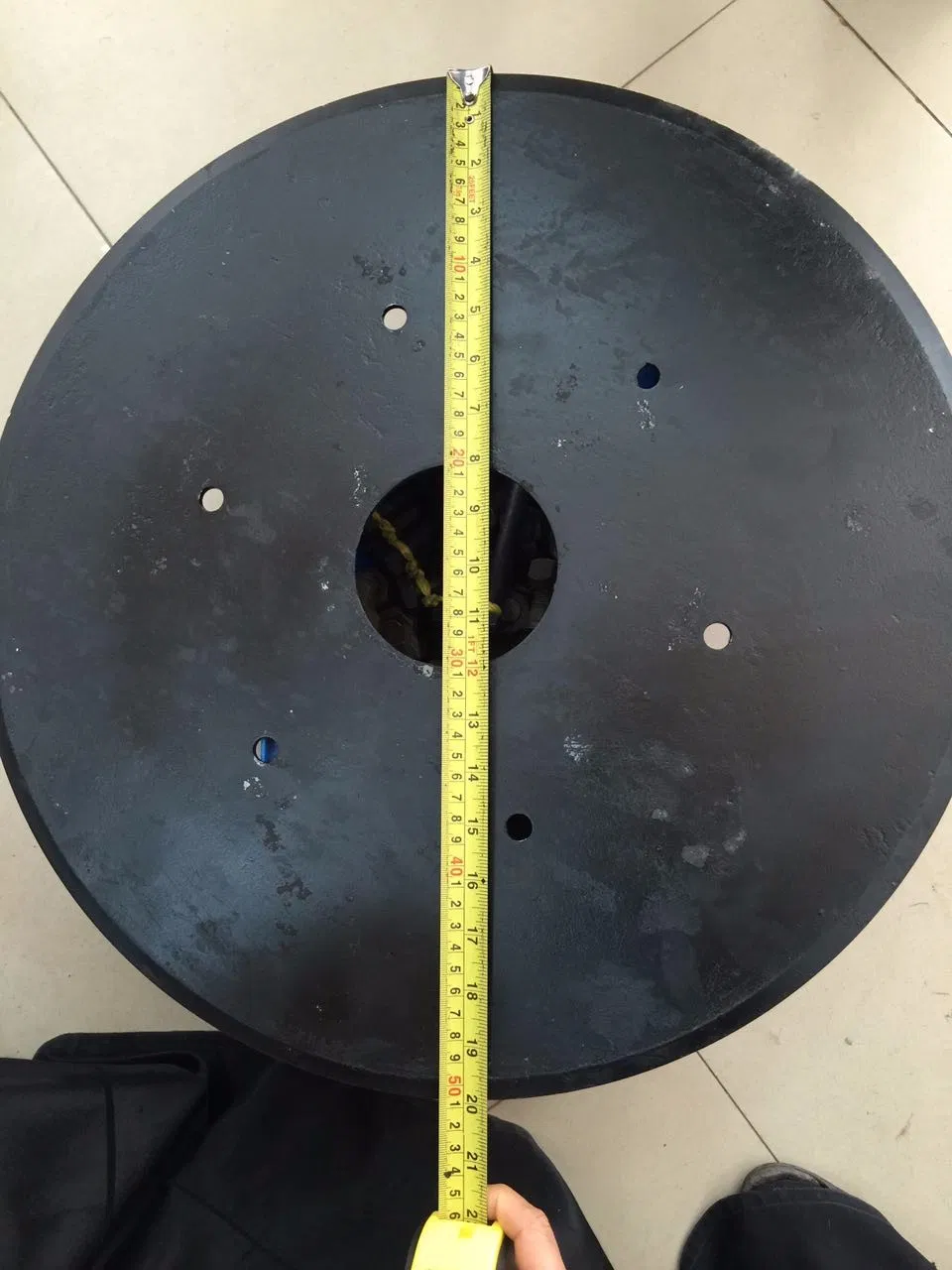
A frustrated workshop foreman in Nairobi recently phoned his parts supplier, convinced the latest batch of driven plates was defective. Every plate installed in their Hino 300 series trucks developed a chatter within two weeks. The real culprit? A floor transmission jack with a sagging hydraulic seal that tilted the gearbox by 4 degrees during mounting, forcing the input shaft to hang on the splined hub. The splines hammered a fretted pattern into the hub’s steel bore, inducing a permanent radial run-out of 0.3 mm—ten times the acceptable limit. Every rotation now scraped the friction material unevenly. This installation-induced misalignment remains a silent epidemic in fleet depots worldwide. When a buyer sources a driven plate from a factory that ships the hub without post-broaching stress relief, the internal spline deformations nucleate fatigue cracks under cyclic loading. Raydafon Technology Group Co.,Limited subjects every spline hub to a triple-operation process: precision broaching, induction hardening to HRC 48–52, and final magnetic particle inspection to flag any micro-crack before the plate ever leaves the plant. For buyers, requiring this inspection report in the PPAP (Production Part Approval Process) documentation eliminates the root cause of early spline failure.
Walk past a row of agricultural tractors after the spring tillage season. Many clutch housings will carry a thin film of transmission oil that migrated past a tired input-shaft seal. When oil wicks onto the driven plate friction surface, it cooks into a hard, glass-like glaze that drops the friction coefficient instantly. The clutch no longer grabs; it slips, polishes the flywheel, and forces the operator to ride the pedal just to maintain PTO speed. The procurement fix is not simply replacing the plate but specifying a driven plate with oil-evacuation channels—spiral grooves cut into the friction puck that act as centrifugal slingers. What causes a clutch driven plate to wear out quickly in these greasy environments? The glazed layer forms a barrier that prevents the fresh friction material underneath from ever making contact: the plate effectively becomes a frictionless disc. Raydafon Technology Group Co.,Limited designs its agricultural-application driven plates with aggressive waffle-pattern grooves and a slightly porous friction matrix that tolerates trace oil without glazing, keeping tractors in the field and off the low-loader.
Modern turbo-diesel engines produce fierce torsional-spike vibrations, especially at low RPM under full boost. The damper springs nestled inside the driven plate hub absorb these spikes, compressing and releasing thousands of times per minute. When a procurement manager selects an economy driven plate that uses single-stage springs with open-coil ends, those springs fatigue and snap within 50,000 kilometers, lodging a broken coil between the friction facings. The driver hears a rhythmic knock at idle that disappears when the pedal is depressed—the classic damper-death rattle. Raydafon Technology Group Co.,Limited deploys a dual-stage spring pack arrangement in heavy-duty driven plates; the inner spring handles low-amplitude idle vibration, while the outer spring engages under torque load. The coil ends are closed and ground flat, seated in a stamped window that provides stress-relief radii. For buyers issuing RFQs, adding the line “dual-stage damper with closed-ground coil ends” to the specification sheet eliminates the sub-tier suppliers who cut corners on spring metallurgy. The result is a driven plate that maintains smooth NVH (noise, vibration, hardness) characteristics through its entire service life, reducing warranty claims that chew into the importer’s margin.
An alarming trend has surfaced on international trade platforms: driven plates that visually mimic name-brand products but substitute the friction ring adhesive with a low-temperature phenolic resin imported from uncertified chemical mills. Under a micro-photograph, the authentic friction matrix shows a uniform distribution of brass chips and aramid fibers; the counterfeit shows clumps of recycled cotton flock and traces of iron oxide pigment to fake the copper color. When the clutch temperature crosses the 200°C threshold, the counterfeit adhesive liquefies, the friction puck delaminates from the steel core, and the driven plate destroys the pressure plate and flywheel in one explosive event. Buyers who chase the lowest per-piece price without demanding ISO/TS 16949 certification and a detailed bill of materials walk straight into this trap. Raydafon Technology Group Co.,Limited maintains a closed-loop supply chain for all friction raw materials, certifying each batch with Fourier-transform infrared spectroscopy to confirm the polymer backbone matches the OE specification. The company’s in-house metallurgical lab routinely publishes component-level hardness and tensile reports, so a buyer in Lagos or Jakarta knows exactly what steel grade forms the spline hub—not a guess, but a traceable data point.
| Inspection Point | Raydafon Specification | Why It Extends Plate Life |
|---|---|---|
| Friction material binder | High-temperature phenolic with copper addition | Resists binder carbonization up to 380°C |
| Spline hub hardness | HRC 48–52, induction hardened | Eliminates fretting wear from input shaft micro-movements |
| Damper spring type | Dual-stage, closed-ground ends | Absorbs idle rattle and peak torque spikes without fatigue |
| Facing groove pattern | Radial-cum-spiral oil-evacuation channels | Clears oil film and accelerates thermal shedding |
| Dynamic balancing grade | G6.3 at 3000 RPM | Prevents axial vibration that scallops the friction surface |
| Quality certification | IATF 16949, PPAP Level 3 documentation | Guarantees process repeatability across production batches |
Correct pedal discipline alone cannot compensate for a driven plate whose friction puck sits on a warped steel core. Run-out exceeding 0.5 mm causes the plate to scrub against the pressure plate and flywheel during clutch disengagement, effectively wearing the material even when the pedal is fully depressed. This manufacturing defect, often present in plates that skip the final dynamic-balancing and flatness-inspection stage, mimics driving abuse but originates in the supply chain. Buyers should request a concentricity measurement report with each shipment; the Raydafon QC protocol mandates a dial-indicator check on every plate before packaging, discarding any core that exceeds 0.3 mm total indicated run-out.
The standing-start high-load scenario demands a brief but intense slip phase where the friction coefficient must rise linearly without grabbing. If the driven plate friction puck lacks a proper “bite-release” characteristic—typically achieved by blending ceramic particles into the organic matrix—the driver compensates by excessively slipping the clutch, which doubles the engagement time and doubles the heat injected into the plate per launch. The solution lies in specifying a driven plate with a confirmed µ (friction coefficient) curve that stays flat between 0.32 and 0.38 across the temperature range. Raydafon Technology Group Co.,Limited publishes the SAE J2487 dynamometer test µ-curves for its heavy-duty plates, giving fleet purchasers the data to match the plate to the trailer weight category.
Every procurement decision you make either feeds the maintenance bay or starves it. When you source a driven plate from a supplier who treats the part as a commodity—generic friction mix, unchecked spline hardness, a single weak damper spring—you wire the cost of future downtime directly into your operating budget. Raydafon Technology Group Co.,Limited flips that script. We sit on the same side of the table as the fleet buyer, the distributor, and the workshop foreman because our engineering team defines “quality” by how many extra duty cycles a plate survives before a driver notices the first shudder. Our application engineering service reviews your fleet’s duty cycle, pedal map, and historical failure records, then maps the correct driven plate variant from our catalog—whether it’s a sintered-copper beast for inner-city refuse trucks or an aramid-organic workhorse for inter-city coaches. With IATF 16949-certified production lines, full PPAP Level 3 documentation, and a raw-material traceability system that tracks a batch of friction material back to the resin lot number, Raydafon Technology Group Co.,Limited gives procurement managers the technical confidence they need to sign off on a million-kilometer supply agreement. The question “What causes a clutch driven plate to wear out quickly?” stops being a mystery and becomes a solved equation—one where the variables of material science, manufacturing precision, and application matching are already plugged into the Raydafon catalog. Stop chasing ghost failures. Visit our website or speak directly with our technical procurement desk at [email protected], and let’s engineer a driven plate specification that keeps your fleet rolling and your maintenance ledger in the black.
Raydafon Technology Group Co.,Limited, accessible through https://www.raydafon-power.com, is a specialized manufacturer and global exporter of clutch driven plates, pressure plates, and complete clutch kits for light commercial, heavy-duty truck, and agricultural applications. With in-house friction-material compounding, precision spline broaching, and IATF 16949-certified assembly lines, the company supplies OE-equivalent and performance-grade clutch components to distributors and fleet operators across more than 40 countries. Every driven plate undergoes dynamic balance testing, concentricity inspection, and, upon request, full PPAP Level 3 documentation, ensuring that procurement buyers receive consistent, traceable quality batch after batch. For technical inquiries, custom application matching, or bulk pricing, contact the team at [email protected].
Miyoshi, K., & Buckley, D. H. (1982). Friction and wear of some ceramics and cermets sliding against hardened steel. NASA Technical Paper, 1982, TP-2042.
Anderson, A. E., & Knapp, R. A. (1990). Hot spotting in automotive friction systems. Wear, 135(2), 319–337.
Jacko, M. G., & Rhee, S. K. (1992). Brake linings and clutch facings. Kirk-Othmer Encyclopedia of Chemical Technology, 4(5), 523–537.
Shibata, K., Goto, A., & Yoshida, T. (1995). Development of organic friction materials for heavy-duty truck clutches. JSAE Review, 16(4), 409–414.
Holinski, R., & Hesse, D. (2002). Changes of friction properties under high thermal load in dry-running clutch systems. Tribology International, 35(7), 431–438.
Kim, S. J., & Jang, H. (2005). Friction and wear of friction materials containing two different phenolic resins reinforced with aramid pulp. Tribology International, 38(5), 451–458.
Ostermeyer, G. P., & Müller, M. (2006). Dynamic interaction of friction and surface topography in brake systems. Tribology International, 39(5), 370–380.
Abu Bakar, A. R., Ouyang, H., & Li, L. (2008). Thermal analysis of a disc brake model considering a real brake pad surface and wear. Engineering Tribology, 222(6), 749–763.
Cho, M. H., Kim, S. J., Basch, R. H., & Jang, H. (2009). The effect of solid lubricants on the friction and wear of brake friction materials. Wear, 268(7–8), 917–923.
Eriksson, M., Bergman, F., & Jacobson, S. (2011). On the nature of tribological contact in automotive brakes. Wear, 252(1–2), 26–36.