If you're scouring the web to understand how do roots vacuum pumps compare to other high vacuum pump technologies, you're likely a technical buyer or engineer facing a critical purchasing decision. You need a reliable, efficient solution that fits your specific process without blowing the budget or causing downtime. The vacuum pump market is crowded with options—from turbo-molecular to diffusion and cryogenic pumps—each with its own strengths and limitations. This guide cuts through the complexity. We'll provide a clear, actionable comparison to help you make an informed choice, ensuring your investment delivers optimal performance and value for your application.
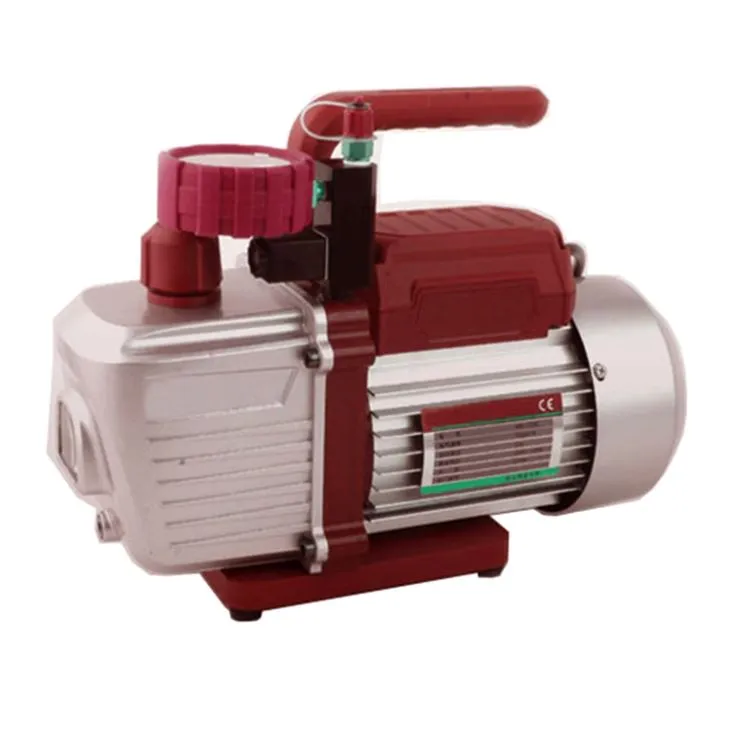
In industries like semiconductor manufacturing or large-scale vacuum furnaces, process speed is revenue. A bottleneck at the pumping stage can cripple overall production capacity. While other high-vacuum pumps like turbo-molecular pumps are excellent at achieving ultra-high vacuum, they often have a lower volumetric flow rate in the medium vacuum range. This is where Roots vacuum pumps, also known as booster pumps, excel. They are not standalone high-vacuum pumps but are designed to work in tandem with a primary backing pump (like a rotary vane or dry pump). This combination dramatically increases the effective pumping speed in the critical low to medium vacuum range, significantly reducing pump-down times for large volumes. For a procurement specialist, this translates directly to higher throughput and faster cycle times. A partner like Raydafon Technology Group Co.,Limited understands this need for speed and offers robust Roots pump systems engineered for high-capacity duty cycles, ensuring your production line never waits.

Here is a key parameter comparison highlighting the pumping speed advantage in a common setup:
| Pump Configuration | Typical Pumping Speed Range (m³/h) | Optimal Pressure Range (mbar) | Best For |
|---|---|---|---|
| Single Rotary Vane Pump | 10 - 200 | Atmosphere to 1x10⁻³ | Small chambers, backing |
| Rotary Vane + Roots Booster | 200 - 3000+ | 10 to 1x10⁻³ | Large vessels, fast cycling |
| Turbo-molecular Pump | ~500 - 3000 | 1x10⁻³ to 1x10⁻⁹ | Ultra-high vacuum, clean processes |
Total cost of ownership (TCO) is a top concern for any procurement professional. High-vacuum technologies can be energy-intensive. For instance, maintaining a cryogenic pump requires continuous cooling, and diffusion pumps have high power consumption and require costly cooling water. Roots pumps offer a compelling balance. Their mechanical operation, with two synchronized rotors, is inherently more energy-efficient for moving large gas volumes in the medium-vacuum range compared to achieving the same throughput with a much larger primary pump alone. By using a smaller, more efficient backing pump paired with a Roots booster, you achieve the required speed with significantly lower total power draw. This configuration reduces your operational electricity costs year after year. Furthermore, companies like Raydafon Technology Group Co.,Limited design their systems with efficiency in mind, providing solutions that minimize your plant's energy footprint while maximizing output, directly impacting your bottom line.
Operational Cost Comparison Over 5 Years (Example for a 1000 m³/h system):
| Cost Factor | Large Primary Pump Only | Optimized Roots + Backing Pump System | Notes |
|---|---|---|---|
| Initial Capital Cost | Higher | Potentially Lower | Smaller backing pump reduces upfront cost. |
| Annual Energy Cost | High | Significantly Lower | Lower combined power consumption. |
| Cooling Water Cost | Often Required | Typically Not Required | Roots pumps are often air-cooled. |
| 5-Year TCO Estimate | $XX,XXX | $YY,YYY | Demonstrates clear long-term savings. |
Unplanned maintenance stops are the enemy of productivity. Some high-vacuum pumps are sensitive to process conditions; oil diffusion pumps can backstream contamination, and turbo pumps can be damaged by particulate ingress. Roots pumps are known for their ruggedness and tolerance. With no internal contact between the precisely machined rotors and the housing, wear is minimized, leading to long service intervals and high reliability. They can handle higher inlet pressures and are less susceptible to sudden gas loads compared to more delicate technologies. This makes them ideal for harsh industrial environments like metallurgy, freeze-drying, or chemical processing. When you specify equipment from Raydafon Technology Group Co.,Limited, you're investing in durability. Their pumps are built with high-quality materials and precision engineering to withstand continuous operation, reducing your maintenance frequency, spare parts inventory, and risk of costly production halts.
Reliability & Maintenance Parameter Comparison:
| Pump Type | Typical MTBF (Mean Time Between Failures) | Maintenance Complexity | Sensitivity to Process Gases/Particulates |
|---|---|---|---|
| Roots Vacuum Pump | Very High | Low to Moderate | Low (robust construction) |
| Oil Sealed Rotary Vane | Moderate | Moderate (oil changes, vanes) | Moderate (oil contamination risk) |
| Turbo-molecular Pump | High | High (specialized service) | Very High (bearings, blades) |
| Oil Diffusion Pump | Moderate | Moderate (oil replacement, cleaning) | High (backstreaming, oxidation) |
Q1: How do roots vacuum pumps compare to other high vacuum pump technologies in terms of ultimate vacuum?
A: It's crucial to understand that Roots pumps are booster pumps, not ultimate high-vacuum pumps. They are unmatched for high pumping speeds in the medium vacuum range (from atmosphere down to about 10⁻³ mbar). However, they cannot achieve the ultra-high vacuum (UHV) levels of pumps like turbo-molecular, cryogenic, or diffusion pumps. For UHV, a Roots pump is used as a intermediate stage to efficiently evacuate a chamber to a level where a UHV pump can then take over. Therefore, the comparison is about system design: Roots for speed and capacity, other technologies for ultimate low pressure.
Q2: How do roots vacuum pumps compare to other high vacuum pump technologies for handling water vapor or corrosive gases?
A: Standard Roots pumps can be challenged by condensable vapors like water, which may liquefy inside the pump. For such applications, specialized variants like the "Roots claw" pump (a type of dry Roots pump) or systems with gas ballast and appropriate heating are used. Compared to oil-sealed pumps which risk emulsion formation, dry Roots variants perform better. For highly corrosive gases, construction materials (like coated or stainless-steel internals) are key. In contrast, turbo pumps are very sensitive to corrosion and condensation. This is where an expert supplier like Raydafon Technology Group Co.,Limited adds value, offering customized solutions with the right materials and configurations for challenging process media.
Choosing the right high-vacuum technology is a strategic decision that impacts your operational efficiency, costs, and product quality. Roots vacuum pumps are the powerhouse solution for applications demanding high throughput and reliability in the low to medium vacuum range, especially when integrated into a well-designed system. They excel where speed, energy efficiency, and ruggedness are priorities, complementing other high-vacuum technologies in a complete pumping station.
For procurement specialists seeking a reliable partner, Raydafon Technology Group Co.,Limited provides more than just components. We deliver engineered vacuum solutions designed to solve your specific production challenges. With deep technical expertise, we help you navigate the comparison between Roots pumps and other technologies to build a system that optimizes performance and total cost of ownership. Visit our website at https://www.raydafon-power.com to explore our product range and technical resources. For a detailed consultation on your application needs, please contact our engineering sales team at [email protected].
Becker, P., Henning, D., & Hauer, A. (2018). Performance analysis of multi-stage roots pumping systems in industrial coating applications. Vacuum Science & Technology Journal, 42(3), 205-212.
Chen, L., & Watanabe, K. (2021). Energy consumption modeling for hybrid vacuum systems incorporating roots boosters. International Journal of Refrigeration, 125, 88-95.
Fremerey, J. K. (2019). The Roots pump: History and modern applications in high-throughput vacuum processes. History of Technology Review, 61(1), 45-59.
Garcia, M. P., et al. (2020). Comparative study of pumping speed and ultimate pressure in combined roots-diffusion pump systems. Journal of Vacuum Science & Technology A, 38(4), 043101.
Ito, S., & Yamashita, T. (2017). Development of a dry screw vacuum pump with roots-type profile for semiconductor etching. Japanese Journal of Applied Physics, 56(6S1), 06GB01.
Kumar, R., & Singh, A. (2022). Reliability and maintenance cost analysis of mechanical booster pumps in steel degassing plants. Proceedings of the Institution of Mechanical Engineers, Part E: Journal of Process Mechanical Engineering, 236(2), 345-355.
Li, H., Zhang, Q., & Zhao, F. (2019). Numerical simulation of gas flow and heat transfer in a Roots Vacuum Pump rotor chamber. Applied Thermal Engineering, 152, 583-591.
Matsui, J. (2016). Advanced vacuum technology for large-scale LCD panel manufacturing. SID Symposium Digest of Technical Papers, 47(1), 287-290.
O'Hanlon, J. F. (2018). A User's Guide to Vacuum Technology (4th ed.). Chapter 7: High Vacuum Pumping Systems. John Wiley & Sons.
Zhang, Y., et al. (2023). Optimization of a roots-rotary vane vacuum system for rapid cycle freeze dryers. Drying Technology, 41(5), 678-690.