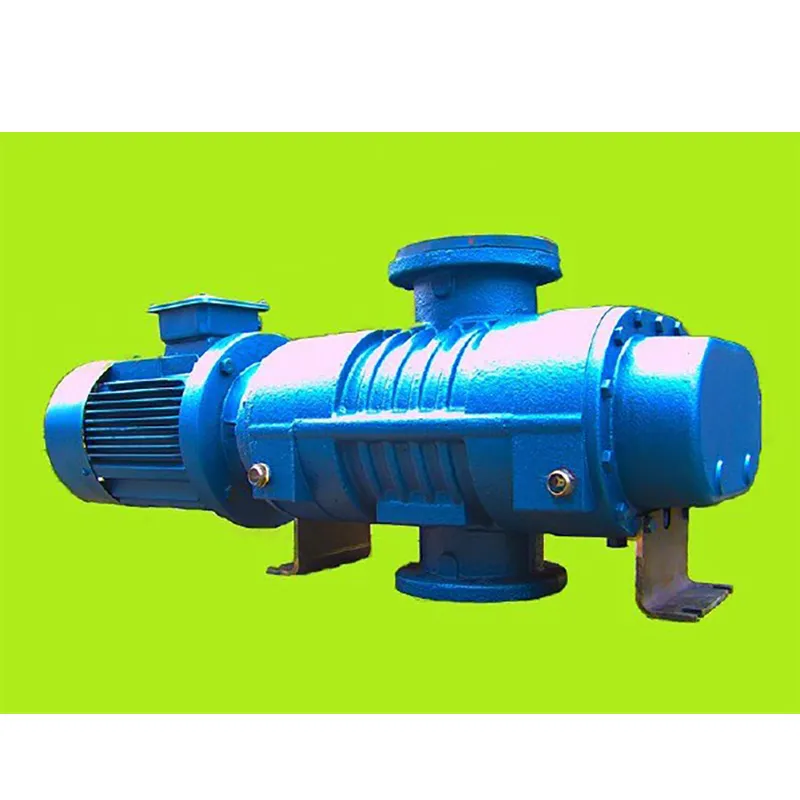
Vacuum downtime rarely announces itself with a dramatic failure. It shows up as slower cycle times, a coating chamber that misses thickness targets, a freeze dryer that cannot hold pressure, or a packaging line that loses grip at the worst moment. That is why procurement teams investigating How does a VP Roots Vacuum Pump work? are not only buying a machine; they are buying predictable throughput, lower energy cost, and fewer maintenance interruptions. A VP Roots vacuum pump, often called a Roots vacuum booster, traps gas mechanically with counter-rotating lobed rotors. The rotors do not touch each other or the casing; timing gears keep a small clearance, so the pump moves large gas volumes at high speed without inner lubrication in the compression zone. It works best when paired with a backing pump: the backing pump handles the initial evacuation and the Roots stage boosts capacity in the rough and medium vacuum range. For buyers, the practical question is not only rotor geometry. It is whether the selected unit matches chamber volume, gas load, ultimate pressure, utility limits, noise rules, and service access. Raydafon Technology Group Co.,Limited supports procurement teams with application review, model matching, utility checks, and lifecycle cost analysis so the vacuum booster supports the line instead of becoming a bottleneck.
On this page
Pain point scenario: A plant approves a booster because the headline pumping speed looks strong, then discovers that the real chamber pressure never reaches the target. The line runs, but cycle time is unstable, the backing pump runs hot, and the quality team blames the process recipe. In many cases, the mismatch started at the quotation stage: the booster was sized for a clean, empty chamber instead of the actual gas load, pressure band, and backing pump curve.
Solution: Start with the operating point, not a single catalog number. A VP Roots vacuum pump works by adding volumetric capacity between the chamber and the backing pump. Two counter-rotating lobed rotors rotate with a small clearance, sweeping gas from the inlet to the outlet. Because there is no contact between rotors or between rotor and casing, the compression zone can run without oil. The timing gears and bearings carry the mechanical load, and the backing pump removes the gas that the Roots stage pushes forward. Raydafon Technology Group Co.,Limited reviews chamber volume, process gas, target pressure, backing pump performance, and duty cycle before recommending a model, so buyers can compare real operating conditions rather than isolated peak figures.
| Parameter | What Buyers Should Confirm | Why It Matters | Raydafon Support |
|---|---|---|---|
| Pumping speed at target pressure | Value at the actual process pressure, not only at ultimate vacuum | Shows whether the line can hold cycle time | Application-based curve review |
| Ultimate pressure with backing pump | Combined system limit | Prevents an undersized backing pump from limiting the booster | System matching check |
| Compression ratio | Allowed differential pressure for the duty | Protects rotors, seals, and motor from overload | Duty cycle and gas load review |
| Rotor profile | Two-lobe or three-lobe design | Affects pulsation, efficiency, and noise | Model selection by process sensitivity |
| Motor and cooling | Voltage, frequency, cooling method, ambient limit | Prevents nuisance trips and hot-running conditions | Utility and site-condition review |
| Flange and footprint | Inlet/outlet size, orientation, service clearance | Reduces installation rework | Layout and integration support |
Pain point scenario: The purchase order is placed, the booster arrives, and the project stalls because the available power, cooling water, or floor space does not match the quotation assumptions. Procurement now faces expedited piping, extra electrical work, and a production start date that moves week by week. This is a common risk when vacuum equipment is bought as a stand-alone item instead of a system component.
Solution: Treat installation data as part of the technical offer. A VP Roots vacuum pump works as part of a train: inlet piping, isolation valve, filter or trap, backing pump, exhaust line, cooling supply, and controls all affect performance. Raydafon Technology Group Co.,Limited helps buyers lock down utility requirements, flange orientation, noise limits, and maintenance access before shipment. For global procurement teams, this early review reduces site surprises and makes supplier comparison fairer because every offer is checked against the same installation envelope.
| Integration Checkpoint | Target Question | Procurement Action |
|---|---|---|
| Power supply | Does the motor match site voltage and frequency? | Require datasheet confirmation before PO |
| Cooling method | Air-cooled or water-cooled, and what is the ambient limit? | Confirm utilities and seasonal conditions |
| Piping layout | Are inlet and outlet orientations serviceable? | Request dimensional drawings |
| Noise | Does the site have a dB limit at the operator position? | Ask for test data and enclosure options |
| Controls | Stand-alone or PLC-linked operation? | Define signals, interlocks, and alarms |
| Maintenance access | Can seals, gears, and filters be reached safely? | Include service clearance in layout review |
At rough vacuum, the backing pump has already removed the bulk of the air. The Roots stage then increases the effective pumping speed in its useful pressure band. In simple terms, it does not replace the backing pump; it multiplies the system's capacity so the chamber reaches the target pressure faster and holds it under gas load. Raydafon Technology Group Co.,Limited checks the combined curve so the booster and backing pump work as one system.
It cannot compensate for every backing-pump limitation. If the backing pump cannot remove the forward gas flow, the booster may run at a higher differential pressure, which can raise temperature, power draw, and wear. The correct procurement step is to share the real gas load, target pressure, and cycle profile before selection. Raydafon Technology Group Co.,Limited reviews these inputs and recommends a matched train rather than a booster that only looks good on a single data point.
| Symptom | Likely Cause | Procurement Action |
|---|---|---|
| Slow pump-down after rough vacuum | Booster curve does not match the pressure band | Request combined system curve |
| High discharge temperature | Differential pressure too high | Review gas load and backing pump capacity |
| Frequent overload trips | Motor or compression ratio mismatch | Confirm duty cycle and protection settings |
| Oil or particle risk in chamber | Wrong sealing or lubrication concept for process | Specify dry Roots stage where required |
Pain point scenario: A buyer selects a lower-cost booster without checking the process atmosphere. Weeks later, maintenance finds oil migration risk, seal wear, or a cleaning routine that adds unplanned downtime. In food packaging, coating, semiconductor support, and freeze drying, a small lubrication decision can become a quality and compliance issue.
Solution: Match the rotor sealing and lubrication concept to the process. In a VP Roots vacuum pump, the compression chamber can be dry because the rotors do not touch. The gears and bearings still need proper lubrication, so the design must keep lubricant away from the gas path when contamination is a concern. Raydafon Technology Group Co.,Limited helps buyers compare dry Roots stages, sealed designs, and maintenance intervals against the actual process gas, cleaning cycle, and spare-parts strategy.
| Design Choice | Best Fit | Buyer Check |
|---|---|---|
| Dry Roots compression zone | Clean processes and contamination-sensitive chambers | Confirm seal arrangement and purge needs |
| Lubricated gears and bearings | Continuous industrial duty with planned service | Check oil change interval and access |
| Two-lobe rotor | Robust general vacuum boosting | Review noise and pulsation tolerance |
| Three-lobe rotor | Smoother gas flow and lower pulsation | Compare efficiency and spares cost |
| Protective inlet trap | Processes with dust, powder, or condensate | Confirm pressure drop and cleaning plan |
Pain point scenario: The datasheet says the booster has high pumping speed, but the chamber gauge tells a different story. Long piping, tight elbows, a clogged filter, or a small isolation valve can remove the advantage before the gas reaches the pump. The buyer then faces a debate between supplier performance and site installation.
Solution: Evaluate the whole vacuum path. A VP Roots vacuum pump works by moving volume, so every restriction upstream changes the effective speed at the chamber. Raydafon Technology Group Co.,Limited reviews pipe diameter, conductance, trap pressure drop, valve size, and backing-pump curve with the buyer. The goal is a measurable acceptance point: target pressure reached in a defined time, with stable gas load and repeatable cycle performance.
| Performance Factor | What to Validate | Acceptance Evidence |
|---|---|---|
| Effective pumping speed | Speed at chamber, not only at pump inlet | Pump-down test curve |
| Conductance | Pipe size, bends, valves, filters | Layout drawing and calculation |
| Ultimate pressure | Combined booster and backing pump limit | Factory or site test record |
| Gas load | Process vapor, leakage, outgassing | Application data sheet |
| Cycle repeatability | Pressure recovery between batches | Production trial checklist |
| Noise and vibration | Site limits at operator position | Test report and installation review |
Energy use depends on the operating pressure, gas load, motor efficiency, cooling method, and how often the booster runs outside its best range. A lower purchase price can hide higher power draw, shorter service intervals, or costly downtime. Raydafon Technology Group Co.,Limited supports buyers with duty-based power estimates, spare-parts lists, and maintenance assumptions so the total cost of ownership can be compared before the order is placed.
Factory acceptance should confirm rotation direction, leak tightness, vibration, noise, control signals, and performance at agreed points. Site acceptance should confirm integration with the backing pump and chamber. Spare-parts planning should cover seals, bearings, gears, filters, and critical sensors. Raydafon Technology Group Co.,Limited prepares documentation and inspection points that procurement teams can use in supplier scorecards and handover checklists.
| Evaluation Item | Evidence to Request | Raydafon Support |
|---|---|---|
| Performance | Curve at agreed pressure points | Application-matched selection |
| Quality | Leak test, vibration, noise records | FAT documentation |
| Integration | Wiring, signals, interlocks, dimensions | Drawings and controls review |
| Service | Spare-parts list and recommended stock | Maintenance plan support |
| Delivery | Lead time and packaging plan | Export coordination |
| Cost | Power, consumables, downtime assumptions | Lifecycle cost review |
Pain point scenario: Procurement receives three quotes with similar purchase prices, but the operating outcomes are not similar. One unit runs near its differential-pressure limit, another needs frequent seal service, and a third has long lead times for critical spares. The lowest quote can become the most expensive line item after twelve months of production.
Solution: Compare the vacuum booster on the same lifecycle basis. A VP Roots vacuum pump works best when it is selected for the real pressure band, protected from process carryover, and supported by a clear service plan. Raydafon Technology Group Co.,Limited helps buyers build a comparison that includes energy, maintenance intervals, spare-parts availability, installation cost, and downtime risk. This approach gives procurement a defensible decision record and gives operations a system they can maintain.
| Lifecycle Driver | Procurement Lever | Target Outcome |
|---|---|---|
| Energy | Match motor and operating point | Lower kWh per cycle |
| Maintenance | Confirm service interval and access | Planned downtime, not emergency stops |
| Spares | Stock critical seals and bearings | Faster recovery |
| Process protection | Add trap, filter, or purge where needed | Cleaner rotor and longer life |
| Integration | Review drawings before shipment | Less site rework |
| Documentation | Require test records and manuals | Audit-ready handover |
Pain point scenario: A buyer needs a comparable offer quickly, but each supplier asks for different data. The result is a spreadsheet of mismatched assumptions and a delayed decision. Global procurement needs a concise request that forces the same technical answers from every supplier.
Solution: Use a one-page checklist. Ask every supplier to state how the VP Roots vacuum pump works with the proposed backing pump, what pressure band it covers, what utilities it needs, and what evidence will be provided at FAT. Raydafon Technology Group Co.,Limited can return a matched selection with drawings, utility data, and service assumptions so the purchasing team can compare offers on equal terms.
| Buyer Checklist | Required Answer | Decision Value |
|---|---|---|
| Chamber volume and target pressure | Value and pump-down time | Defines basic size |
| Gas load and vapor | Process description and temperature | Protects performance and seals |
| Backing pump | Model and curve | Confirms system match |
| Utilities | Power, cooling, air, exhaust | Prevents installation delay |
| Control interface | Signals and interlocks | Ensures line integration |
| Acceptance test | Pressure points and records | Creates verifiable handover |
If your team is comparing boosters for a coating line, freeze dryer, central vacuum system, packaging machine, heat-treatment furnace, or semiconductor support process, share the chamber volume, target pressure, gas load, backing pump data, and utility limits with Raydafon Technology Group Co.,Limited. The company supports global buyers with application review, model matching, export documentation, and lifecycle cost planning for VP Roots vacuum pumps and related vacuum systems. Visit https://www.raydafon-power.com to review product information, or send your operating conditions to [email protected] for a technical response and a comparable quotation. Raydafon Technology Group Co.,Limited is ready to help procurement teams turn vacuum requirements into a clear, verifiable specification before the order is placed.
Zhang, Y., Li, H., and Wang, J. (2019). Performance analysis of a Roots vacuum pump with different rotor profiles. Vacuum, 167, 123-132.
Liu, X., Chen, M., and Zhao, Q. (2018). Numerical study of gas flow and pressure pulsation in a Roots blower. Journal of Mechanical Science and Technology, 32(7), 3315-3324.
Park, S., Kim, D., and Lee, C. (2020). Experimental evaluation of pumping characteristics in a dry Roots vacuum booster. Journal of Vacuum Science and Technology A, 38(4), 043201.
Wang, L., Sun, Y., and Xu, R. (2017). Rotor profile optimization for Roots vacuum pumps. International Journal of Refrigeration, 82, 245-254.
Chen, Y., Zhou, P., and Huang, W. (2021). Thermal deformation and clearance design of Roots blower rotors. Applied Thermal Engineering, 185, 116372.
Kim, J., Seo, H., and Cho, S. (2016). Noise and vibration reduction in Roots-type vacuum boosters. Mechanical Systems and Signal Processing, 76, 410-423.
Li, Q., Zhang, R., and Gao, F. (2022). Energy efficiency comparison of two-lobe and three-lobe Roots blowers. Energies, 15(8), 2891.
Bianchi, G., Cipollone, R., and Contaldi, G. (2015). A review of Roots blower modeling for industrial vacuum systems. Engineering Failure Analysis, 57, 188-201.
Sun, H., Ma, Z., and Ren, T. (2020). Leakage flow and volumetric efficiency in a Roots vacuum pump. Machines, 8(3), 47.
Wang, F., Hu, J., and Lin, K. (2023). Condition monitoring of Roots vacuum boosters in continuous production lines. Measurement, 206, 112318.
-