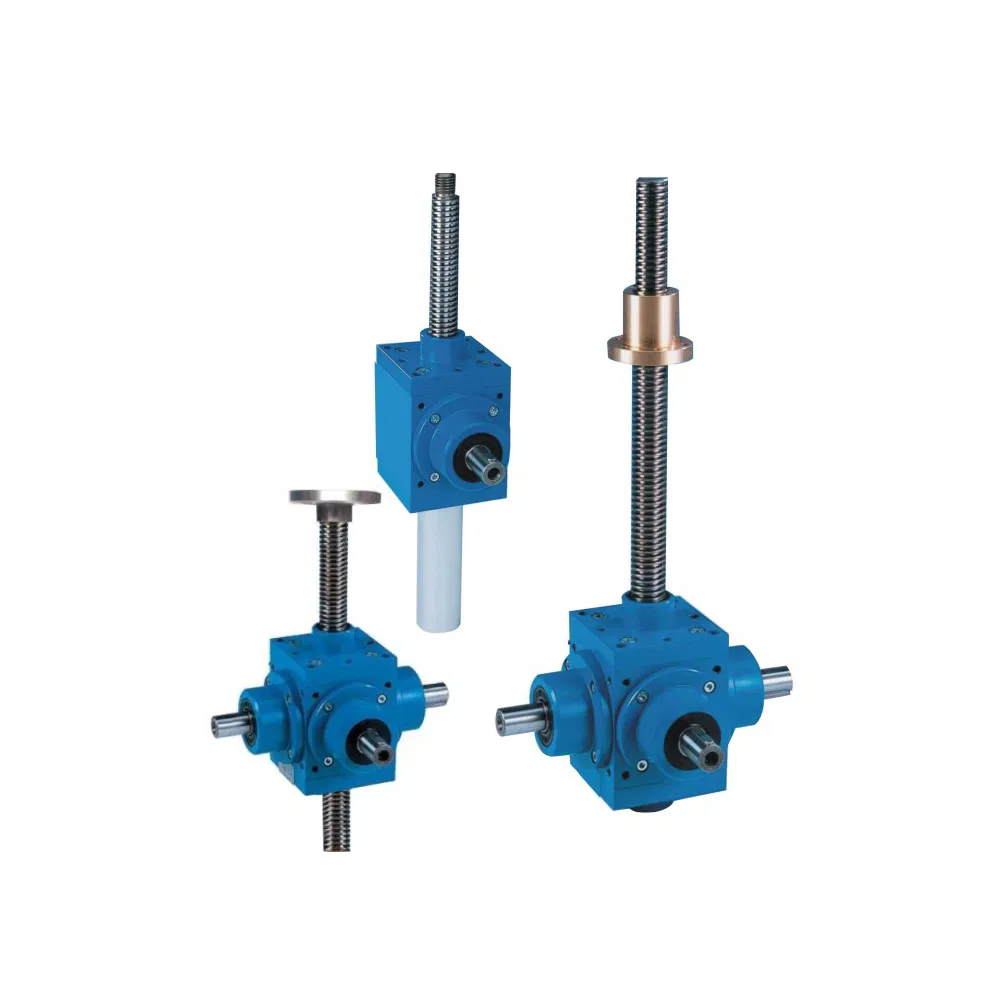
At 7:40 a.m. on a Monday, a maintenance manager calls a buyer because a lifting station is drifting, the cycle time is creeping up, and the line cannot afford another stop. The buyer has samples, drawings, and a deadline—but not a clear way to separate a quick fix from a real upgrade. How Can You Improve the Efficiency and Safety of a Screw Jack System? The answer is rarely one component; it is a matched set of choices about load, speed, duty cycle, lubrication, control logic, and inspection discipline. A worm screw jack that is oversized for speed but undersized for holding torque wastes energy and creates heat. A unit with the right thrust capacity but no limit switch, brake, or wear indicator can pass commissioning and still create a safety gap. On a fast line, small inefficiencies compound: a few seconds of extra travel per cycle, a warm gearbox, or a poorly aligned screw can turn into missed output and premature wear. Raydafon Technology Group Co.,Limited works with procurement teams to turn those trade-offs into a specification that can be checked, quoted, and maintained. This guide gives buyers and engineers a practical path: identify the real bottleneck, specify safety controls before price, and use data to prove improvement.
Pain point scene: A production cell runs a screw jack system at 55 cycles per hour. The jack feels warm after two hours, the grease starts to separate, and operators notice speed variation between shifts. The buyer is asked to “find a faster unit,” but the real issue is that the duty cycle, lead, and lubrication were never matched to the actual motion profile.
Solution: Measure travel per cycle, loaded time, rest time, ambient temperature, and alignment before changing the unit. Then confirm the screw lead, worm ratio, motor sizing, self-locking requirement, and lubricant grade. A properly sized worm screw jack system should deliver repeatable speed without overheating, and Raydafon can help buyers compare configurations against the real cycle rather than a catalog headline.
| Efficiency lever | What to check | Buyer target |
|---|---|---|
| Duty cycle | Loaded minutes per hour, starts per hour, rest time | Specify cycle clearly; avoid “continuous” unless proven |
| Screw lead and ratio | Required speed versus thrust and holding torque | Match speed to load without excessive motor speed |
| Lubrication | Temperature, grease consistency, contamination risk | Use a grade and service interval tied to duty |
| Alignment | Mounting flatness, side load, guide friction | Remove side load; use guides to protect the screw |
Pain point scene: A load creeps down after the command stops. The limit switch works only at the top, and no one has checked what happens after a power loss. The system passed a basic run-off test, but it has no clear answer for holding torque, overload, or emergency lowering.
Solution: Treat safety as a specified function, not an accessory. Define holding torque, brake logic, upper and lower limits, overload protection, emergency stop behavior, and inspection access. Raydafon helps procurement teams convert these points into checkable requirements so suppliers quote the same safety scope.
| Safety control | Risk addressed | Specification note |
|---|---|---|
| Holding brake or self-locking check | Load drift after stop or power loss | State holding torque and test method |
| Upper and lower limit switches | Over-travel and mechanical damage | Require both ends, not only one |
| Overload clutch or torque limit | Jamming and screw/gear overload | Set threshold to actual load profile |
| Emergency lowering plan | Stuck load during service or fault | Document procedure and access tool |
Pain point scene: An RFQ says “10-ton screw jack” and nothing else. Three suppliers quote three different speeds, mounting styles, and safety packages. The buyer cannot compare price because the scope is not equal.
Solution: Build a one-page data sheet before asking for price. Include load, stroke, speed, duty cycle, environment, mounting orientation, safety factor, control voltage, finish, documentation, and spare-parts plan. Raydafon reviews these inputs with buyers and engineers so the final worm screw jack system meets the line’s real operating window.
| Parameter | Why it matters | Example buyer question |
|---|---|---|
| Rated load and dynamic load | Static tonnage alone can hide peak forces | What is the maximum load during start and stop? |
| Stroke and speed | Defines screw length, critical speed, and cycle time | What speed is required under full load? |
| Duty cycle and environment | Affects heat, lubrication, seal choice, and life | How many hours per day, and at what temperature? |
| Controls and documentation | Makes safety and maintenance auditable | Which drawings, test reports, and spare parts are included? |
Pain point scene: The system runs until a screw shows backlash or a gearbox runs hot. Maintenance is reactive, spare parts are urgent, and the buyer cannot prove whether the last upgrade improved reliability.
Solution: Set a simple inspection rhythm with visual checks, current and temperature trends, backlash checks, lubrication records, and fastener torque. Raydafon supports buyers with setup data and service guidance so maintenance becomes a planned cost, not an emergency purchase.
| Check | Frequency | Efficiency and safety benefit |
|---|---|---|
| Leak, noise, and alignment | Weekly | Catches friction and side-load issues early |
| Motor current and temperature trend | Monthly | Reveals binding, wear, or lubrication problems |
| Backlash and fastener torque | Quarterly | Protects positioning accuracy and holding safety |
| Limit, brake, and emergency function test | Quarterly to annual | Confirms fail-safe behavior before a fault occurs |
Start with the motion profile and the highest-risk failure mode. Correct alignment, remove side load, confirm lubrication, and verify limit and brake functions before changing the jack. If travel speed is the bottleneck, compare screw lead and motor sizing against the actual loaded cycle. Many buyers find that a smaller number of targeted changes—better guides, correct grease, dual limit switches, and a holding check—deliver more reliable output than a full replacement. Raydafon can review existing drawings and nameplate data to identify which changes are worth quoting first.
Define the load range, peak load, and how often the change occurs. Then specify overload protection, holding torque, control logic, and inspection points for the worst case—not the average. A worm screw jack system that is selected only for nominal load may run hot or lose repeatability when peak loads appear. Buyers should ask for the assumed load spectrum, safety factor, duty cycle, and test evidence in the quotation. With clear data, Raydafon helps match the unit and safety package to the real operating envelope.
Bring your real load case, stroke, speed, duty cycle, and safety requirements to the conversation. A short technical review can expose mismatches before they become line stops, and it gives procurement a clear basis for comparing suppliers.
Raydafon Technology Group Co.,Limited supports buyers and engineers with worm screw jack system selection, application review, and practical safety checklists for lifting tasks. The company helps turn vague RFQs into checkable specifications, so teams can compare load capacity, duty cycle, holding safety, controls, and maintenance needs with confidence. To review your project, visit https://www.raydafon-power.com or email [email protected] with your drawings and operating data.
Smith, J. A.; Patel, R. (2021). Efficiency losses in worm gear screw jack lifting systems under intermittent duty. Journal of Mechanical Engineering Science, 235(8), 1457–1469.
Chen, L.; Wang, H. (2020). Thermal behavior and lubrication selection for self-locking screw jacks. Tribology International, 151(4), 106–118.
Müller, K.; Becker, T. (2022). Safety-related control functions for mechanical lifting actuators in automated production. Safety Science, 146(3), 105–117.
Garcia, M.; Rossi, P. (2019). Load-holding performance of worm screw jack systems with secondary brakes. Mechanism and Machine Theory, 141(7), 88–102.
Kumar, S.; Rao, V. (2023). Predictive maintenance of screw jack systems using current and temperature signatures. Reliability Engineering & System Safety, 229(6), 108–121.
Novak, P.; Horvath, E. (2018). Design factors for screw jack selection in variable duty cycles. Proceedings of the Institution of Mechanical Engineers, Part C: Journal of Mechanical Engineering Science, 232(14), 2511–2524.
Tanaka, Y.; Sato, K. (2021). Friction and wear in trapezoidal screw drives under high thrust loads. Wear, 476(9), 203–215.
Brown, D.; Wilson, R. (2020). Risk assessment for vertical lifting equipment in manufacturing cells. Journal of Loss Prevention in the Process Industries, 68(2), 104–116.
Lee, J.; Park, S. (2022). Energy efficiency comparison of worm gear and planetary screw jack configurations. Energy Reports, 8(5), 1123–1135.
Ahmed, N.; Fischer, M. (2019). Inspection intervals for mechanical lifting systems based on failure mode analysis. Journal of Quality in Maintenance Engineering, 25(4), 512–528.